Postpartum Hair Loss: How Long Does It Last in the UK?


Postpartum hair loss affects the majority of new mothers in the UK, typically beginning around three to four months after giving birth — but how long it actually lasts, and what you can do to support recovery, is far less understood than it should be.
What Is Postpartum Hair Loss?
The medical term is telogen effluvium — a temporary disruption to the hair growth cycle that causes a larger-than-usual number of strands to enter the shedding phase at the same time. During pregnancy, elevated oestrogen and progesterone effectively put many hair follicles into a prolonged growth phase (anagen), which is why many women enjoy notably thicker, more lustrous hair while expecting. The trade-off arrives shortly after delivery, when those hormone levels fall sharply and all those follicles that were "held back" finally shed together.
This is not pathological hair loss in the clinical sense — no follicle is being permanently damaged. It is, instead, a delayed correction. The body prioritised the pregnancy, and the hair is now catching up on the cycle it skipped. Understanding this distinction matters enormously, because it shapes both how long the process takes and what kind of support is genuinely useful.
Postpartum telogen effluvium is considered one of the most common hair concerns among women of reproductive age in the UK. Estimates across dermatological literature generally suggest anywhere between 40% and 50% of women experience noticeable shedding in the months following birth, though milder cases are likely underreported.
How Long Does Postpartum Hair Loss Last in the UK?
For most women, postpartum hair shedding begins somewhere between six and sixteen weeks after delivery, with the peak typically occurring at around three to four months postpartum. From that peak, shedding gradually declines, and the majority of women see their hair return to its pre-pregnancy density by the time their baby reaches nine to twelve months of age.
In practical terms, this means the total duration from first noticeable shedding to full visible recovery is commonly between six and twelve months. For some women, particularly those who are breastfeeding, managing significant sleep deprivation, or entering the postpartum period with pre-existing nutritional deficiencies, the timeline can extend to fifteen or even eighteen months. This is still within the range that trichologists consider a normal, self-resolving event.
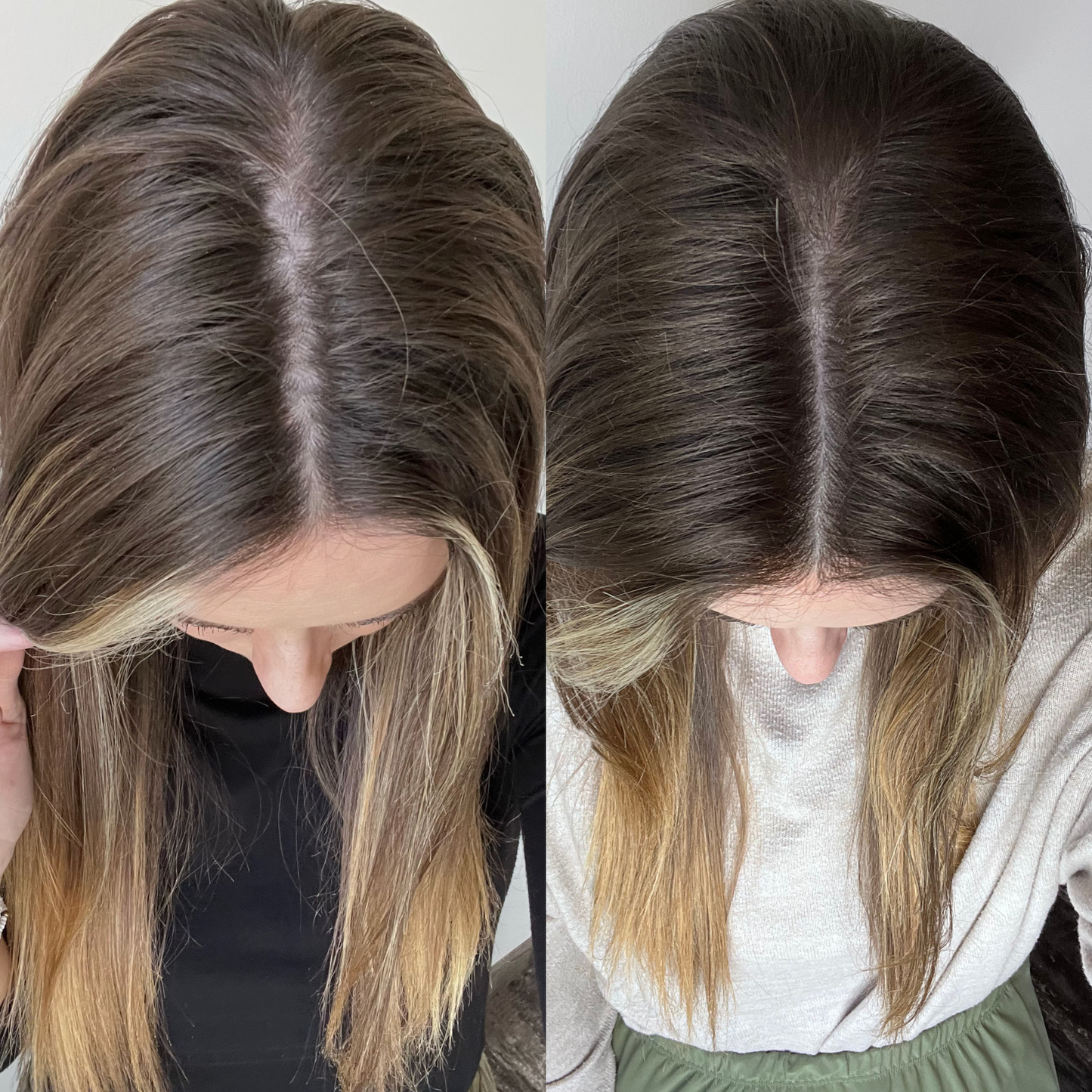
The key distinction to hold onto: shedding stopping does not mean density is restored. Once the excess shedding slows — usually between months four and six postpartum — the regrowth phase begins, but new strands need time to reach a visible length. This is why many women at the seven-to-nine month mark notice short, fine baby hairs around the hairline and temples: healthy regrowth is underway, even if it doesn't look fully recovered yet.
The Postpartum Hair Cycle: A Month-by-Month Timeline
Breaking the postpartum period into rough phases helps set realistic expectations. Individual variation is real — genetics, nutrition, thyroid function, and stress levels all influence where on this spectrum any given woman falls — but the general pattern is consistent enough to be useful as a guide.
| Time After Birth | What's Happening | What You Might Notice |
|---|---|---|
| Weeks 1–6 | Oestrogen drops sharply; follicles begin transitioning from anagen to telogen | Little to no change yet; hair may still feel thick |
| Months 2–4 | Telogen follicles begin shedding en masse | Noticeably more hair in the shower, on the pillow, in the brush |
| Months 4–5 | Peak shedding; highest daily hair loss counts typical at this stage | Thinning at the temples and part line most visible; ponytail may feel thinner |
| Months 5–7 | Shedding begins to slow; new follicles enter anagen | Slightly less hair in the shower; scalp may still look thin |
| Months 7–10 | Active regrowth phase; new strands growing but still short | Baby hairs visible around hairline; overall shedding normalising |
| Months 10–12+ | Hair density returning to baseline for most women | Fuller appearance; regrowth strands blending with existing hair |

Factors That Can Prolong Shedding
While postpartum hair loss is inherently temporary, certain circumstances can push recovery towards the longer end of the spectrum — or, in rarer cases, cause shedding that persists beyond what would be expected from hormonal fluctuation alone. Being aware of these factors allows you to address them proactively rather than waiting and wondering.
Nutritional Deficiencies
Pregnancy and breastfeeding place significant demands on the body's micronutrient reserves. Iron, ferritin, zinc, vitamin D, and B vitamins — particularly biotin and folate — are all commonly depleted in the postpartum period. Hair follicles are metabolically active and among the first structures to be de-prioritised when nutrients are scarce. Low ferritin in particular is consistently associated with prolonged telogen effluvium in clinical literature. If you haven't had a blood panel in the postpartum period, this is one of the most worthwhile investments you can make. Our guide to vitamins for women's hair loss covers the evidence base for each key nutrient in detail.
Thyroid Disruption
Postpartum thyroiditis — a temporary inflammation of the thyroid gland that can cause either hyperthyroid or hypothyroid phases — affects roughly five to ten per cent of new mothers. Both states can independently trigger or worsen hair shedding. Because the symptoms overlap considerably with normal new-parent exhaustion (fatigue, mood changes, weight fluctuation), it is frequently missed. A simple TSH blood test from your GP can rule this out.
Chronic Sleep Deprivation and Stress
The early months of parenthood are rarely conducive to rest. Cortisol — the primary stress hormone — when chronically elevated, has been shown in physiological research to interfere with the hair cycle by shortening the anagen (growth) phase. This does not cause the initial postpartum shed, but it can compound it and delay recovery. For a deeper look at this mechanism, see our piece on hair loss caused by stress and how to address it.
Hard Water Exposure
Much of England — including London, the South East, East Anglia, and the East Midlands — is supplied with hard water that carries a high mineral load. While hard water doesn't cause hair loss directly, it can deposit calcium and magnesium on the scalp, clog follicles, and leave hair more brittle and prone to breakage. This is frequently mistaken for additional shedding. If you live in a hard water area, this is worth factoring into your routine.
What Actually Helps During the Recovery Phase?
There is no supplement or product that stops postpartum shedding outright — because the shedding is driven by a hormonal shift that has to run its course. What targeted support can do, however, is ensure your follicles have the nutritional environment they need to move through the regrowth phase as efficiently as possible, and to prevent secondary factors (deficiency, scalp health, stress) from extending the timeline unnecessarily.
Targeted Nutritional Support
A high-quality women's hair supplement formulated around the specific deficiencies common in the postpartum period can make a meaningful difference to regrowth speed and hair quality. Lumeyr Women is designed precisely for this: it combines evidence-backed ingredients including marine collagen peptides, zinc, vitamin D3, iron-friendly vitamin C, and a biotin complex — addressing the most frequently depleted nutrients without unnecessary fillers. Many postpartum women also find our Hair, Skin & Nails formula a useful complement, particularly for supporting nail and skin health that is often affected alongside hair during this period.

Scalp Health and Circulation
A healthy scalp environment is essential for supporting follicles that are trying to re-enter the growth phase. Regular, gentle scalp massage — ideally with a tool like the JUMBO Scalp Stimulator — has been shown in small physiological studies to increase dermal papilla thickness and may support localised blood flow to follicles. Pairing this with a monthly scalp exfoliation session using something like the Revive + Restore Scalp Scrub can help clear follicle-blocking mineral and sebum build-up, particularly relevant in hard water regions.
Managing Hard Water Impact
If you are in a hard water area — and the majority of England is — fitting a filtered showerhead is one of the simplest structural changes you can make to your hair environment. Filtering out chlorine and excess minerals reduces the oxidative load on the scalp and prevents the brittleness that mimics additional shedding. Our guide on female hair loss causes and treatments covers the environmental dimension of this in more detail.
Patience and Realistic Expectations
This sounds unhelpfully simple, but it is genuinely one of the most important points. Anxiety about shedding can itself elevate cortisol and compound the problem. Understanding that what you are experiencing has a clear biological explanation and a defined endpoint — that the vast majority of women reach full or near-full recovery within twelve months — is not a platitude. It is clinically accurate reassurance, and it matters.
Support Your Postpartum Recovery from the Inside Out
Lumeyr Women is formulated specifically for women experiencing hormonal and postpartum hair shedding — with the nutrients your follicles need most during the regrowth phase.
Shop Lumeyr Women →When to Speak to Your GP
Postpartum hair loss is self-resolving in the vast majority of cases, but there are clear signals that warrant a conversation with a healthcare professional rather than watchful waiting. Seek advice if:
- Shedding remains at peak intensity beyond five to six months postpartum with no sign of slowing
- You are noticing patchy or asymmetrical hair loss rather than diffuse overall thinning
- Shedding is accompanied by significant fatigue, unexplained weight changes, or persistent low mood beyond what you'd expect from sleep deprivation
- Your hair hasn't shown meaningful recovery by twelve to fifteen months postpartum
- You have a personal or family history of alopecia areata or female pattern hair loss
A GP can refer you to a dermatologist or trichologist and can arrange the blood tests most relevant to postpartum hair concerns: ferritin, full blood count, thyroid function (TSH, free T4), vitamin D, and zinc. These results often reveal simple, addressable deficiencies that, when corrected, significantly accelerate recovery. For a broader overview of what a formal assessment might involve, our article on female alopecia: causes and treatments provides a useful clinical framework.
While postpartum hair loss typically resolves within 6-12 months as hormone levels stabilise, some women explore supplementary options such as marine collagen for hair to support their hair health during this transitional period.
Whilst postpartum hair loss is typically temporary and resolves within 6-12 months, those experiencing more severe or prolonged hair shedding should consider consulting their GP, as conditions such as alopecia areata in women may require specialist support.
Frequently Asked Questions
How long does postpartum hair loss last on average in the UK?
For most women in the UK, postpartum hair shedding peaks at around three to four months after delivery and then gradually slows over the following two to three months. Full visible recovery — meaning hair density returning to its pre-pregnancy baseline — typically occurs by nine to twelve months postpartum. Women with nutritional deficiencies, thyroid issues, or high stress levels may take up to fifteen to eighteen months to reach the same point, but this is still considered within normal range by trichologists.
Will my hair go back to normal after postpartum hair loss?
Yes, for the overwhelming majority of women, hair returns to its pre-pregnancy thickness and density once the postpartum hormone fluctuation completes. This is because postpartum shedding (telogen effluvium) does not damage or destroy follicles — it simply shifts them temporarily into a resting and shedding phase. Once the growth cycle restarts, follicles resume normal function. In a small minority of cases, postpartum shedding can unmask or accelerate female pattern hair loss that was already present genetically; if you notice thinning that follows a distinct pattern at the crown or hairline rather than diffuse shedding, it is worth seeking a trichologist's assessment.
Does breastfeeding make postpartum hair loss worse or last longer?
Breastfeeding can influence the duration of postpartum hair loss, though the relationship is not straightforward. Prolonged breastfeeding keeps oestrogen levels lower for longer, which may extend the period of elevated shedding in some women. Additionally, the nutritional demands of lactation are considerable — particularly for iron, zinc, vitamin D, and B vitamins — so deficiencies are more likely and more impactful. This does not mean breastfeeding causes greater hair loss; rather, it makes adequate nutritional support even more important during this period. Supplementing with a well-formulated product designed for women's hair health can help bridge the gap.
At what point should I be worried about postpartum hair loss?
Postpartum hair shedding that follows the typical pattern — diffuse, beginning at two to four months, peaking, then gradually resolving — is almost always benign and temporary. You should consider speaking to a GP if: shedding is still intense beyond five to six months with no sign of slowing; loss is occurring in distinct patches rather than evenly across the scalp; you have other symptoms such as extreme fatigue, cold intolerance, or significant mood changes; or there is no meaningful regrowth by twelve to fifteen months. These scenarios warrant a blood panel to check ferritin, thyroid function, vitamin D, and full blood count.
Can a supplement actually help with postpartum hair loss?
No supplement can stop the initial hormonal shed — that phase is driven by physiology and has to complete itself. However, targeted supplementation can meaningfully support the regrowth phase that follows. When the body lacks sufficient ferritin, zinc, biotin, or vitamin D, follicles lack the building blocks they need to re-enter the growth phase efficiently. Correcting deficiencies through a well-formulated supplement can reduce the duration and severity of the overall episode and improve the quality of new hair growth. The key is choosing a product with evidence-backed ingredients at clinically meaningful doses, rather than one built around marketing claims.
How many hairs per day is normal during postpartum shedding?
A healthy adult typically sheds between 50 and 100 hairs per day as part of normal cycle turnover. During peak postpartum telogen effluvium, it is common for women to lose two to three times that amount — sometimes more. While alarming to see on a hairbrush or in the shower drain, this volume of shedding is generally consistent with a self-resolving event. If counts remain at several hundred hairs per day beyond the five-month mark without any sign of tapering, or if visible scalp is appearing in areas you did not notice before, a professional assessment is worthwhile.
The Bottom Line
Postpartum hair loss is an almost universal — and almost always temporary — feature of the first year after giving birth. In the UK, where hard water, frequently depleted postpartum diets, and limited sleep are all common realities, understanding the typical timeline helps enormously: most women move through the full cycle from peak shedding to visible recovery within twelve months. The process cannot be short-circuited, but it can be supported — with good nutrition, a healthy scalp environment, and the patience to trust the biology.
If you are in the midst of the worst of it right now, know that the peak is temporary. If you are in the regrowth phase and frustrated that recovery feels slow, those short baby hairs are exactly what they look like: your follicles doing their job. Give them the right environment, and they will get there.

This article follows our editorial & research standards. It is informational content, not medical advice.