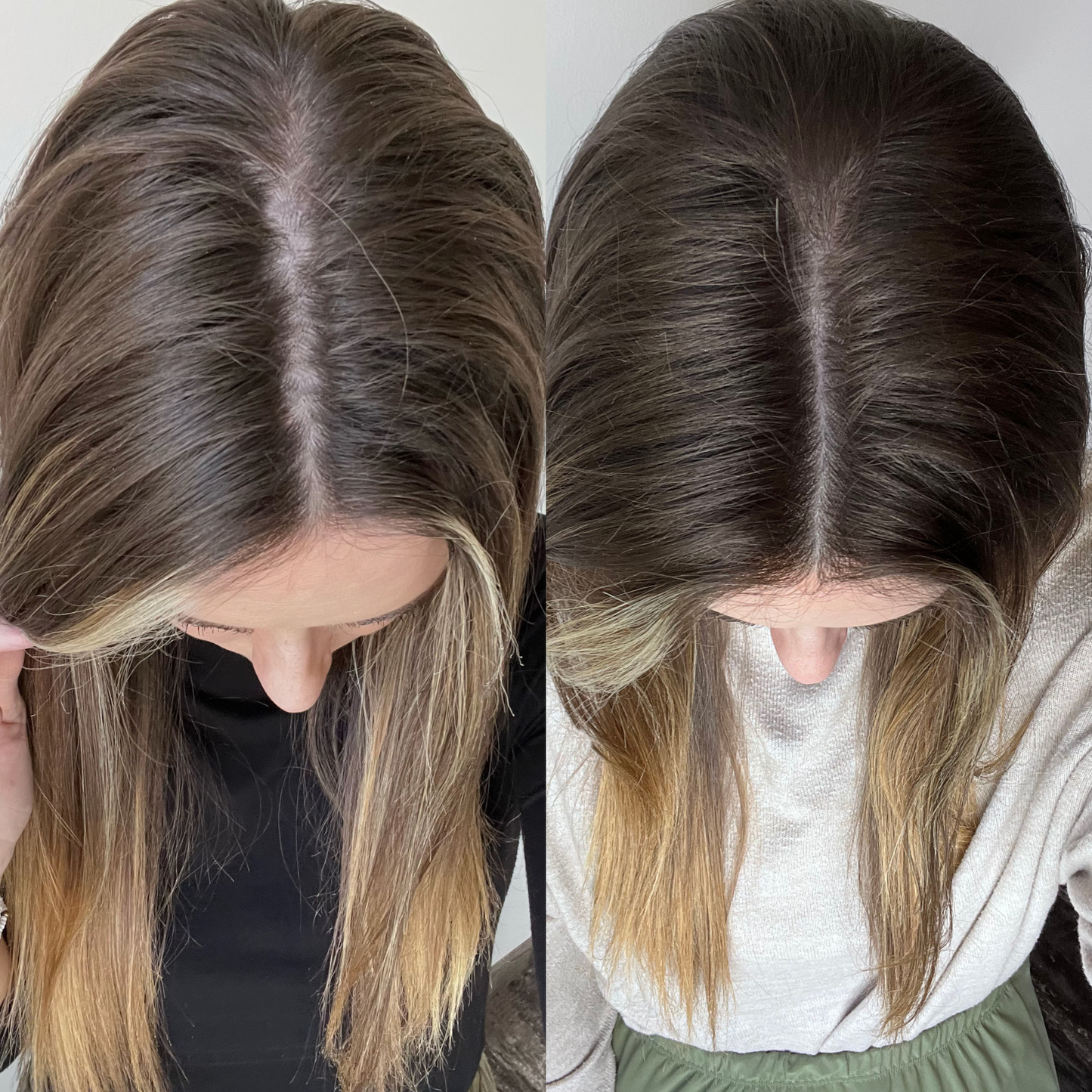
Telogen Effluvium Recovery Time: What to Expect & When


Telogen effluvium recovery time is the question that keeps countless women awake at night — and the honest answer is more nuanced than most articles admit. Shedding typically slows within three to six months of removing the trigger, yet full visible density can take considerably longer to restore. This guide walks you through exactly what to expect, month by month, and what you can do to support each stage of the process.
What Telogen Effluvium Actually Is
The hair follicle is not a passive structure. It cycles continuously through growth (anagen), transition (catagen), and rest (telogen) phases. Under normal circumstances, roughly 85–90% of your follicles are in anagen at any given moment, with only a small proportion resting and eventually shedding. Telogen effluvium (TE) occurs when a significant stressor — physical, nutritional, hormonal, or psychological — forces an abnormally large cohort of follicles to abandon anagen prematurely and enter telogen simultaneously.
The result is a wave of shedding that typically becomes noticeable two to four months after the triggering event, because that is how long the resting follicle takes to release the hair shaft. This delay is one of the most confusing aspects of TE: by the time you are filling the shower drain, the stressor that caused it may feel like ancient history. Common triggers include childbirth, rapid weight loss, surgery, severe illness, crash diets, significant emotional stress, and — particularly relevant for many women in the UK — hormonal shifts around perimenopause and menopause. Iron deficiency and low ferritin are also well-recognised contributors.
Crucially, TE is not the same as female pattern hair loss (androgenetic alopecia), although the two can coexist. TE is generally diffuse — you lose density across the whole scalp rather than in a defined pattern — and, provided the underlying cause is addressed, the follicles themselves remain intact and fully capable of re-entering anagen. That is the reason recovery is possible in the vast majority of cases.
The Recovery Timeline: Month by Month
There is no single universal timetable, but dermatology and trichology literature consistently describes a recognisable pattern for acute TE — that is, a single, identifiable trigger rather than an ongoing one. The table below summarises what most women can reasonably expect once the trigger has been resolved or adequately managed.
| Phase | Approximate Timing | What Is Happening | What You May Notice |
|---|---|---|---|
| Peak shedding | Months 2–4 post-trigger | Resting follicles releasing hairs in a concentrated wave | Alarming daily hair counts, reduced ponytail thickness |
| Shedding plateau | Months 3–5 | The wave of resting follicles is exhausted; fewer new ones entering telogen | Shedding feels consistent but may not worsen further |
| Shedding slowdown | Months 4–6 | Follicles begin re-entering anagen; new hairs start forming below the scalp surface | Daily shed count gradually decreasing |
| Early regrowth | Months 5–8 | New hairs emerge through the scalp; very fine at first | Short, wispy “baby hairs” visible along the hairline and parting |
| Density restoration | Months 9–18 | New hairs mature and thicken through successive anagen cycles | Visible improvement in volume; full recovery takes patience |
It bears repeating: these are general ranges based on the clinical picture described in trichological literature, not a guarantee. Women who experienced a short, sharp trigger — a single surgery or a bout of illness — tend to recover more predictably within this window. Those whose trigger was prolonged (months of chronic stress, untreated nutritional deficiency, or an unresolved hormonal imbalance) may find recovery is slower and less linear, sometimes with secondary shedding episodes.
Factors That Speed Up or Slow Down Recovery
Recovery from telogen effluvium is not passive. The speed and completeness of regrowth depend heavily on what is happening in your body during the recovery window. Think of it as giving the follicle either a favourable or an unfavourable environment in which to restart its growth cycle.
Nutritional status
Iron (specifically ferritin, the storage form) is consistently flagged by trichologists as one of the most important nutritional variables in TE recovery. Many women — particularly those who are vegetarian, have heavy periods, or have recently been through pregnancy — carry suboptimal ferritin levels that their GP may not flag as clinically anaemic but which are considered low by hair specialists. Similarly, vitamin D insufficiency is extremely common in the UK, and zinc, B vitamins (especially biotin and B12), and amino acid availability all influence how quickly follicles can sustain anagen. Getting a comprehensive blood panel and addressing specific deficiencies is a foundational step, not an optional extra.
Hormonal balance
For women in their thirties and beyond, hormonal fluctuation is a frequent co-trigger for TE. Declining oestrogen around perimenopause can reduce the follicle's ability to stay in anagen, making recovery from any stressor slower than it might have been a decade earlier. Postpartum hormonal shifts are another classic scenario. Addressing the hormonal picture — whether through lifestyle, supplementation, or medical support — materially affects the recovery environment. Our deeper guide on hair loss during menopause: what to do step by step covers this in detail.
Ongoing stress load
Cortisol, the primary stress hormone, has a directly disruptive relationship with the hair cycle. If the stressor that originally triggered your TE has not been resolved — or if new stressors have emerged — the follicles receive a continued signal to remain dormant. This is one of the main reasons some cases of TE drag on for twelve months or more. Managing the chronic stress load is not a soft, optional recommendation; it is mechanistically relevant to recovery speed.
Scalp environment
Blood flow to the scalp delivers the oxygen and nutrients that re-entering anagen follicles need. A congested or inflamed scalp — common with product build-up, hard water mineral deposits, or simple inactivity — is a less hospitable environment for regrowth. Physical scalp stimulation and keeping the scalp clean and healthy can make a measurable difference in this context.

How to Actively Support Regrowth
Once you have confirmed the diagnosis and addressed the root trigger, there are concrete, evidence-informed steps you can take to support the fastest possible recovery. None of these are magic — hair biology is fundamentally rate-limited — but they meaningfully improve the environment in which your follicles are trying to restart.
Targeted nutritional supplementation
A high-quality supplement formulated specifically for women's hair loss addresses several of the key nutritional pathways simultaneously. Lumeyr Women is designed precisely for this purpose, combining ingredients that support healthy follicle cycling, manage hormonal DHT sensitivity, and provide the micronutrients most commonly depleted in women experiencing TE. Unlike generic “hair, skin and nails” products, it is built around the specific biochemistry of female hair loss — a meaningful distinction when you are trying to support recovery rather than simply taking a multivitamin. For a broader look at nutritional options, our guide to female hair loss causes and treatments provides useful additional context.
Scalp health and circulation
Incorporating a scalp scrub into your weekly routine helps remove the mineral and product residue that can impede follicle function. The Revive + Restore Scalp Scrub is a practical tool for this — it gently exfoliates the scalp surface while supporting circulation. Pairing a scrub with a dedicated scalp massage routine (using a tool like the JUMBO Scalp Stimulator for five to ten minutes daily) has been shown in general trichological practice to support blood flow to the follicle bed and improve the scalp environment for regrowth.
Water quality
This is an underappreciated factor, particularly in the UK where a significant portion of the population — especially in London and the South East — lives in hard water areas. Calcium and magnesium ions in hard water bind to the hair shaft and scalp, contributing to dryness, scalp irritation, and potentially to follicle stress over time. Switching to a filtered showerhead can noticeably improve scalp condition during the recovery period. If you are curious about how hard water affects hair, our article on hard water and hair quality in the UK explores the evidence in depth.
Protein and dietary foundations
Hair is primarily composed of keratin, a protein. During any recovery phase, ensuring adequate dietary protein — generally at least 1–1.2 g per kilogram of bodyweight daily as a rough guide — gives the follicle the raw materials it needs to produce hair fibre. Caloric restriction or very low-fat diets should be avoided during recovery, as both can perpetuate or re-trigger shedding.

Ready to Support Your Recovery?
Lumeyr Women is built around the specific nutritional and hormonal pathways involved in female hair loss — including the recovery phase after telogen effluvium.
Shop Lumeyr Women →When It Becomes Chronic — and What to Do
Acute TE resolves on its own once the trigger is gone. Chronic telogen effluvium (CTE) is a different matter. Broadly defined as diffuse shedding that persists beyond six months, CTE is more common in women aged 30–60 and is frequently associated with an ongoing, unresolved trigger rather than a single discrete event. Common culprits include persistently low ferritin, undiagnosed thyroid dysfunction, ongoing psychological stress, and — in peri- and postmenopausal women — the sustained hormonal shift away from oestrogen dominance.
The frustrating reality of CTE is that it can feel stable — neither dramatically worsening nor meaningfully improving — for extended periods. Many women describe a sense of plateau that is demoralising precisely because the narrative of “it will get better in six months” has not played out. If this sounds familiar, the priority is investigation rather than simply waiting longer. A comprehensive blood panel (including full iron studies, thyroid function, vitamin D, B12, and hormonal markers) can identify whether an ongoing biological trigger is maintaining the shedding.
It is also worth noting that CTE and female pattern hair loss (FPHL) can and do coexist, and distinguishing between them requires clinical expertise. A trichologist or dermatologist can perform a trichoscopy or pull test to assess the proportion of resting versus growing hairs and determine whether follicle miniaturisation — the hallmark of FPHL — is also present. If you suspect pattern loss is a component, our guide to female pattern hair loss treatment options provides a thorough overview of what is available.
Frequently Asked Questions
How long does it take for hair to grow back after telogen effluvium?
For acute TE with a clearly resolved trigger, most women begin to see visible regrowth — typically short, fine “baby hairs” — within five to eight months of the trigger event. Full density restoration generally takes between nine and eighteen months, depending on individual factors including nutritional status, age, hormonal balance, and scalp health. There is no shortcut to this timeline because each hair has to grow from scratch, and anagen hair growth averages roughly one centimetre per month.
How do I know if my telogen effluvium is recovering?
The earliest and most reliable sign of recovery is a gradual reduction in daily shed count — this typically precedes visible regrowth by several weeks. Shortly after, you may notice short, wispy new hairs emerging at the hairline, temples, and along the parting. Your scalp may also start to feel less exposed in strong light. A trichologist can confirm recovery more objectively using a trichoscopy to measure the ratio of anagen to telogen hairs.
Can telogen effluvium last for years?
Acute TE generally resolves within six to twelve months. However, chronic telogen effluvium can persist for two or more years, particularly when an ongoing trigger — such as untreated iron deficiency, thyroid dysfunction, or chronic stress — has not been identified and addressed. If your shedding has continued for more than six months without clear improvement, a thorough medical investigation is the appropriate next step rather than further waiting.
What supplements help with telogen effluvium recovery?
The most important step is correcting any confirmed deficiencies — particularly iron/ferritin and vitamin D, which are commonly low in UK women. Beyond deficiency correction, supplements containing ingredients that support follicle cycling, reduce hormonal DHT sensitivity, and provide key building blocks for hair protein (such as zinc, biotin, and amino acid complexes) can help create a more favourable environment for recovery. A supplement formulated specifically for women's hair loss, such as Lumeyr Women, is more targeted than a generic multivitamin in this context.
Does stress make telogen effluvium recovery slower?
Yes. Elevated cortisol has a well-established disruptive effect on the hair cycle, pushing follicles towards the resting phase. If ongoing psychological or physiological stress is present during the recovery period, it can both slow the rate at which follicles return to anagen and, in some cases, trigger secondary shedding waves. Stress management is therefore not a peripheral concern during TE recovery — it is directly relevant to the speed and completeness of regrowth.
Should I see a doctor or a trichologist for telogen effluvium?
Ideally both. Your GP is best placed to order the blood panel needed to rule out underlying causes — thyroid issues, iron deficiency, hormonal imbalances — and to exclude other diagnoses. A trichologist can complement this with a clinical scalp assessment, trichoscopy, and personalised advice on the recovery process. If your GP is dismissive of hair loss concerns, seeking a private trichology consultation is a worthwhile investment.
Conclusion: Patience, Evidence, and the Right Support
Telogen effluvium recovery time is not a fixed number — it is a range shaped by your individual biology, the nature of the original trigger, and the steps you take during the recovery window. The reassuring truth is that in the vast majority of cases, the follicles are intact and capable of full recovery. The less reassuring truth is that hair biology is genuinely slow, and there is no shortcut to growing centimetres of new hair.
What you can control is the environment you give those follicles. Addressing nutritional gaps — especially ferritin and vitamin D — managing stress, keeping the scalp healthy, and choosing supplementation that is designed specifically for women's hair health are all meaningful, evidence-informed actions. If you are at the start of your recovery journey or finding progress frustratingly slow, Lumeyr Women is worth exploring as a targeted daily foundation. And if shedding continues beyond six months without improvement, please seek a clinical assessment — some causes of persistent TE require investigation that goes beyond lifestyle and supplementation alone.

This article follows our editorial & research standards. It is informational content, not medical advice.