Female Pattern Hair Loss Treatment Options: The Complete Guide

TL;DR
Female pattern hair loss (FPHL) is caused by follicular sensitivity to DHT and affects up to 50% of women by age 50. Minoxidil is the most clinically studied treatment available in the UK, while nutritional optimisation, scalp care, and lifestyle changes serve as essential supporting pillars. Early intervention offers the best chance of slowing progression and stimulating partial regrowth.
Key takeaways
- Minoxidil — applied topically or taken at low oral doses under medical supervision — is the most evidence-backed first-line treatment for FPHL currently available in the UK.
- Allow at least 4 to 6 months before judging whether any treatment is working; nutritional interventions such as correcting iron or vitamin D deficiency can require 6 to 12 months to show measurable improvement in hair density.
- Blood tests for serum ferritin, TSH, vitamin D, full blood count, and androgens (DHEAS, free testosterone) should be the first step before investing in any treatment, as correcting deficiencies alone can meaningfully improve shedding.
- Perimenopause and menopause accelerate FPHL in predisposed women because declining oestrogen removes its protective effect on follicles, increasing the relative androgenic load on the scalp — not because androgens actually rise.
- FPHL is classified by the Ludwig scale (Grades I–III) and the Sinclair scale; knowing your grade helps clinicians tailor treatment intensity and set realistic expectations for regrowth versus stabilisation.
- Hard water, prevalent across much of England, does not cause androgenetic alopecia but deposits minerals and increases oxidative stress on the scalp, worsening the visual appearance of thinning and compromising the follicular environment.
- Key nutrients most frequently cited in trichology for women with pattern hair loss include ferritin (stored iron), zinc, vitamin D, B vitamins, l-cysteine, l-lysine, and pumpkin seed oil, which shows emerging evidence for modulating DHT sensitivity.


Female pattern hair loss is the most common cause of hair thinning in women, yet it remains one of the least openly discussed. This guide covers every credible female pattern hair loss treatment option available in the UK today — from prescription medicines and evidence-informed supplements to scalp care and lifestyle changes — so you can make sense of your choices and start a protocol that actually fits your life.
What is female pattern hair loss?
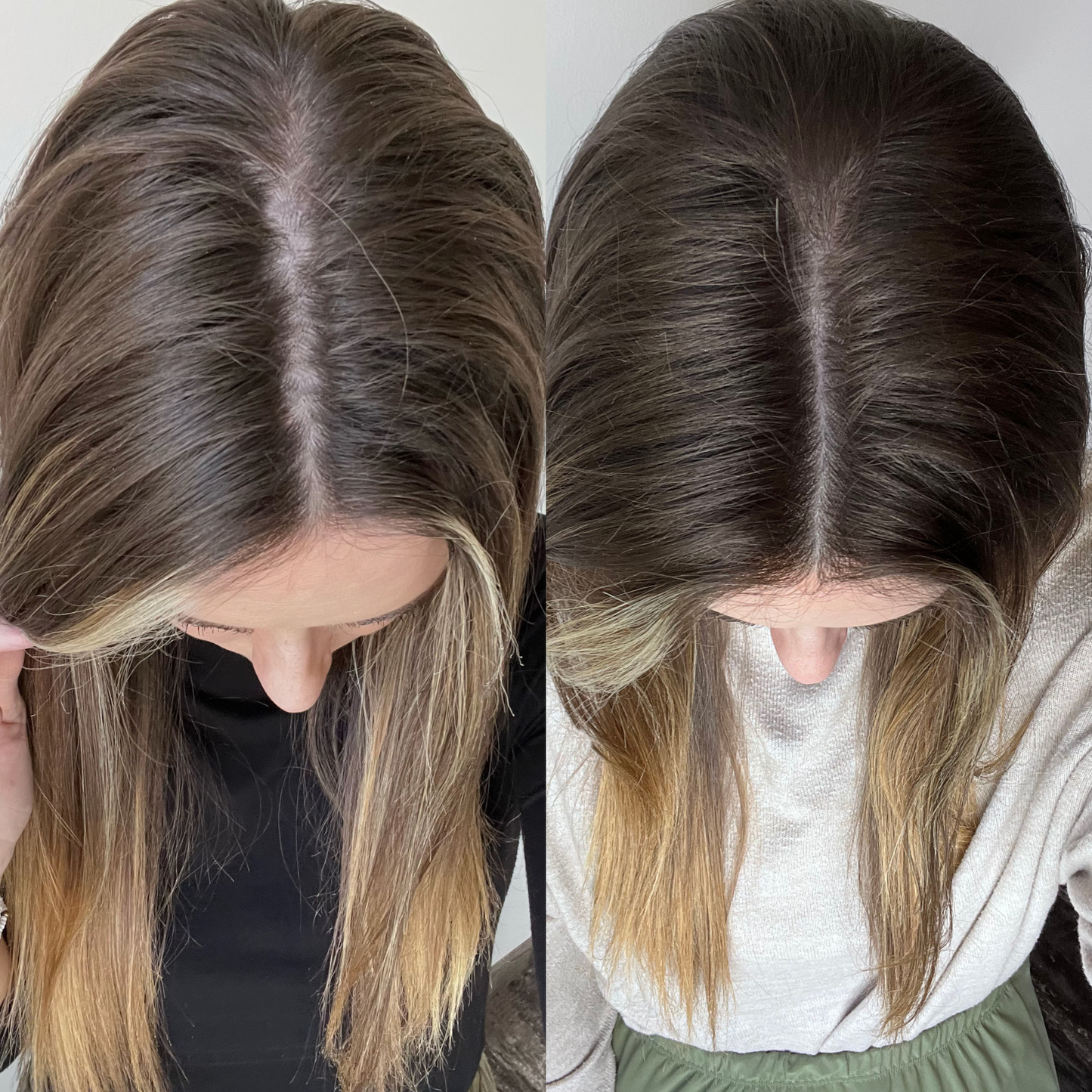
Female pattern hair loss (FPHL) — also called androgenetic alopecia in women — is a progressive condition in which hair follicles gradually miniaturise, producing finer and shorter strands until the follicle eventually becomes dormant. Unlike the dramatic receding hairline seen in men, FPHL typically presents as a diffuse thinning across the top of the scalp, a progressively wider parting, and a reduction in overall volume rather than complete baldness in a defined zone.
The Ludwig scale is the most widely used classification system for FPHL. Grade I describes a perceptible thinning on the crown with the frontal hairline largely intact; Grade II shows more pronounced diffuse thinning; and Grade III represents marked thinning across the top of the scalp. The Sinclair scale offers a slightly more detailed grading framework specifically developed for women. Understanding where you fall on these scales is useful when discussing options with a dermatologist or trichologist, because the approach to treatment does differ depending on severity and how long the condition has been progressing.
It is important to distinguish FPHL from other forms of hair loss that affect women. Telogen effluvium — a diffuse shedding often triggered by illness, crash dieting, surgery, or childbirth — can look very similar but is typically temporary. Alopecia areata produces patchy loss and has an autoimmune origin. Traction alopecia results from chronic pulling tension. Identifying the correct diagnosis is the essential first step before committing to any treatment strategy. For a broader overview, our guide to female hair loss causes and treatments in the UK is a useful starting point.
Causes and triggers in women
The root cause of female pattern hair loss is follicular sensitivity to dihydrotestosterone (DHT), a potent androgen derived from testosterone via the enzyme 5-alpha reductase. In women who are genetically predisposed, DHT binds to androgen receptors in the scalp follicle, progressively shortening the anagen (active growth) phase and lengthening the telogen (resting) phase. Over successive cycles, the follicle produces a thinner, shorter hair until it effectively stops growing altogether.
What makes FPHL in women more complex than in men is that it does not always correlate with elevated androgen levels in the blood. Many women with FPHL have entirely normal hormone panels. The sensitivity lies at the follicle itself, inherited through genes from either parent. That said, conditions involving elevated androgens — polycystic ovary syndrome (PCOS), congenital adrenal hyperplasia, or certain hormonal tumours — can accelerate FPHL dramatically, which is why a blood panel is a worthwhile step at diagnosis.
Perimenopause and menopause are the periods when many women first notice significant thinning. As oestrogen and progesterone decline, the relative proportion of androgens increases, and the protective effect that oestrogen had on follicles diminishes. This hormonal recalibration does not cause FPHL where there was no predisposition, but it accelerates the process in those who were already vulnerable. For a detailed look at this hormonal intersection, see our dedicated article on hair loss during the menopause and what to do about it.
Additional contributing factors include:
- Nutritional deficiencies — particularly low ferritin (stored iron), vitamin D, and zinc, all of which are common in UK women
- Chronic psychological stress — sustained cortisol elevation can push follicles into telogen prematurely
- Thyroid dysfunction — both hypothyroidism and hyperthyroidism can cause diffuse shedding that overlaps with FPHL
- Scalp inflammation — seborrhoeic dermatitis and folliculitis create a hostile environment for healthy hair cycling
- Hard water exposure — prevalent across much of England, the mineral deposits in hard water can oxidise and weaken the hair shaft, worsening the appearance of thinning
How female pattern hair loss is diagnosed
Diagnosis of FPHL in the UK typically begins with your GP, who will take a full history, examine the scalp, and organise blood tests to rule out contributing or alternative causes. If the picture is unclear, or if first-line treatment is not producing results, referral to a consultant dermatologist with a sub-speciality in trichology is the recommended pathway. NHS waiting times can be lengthy for non-urgent dermatology, which is why many women choose to see a private trichologist or dermatologist.
A trichologist will typically perform a trichoscopy — a dermoscopic examination of the scalp using magnification — to look for the characteristic signs of FPHL: follicular miniaturisation, perifollicular pigmentation, an increased ratio of vellus to terminal hairs, and a reduction in follicular unit density at the crown compared with the occiput. In some cases a scalp biopsy is taken for histological analysis, particularly when the clinical picture is ambiguous.
Pull tests, wash tests, and photographic documentation at standardised angles are used to establish a baseline and monitor progress over time. It is worth requesting these even at a private consultation, because tracking change objectively is the only reliable way to assess whether a treatment is working — subjective perception of hair density is notoriously unreliable and influenced by lighting, styling, and mood.
Clinical and prescription treatment options
Understanding the clinical landscape is essential before exploring any treatment. The options below range from well-established medicines with decades of evidence to newer procedural approaches. None are a cure; the goal is stabilisation and, where possible, partial regrowth.
Topical minoxidil
Minoxidil is the only topical medicine with robust, replicated clinical evidence for FPHL and is available over the counter in the UK in a 2% solution. It works by prolonging the anagen growth phase and widening blood vessels around the follicle, improving nutrient delivery. The 5% foam formulation (licensed for men) is also used off-label in women and is often preferred because it is less likely to cause the facial hair that the 2% solution occasionally triggers when it drips onto the face during application. Studies consistently suggest that 4 to 6 months of twice-daily use is required before any improvement is visible, and treatment must continue indefinitely — cessation leads to reversion within 3 to 6 months.
Oral minoxidil (low dose)
Low-dose oral minoxidil — typically 0.25 mg to 1 mg daily in women — has gained significant traction in trichology practice over recent years as an off-label prescription option. Several published case series and trials suggest it may be at least as effective as topical application and considerably more convenient for patients who struggle with the twice-daily topical routine. Side effects at these low doses are generally mild but can include fluid retention, initial increased shedding, and — in a minority — unwanted facial hair. It requires a GP or dermatologist prescription and monitoring, particularly in women with any cardiovascular history.
Anti-androgen therapies
Because DHT sensitivity is central to FPHL, anti-androgen medicines are a logical therapeutic approach. Spironolactone, originally a diuretic, has anti-androgenic properties and is used off-label in the UK for FPHL at doses typically ranging from 50 mg to 200 mg daily. Finasteride (a 5-alpha reductase inhibitor) is licensed for male androgenetic alopecia but is used off-label in post-menopausal women. Both require prescription and ongoing monitoring. Neither should be used by women of childbearing potential who are not using reliable contraception, due to the risk of feminisation of a male foetus.
Cyproterone acetate, available in the UK as part of co-cyprindiol (a combined oral contraceptive), is another option discussed with premenopausal women whose FPHL coincides with signs of hyperandrogenism such as acne and hirsutism. The decision to prescribe is nuanced and always sits with a clinician.
Platelet-rich plasma (PRP) therapy
PRP involves drawing a small amount of the patient’s blood, centrifuging it to concentrate the growth-factor-rich plasma, and injecting this directly into the scalp. The growth factors are thought to stimulate dormant follicles and extend anagen. Evidence is accumulating, with studies generally suggesting 3 to 6 monthly sessions to establish results, followed by maintenance injections. It is not available on the NHS and costs in the UK typically range from £300 to £600 per session at a reputable clinic. Results are highly variable between individuals.
Low-level laser therapy (LLLT)
LLLT devices — combs, caps, or helmets emitting red light at around 650 nm — are cleared medical devices in several jurisdictions and have a body of clinical evidence supporting modest improvements in hair density. They are thought to improve mitochondrial function and micro-circulation in the follicle. They are safe, painless, and available for home use, although consistent use (typically 3 to 4 times per week over several months) is required to see any effect.

| Treatment | Availability in UK | Evidence level | Typical timeline | Key consideration |
|---|---|---|---|---|
| Topical minoxidil 2% | OTC (pharmacy) | Strong (RCTs) | 4–6 months minimum | Must continue indefinitely; cessation reverses gains |
| Oral minoxidil (low dose) | Prescription only | Growing (case series, trials) | 4–6 months minimum | Cardiovascular monitoring; facial hair risk |
| Spironolactone | Prescription only (off-label) | Moderate (observational) | 6–12 months | Not for women trying to conceive |
| Finasteride | Prescription only (off-label, post-menopausal) | Moderate | 6–12 months | Contraindicated in women of childbearing potential |
| PRP therapy | Private clinics | Emerging (variable) | 3–6 sessions over 6 months | £300–£600 per session; results vary |
| LLLT devices | Available to buy | Moderate (device trials) | 3–6 months of regular use | Requires strict consistency; modest effect size |
Nutritional support and supplements for female pattern hair loss
No supplement can block DHT as powerfully as a pharmaceutical anti-androgen, but that does not mean nutrition is irrelevant to FPHL. The follicle is one of the most metabolically active structures in the body — it divides rapidly during anagen, and it requires a steady supply of micronutrients to do so. When the nutritional environment is suboptimal, an already-compromised follicle is placed under additional stress, accelerating the thinning that genetic predisposition has set in motion.
The most clinically relevant nutritional areas for women with FPHL are:
Iron and ferritin
Low ferritin (the body’s iron storage protein) is remarkably common in UK women of reproductive age, and it is consistently cited in trichology literature as a factor that worsens FPHL. Many GPs use a serum ferritin threshold that is too low for optimal hair growth; some trichologists suggest that ferritin levels below 70 μg/L can impair the hair cycle even when haemoglobin is within the normal range. Dietary iron from red meat, legumes, and dark leafy vegetables should be prioritised, and supplementation may be appropriate where diet alone is insufficient — always guided by a test result rather than assumption.
Vitamin D
Vitamin D receptors are expressed in the hair follicle, and studies consistently observe an association between low vitamin D levels and various forms of hair loss. The UK’s northerly latitude, combined with an indoor working culture, means deficiency is extremely common, particularly between October and March. Public Health England recommends that adults consider supplementing with 10 micrograms (400 IU) daily during winter months; many practitioners suggest higher doses are warranted where deficiency is confirmed.
Pumpkin seed oil
Pumpkin seed oil has attracted considerable scientific interest as a naturally occurring modulator of 5-alpha reductase activity, the enzyme that converts testosterone to DHT. Studies suggest that regular supplementation over a period of 16 to 24 weeks may produce measurable benefits in hair density. It is considered a well-tolerated, low-risk option with a growing evidence base. For a detailed breakdown of the science, dosing, and what to look for in a product, read our comprehensive guide on pumpkin seed oil for women’s hair growth. Lumeyr’s Pumpkin Seed Oil Softgels deliver a standardised dose in a convenient daily capsule.
B vitamins, zinc, and amino acids
Biotin is the most commercially famous hair nutrient, but its benefit is primarily meaningful in people who are actually deficient — a state that is less common than supplement marketing suggests. Zinc plays a role in follicular cell division and sebum regulation; deficiency is associated with telogen effluvium. The amino acids l-cysteine and l-lysine are among the primary structural building blocks of the keratin protein that forms the hair shaft, and ensuring adequate dietary or supplemental intake supports healthy follicle production.
A well-formulated multi-nutrient supplement designed specifically for women with hair loss concerns removes the guesswork of combining multiple individual products. Lumeyr Women is formulated with a targeted combination of these nutrients — including pumpkin seed oil, zinc, vitamin D, and B vitamins — with dosages aligned to the needs of women experiencing hormonally-driven or nutritionally-accelerated hair thinning. For those who prefer a different format, the Hair Skin Nails Gummies offer a complementary approach with a gummy delivery system that suits women who find capsules difficult to take consistently.

Try Lumeyr Women — Designed for Female Pattern Hair Loss
A targeted daily supplement formulated for women, combining pumpkin seed oil, zinc, vitamin D, and key B vitamins to support the nutritional environment your follicles need.
Shop Lumeyr Women →Scalp health: the underestimated factor in female pattern hair loss
The scalp is not merely a platform from which hair grows — it is a living skin ecosystem, and the condition of that ecosystem directly influences the quality and longevity of every hair cycle. In women with FPHL, two scalp-level issues frequently compound the genetic and hormonal picture: chronic low-grade inflammation around the follicle opening, and impaired micro-circulation that reduces the supply of oxygen and nutrients reaching the dermal papilla at the base of the follicle.
Scalp inflammation and sebum build-up
Excess sebum, product build-up, and colonisation of the scalp by Malassezia yeast are common contributors to perifollicular inflammation. This inflammation is now recognised as a factor that can accelerate miniaturisation in genetically susceptible follicles, essentially worsening the FPHL process independently of DHT. Regular scalp exfoliation — using a gentle physical or enzymatic scrub — helps clear away dead skin cells, excess sebum, and product residue, restoring a healthier environment for the follicle. The Revive + Restore Scalp Scrub is formulated to provide this action without disrupting the scalp’s natural pH or stripping essential moisture.
Scalp stimulation and micro-circulation
Mechanical stimulation of the scalp through massage or specialist tools has a body of evidence suggesting it can improve localised blood flow and, over time, modestly influence hair thickness. Studies suggest consistent scalp massage over 20 to 24 weeks can produce measurable changes in hair shaft diameter. The JUMBO Scalp Stimulator is designed for use during washing or as a dry massage tool, delivering consistent pressure across the scalp in a way that manual fingertip massage struggles to replicate uniformly.
Water quality and the scalp
Approximately 60% of England is supplied with hard water, which contains elevated levels of calcium and magnesium carbonates. These minerals do not directly cause FPHL, but they deposit on the scalp and hair shaft, create a film that resists effective cleansing, and introduce oxidative stress that weakens already-fine hair. For women with thinning hair, this is a meaningful aggravating factor. Installing a filtered showerhead that removes these minerals and chlorine can noticeably improve hair texture and scalp comfort. The Lumeyr Filtered Showerhead™ is designed specifically to address this, filtering out the minerals and chemicals that compromise scalp health with every wash.

Lifestyle and environmental factors that influence female pattern hair loss
No lifestyle change will override a strong genetic predisposition to FPHL, but the lifestyle context within which you manage the condition can meaningfully influence its speed of progression, the quality of hair you retain, and how well any treatment works. The following areas are supported by a reasonable evidence base.
Stress management
Sustained psychological stress elevates cortisol, which can disrupt the hair cycle by prematurely triggering telogen in follicles that would otherwise remain in active growth. In women with FPHL, this stress-induced shedding layered on top of the ongoing androgen-driven miniaturisation can make hair loss feel suddenly and dramatically worse. Practices shown to reduce cortisol over time include regular moderate-intensity exercise, adequate sleep (consistently under 6 hours is associated with elevated cortisol), and structured relaxation practices such as mindfulness or breathing exercises. For more on the connection between stress and shedding, our article on hair loss caused by stress and how to stop it covers this in depth.
Diet and blood sugar regulation
A diet that chronically spikes blood sugar promotes insulin resistance, which in turn drives up androgen production in women (particularly relevant in PCOS). A diet rich in lean protein, complex carbohydrates, healthy fats, and anti-inflammatory foods supports hormonal balance and provides the building blocks the follicle needs for each growth cycle. Extreme calorie restriction — crash dieting — is a well-established trigger for telogen effluvium and should be avoided by women who are already experiencing FPHL.
Hairstyling practices
Heat styling, tight braiding, ponytails, and extensions all create mechanical stress on already-weakened follicles. While these practices do not cause FPHL, they can accelerate apparent thinning in the fronto-temporal and parietal areas where FPHL commonly concentrates. A period of low-manipulation styling while a treatment protocol is being established is generally advisable. Using a Collagen Hair Mask regularly can strengthen the existing hair shaft, reducing breakage and improving the overall appearance of density in the interim.
Sleep and circadian rhythm
The hair follicle operates on a circadian rhythm of its own, and there is evidence that chronic sleep disruption impairs the regulation of the hair cycle. Growth hormone — which supports cell proliferation in the follicle — is primarily secreted during deep sleep. Prioritising consistent, high-quality sleep is not a glamorous intervention, but it is a genuinely useful one for supporting hair health alongside more targeted treatments.
Building your female pattern hair loss treatment protocol
The most effective approach to FPHL is almost never a single intervention — it is a layered protocol that addresses the condition from multiple angles simultaneously. Here is how to think about constructing yours.
Step one: get the right diagnosis and baseline tests
Before spending anything, confirm the diagnosis and identify any correctable contributing factors through blood tests. Treating a ferritin deficiency or vitamin D deficiency costs relatively little and can produce noticeable improvements. Knowing your baseline — with photographs — also allows you to assess progress objectively over time.
Step two: choose a primary treatment
For most women without contraindications, topical minoxidil is the logical starting point given its accessibility, established evidence, and OTC availability. Women who are post-menopausal, or who are under medical supervision, may discuss anti-androgen options or low-dose oral minoxidil with their clinician. This is the foundation of the protocol.
Step three: support with nutrition
Correct any deficiencies identified by blood tests through diet and targeted supplementation. A comprehensive women’s hair supplement such as Lumeyr Women simplifies this by combining the most relevant nutrients in a single daily format. Allow 3 to 6 months before assessing whether nutritional optimisation is contributing to improvement.
Step four: optimise the scalp environment
Introduce a weekly scalp exfoliation routine, a daily or regular scalp massage practice, and — if you live in a hard water area — a filtered showerhead. These interventions create the best possible environment for your primary treatment to work. They are low-cost, low-risk, and have compounding benefits over time.
Step five: address lifestyle factors
Reduce chronic stress where possible, prioritise sleep, eat a nutrient-dense diet, and minimise aggressive heat and tension styling. These changes support every other layer of the protocol.

| Protocol layer | What to do | When to expect change | Lumeyr tool |
|---|---|---|---|
| Medical foundation | GP blood panel; confirm FPHL diagnosis; consider topical minoxidil or referral | Ongoing — 4–6 months for minoxidil response | — |
| Nutritional support | Correct deficiencies; comprehensive hair supplement | 3–6 months | Lumeyr Women |
| Scalp exfoliation | Weekly gentle scrub to clear build-up and reduce inflammation | 2–4 weeks (scalp comfort) | Revive + Restore Scalp Scrub |
| Scalp stimulation | Daily 5-minute massage with stimulator tool | 20–24 weeks for hair diameter change | JUMBO Scalp Stimulator |
| Water quality | Filter minerals and chlorine from shower water | Immediate (texture improvement) | Lumeyr Filtered Showerhead™ |
| Hair shaft integrity | Weekly conditioning mask to reduce breakage | 2–4 weeks | Collagen Hair Mask |
| Lifestyle | Stress reduction, sleep optimisation, anti-inflammatory diet | Ongoing — benefits accumulate | — |
Start Your Protocol with the Lumeyr Women Bundle
Combine Lumeyr Women with scalp care tools in one convenient bundle — everything you need to build a comprehensive, consistent protocol for female pattern hair loss.
Shop the Bundle →Frequently asked questions about female pattern hair loss treatment
What is the most effective treatment for female pattern hair loss in the UK?
Minoxidil (applied topically or taken orally at low dose under medical supervision) remains the most widely clinically studied option available in the UK. Nutritional support, scalp health, and stress management are considered complementary approaches that reinforce results from a primary treatment. A layered protocol addressing multiple contributing factors consistently outperforms any single intervention used in isolation.
How long does it take to see results from female pattern hair loss treatment?
Most clinicians advise allowing at least 4 to 6 months of consistent treatment before assessing whether a therapy is working. Nutritional interventions often require 6 to 12 months to produce their full effect. Hair growth is inherently slow — the follicle’s anagen cycle moves at approximately 1 cm per month at best — and patience is a non-negotiable part of any protocol. Taking dated photographs under consistent lighting at the start of treatment is the most reliable way to track change over time.
Can female pattern hair loss be reversed?
Complete reversal is not typically achievable once follicles have miniaturised significantly or become permanently dormant. However, early intervention can meaningfully slow progression, stabilise shedding, and in many cases stimulate partial regrowth in follicles that are still active. This is one of the strongest arguments for seeking diagnosis and starting a protocol as early as possible, rather than waiting to see if the problem resolves on its own.
Is female pattern hair loss linked to hormones?
Yes. Female pattern hair loss is associated with genetic sensitivity of follicles to androgens, particularly dihydrotestosterone (DHT). This sensitivity is inherited and can come from either parent. Hormonal shifts during perimenopause and menopause often accelerate the process because declining oestrogen reduces its protective effect on follicles, allowing the relative androgenic influence to increase even when androgen levels themselves are not elevated.
Are hair loss supplements safe for women?
Well-formulated hair supplements using recognised nutrients at sensible doses are generally considered safe for healthy adults. However, some ingredients (such as high-dose biotin, which can interfere with thyroid and cardiac blood test results, or saw palmetto, which may interact with anticoagulants) warrant care. Always consult a GP or pharmacist if you are pregnant, breastfeeding, taking prescription medication, or managing a diagnosed health condition before starting any new supplement.
Does hard water make female pattern hair loss worse?
Hard water does not cause androgenetic alopecia, but the mineral deposits and oxidative stress it introduces can worsen the appearance of thinning hair and compromise scalp health by creating a hostile environment for the follicle’s micro-environment. For women who already have FPHL, using a filtered showerhead and a clarifying scalp scrub to reduce this mineral burden is a sensible, low-cost protective measure. Our article on hard water and hair quality in the UK explores this topic in depth.
What nutrients are most important for women with pattern hair loss?
Iron (specifically ferritin levels), vitamin D, zinc, B vitamins including biotin, and the amino acids l-cysteine and l-lysine are among the most frequently cited in trichology literature. Pumpkin seed oil has also attracted growing research interest for its potential role in modulating DHT sensitivity via 5-alpha reductase inhibition. Addressing genuine deficiencies in these areas can make a tangible difference to FPHL progression, particularly when the deficiency has been a contributing accelerant.
When should I see a doctor about female pattern hair loss?
You should see your GP if shedding is sudden and severe, if you notice clearly patchy loss (which could indicate alopecia areata rather than FPHL), if hair loss is accompanied by other symptoms such as fatigue, weight change, irregular periods, or acne, or if over-the-counter and lifestyle approaches have not produced any stabilisation after six months. Earlier intervention generally leads to better outcomes with FPHL, so there is no benefit in delaying a medical conversation.
For women experiencing hair loss during the menopause transition, our guide on hair loss after menopause: UK solutions that actually work offers additional insights into hormonal causes and targeted treatments.
For many women experiencing hair thinning, addressing nutritional deficiencies is a crucial first step, which is why our guide on best vitamins for thinning hair 2026 complements the wider range of treatment options available.
For those whose hair loss is linked to hormonal imbalances, it's worth exploring PCOS hair loss treatment options for women, as polycystic ovary syndrome is a common underlying cause of female pattern hair loss.
To complement medical treatments for female pattern hair loss, maintaining a healthy scalp through proper cleansing routines is essential, and you can learn more about this in our guide on how often you should use a scalp scrub in the UK.
Conclusion
Female pattern hair loss is a chronic, progressive condition with no single cure — but it is far from untreatable. The evidence base available to women in the UK today spans from well-established pharmaceutical options to evidence-informed nutritional strategies, scalp health tools, and environmental modifications that collectively create a far more favourable context for hair retention and regrowth.
The most important things to take away from this guide are these: get a proper diagnosis early, identify and correct any nutritional deficiencies before investing heavily in other interventions, and build a layered protocol that addresses the condition from multiple angles rather than placing all your hope in a single product or treatment. Consistency over months, not intensity over weeks, is what determines outcomes in FPHL.
If you are in the early stages of addressing female pattern hair loss, beginning with a comprehensive daily supplement such as Lumeyr Women — while simultaneously improving your scalp health routine and booking a GP appointment to rule out correctable deficiencies — is a practical, evidence-informed starting point that does not require a prescription and can be implemented today.
For additional reading, our detailed overview of female alopecia causes and treatments and our evidence guide to vitamins for women’s hair loss offer deeper dives into the specific areas touched on throughout this article.
Frequently asked questions
What is the best treatment for female pattern hair loss in the UK? +
Minoxidil remains the most widely clinically studied option for FPHL available in the UK, whether used topically or at low oral doses under a doctor's guidance. Addressing nutritional deficiencies — especially ferritin and vitamin D — alongside scalp care forms an important complementary foundation that can significantly reinforce results.
How long does female pattern hair loss treatment take to work? +
Most clinicians recommend assessing any treatment after a minimum of 4 to 6 months of consistent use. Nutritional corrections often require 6 to 12 months before visible density changes appear, because the hair growth cycle itself is inherently slow.
Can female pattern hair loss be reversed or stopped? +
Once follicles have significantly miniaturised, full reversal is unlikely. However, starting treatment early can slow or halt progression, and follicles that are still partially active may respond with measurable regrowth. Stabilisation is a realistic and worthwhile goal even when complete reversal is not possible.
Why does female pattern hair loss get worse during menopause? +
As oestrogen and progesterone decline during perimenopause and menopause, the protective effect oestrogen had on scalp follicles diminishes, and the relative androgenic influence increases. Women with a genetic predisposition to follicular DHT sensitivity experience an acceleration of the miniaturisation process during this hormonal shift.
What blood tests should I ask for if I think I have female pattern hair loss? +
A useful baseline panel includes serum ferritin, full blood count, TSH (thyroid), vitamin D, DHEAS, and free testosterone. These tests can identify treatable contributors — such as iron deficiency or thyroid dysfunction — that may be driving shedding independently of or alongside androgenetic alopecia.
Is female pattern hair loss hereditary? +
Yes, the genetic predisposition for follicular sensitivity to DHT can be inherited from either parent. However, having the genes does not guarantee significant hair loss; hormonal changes, nutritional status, and scalp environment all influence whether and how quickly the condition progresses.
When should a woman with hair thinning see a doctor rather than treating it herself? +
Seek medical advice if shedding is sudden or severe, if loss appears in distinct patches rather than diffusely, if hair loss is accompanied by fatigue, weight changes, or irregular periods, or if over-the-counter approaches have produced no improvement after six months of consistent use.
Do hair loss supplements actually work for female pattern hair loss? +
Supplements cannot replace medical treatments for androgenetic alopecia, but correcting deficiencies in nutrients such as iron, zinc, vitamin D, and specific amino acids can materially improve the scalp environment and reduce shedding caused by nutritional gaps. Formulas containing ingredients like pumpkin seed oil also show emerging evidence for DHT modulation, though they are considered a supportive rather than standalone approach.
This article follows our editorial & research standards. It is informational content, not medical advice.