How Often Should You Use a Scalp Scrub? A UK Guide


Knowing how often to use a scalp scrub in the UK is trickier than it sounds — hard water, hormonal shifts, and seasonal changes all alter what your scalp actually needs from one week to the next. This guide cuts through the noise so you can build a routine that works in real life, not just on paper.
Why Scalp Exfoliation Actually Matters
Your scalp sheds dead skin cells continuously — roughly every 28 days for the average adult, though this cycle can speed up or slow down depending on hormones, diet, and environment. When those cells accumulate faster than your regular shampoo can remove them, they mix with sebum, styling product residue, and (in much of England) hard-water mineral deposits to form a dense, almost film-like layer across the follicle opening.
That build-up is more than a cosmetic inconvenience. A congested follicle environment can disrupt the scalp's natural microbiome balance, create inflammation at the follicle mouth, and reduce the efficiency with which topical treatments — serums, oils, or medicated products — can actually penetrate the skin. Think of it like trying to water a plant through a layer of cling film.
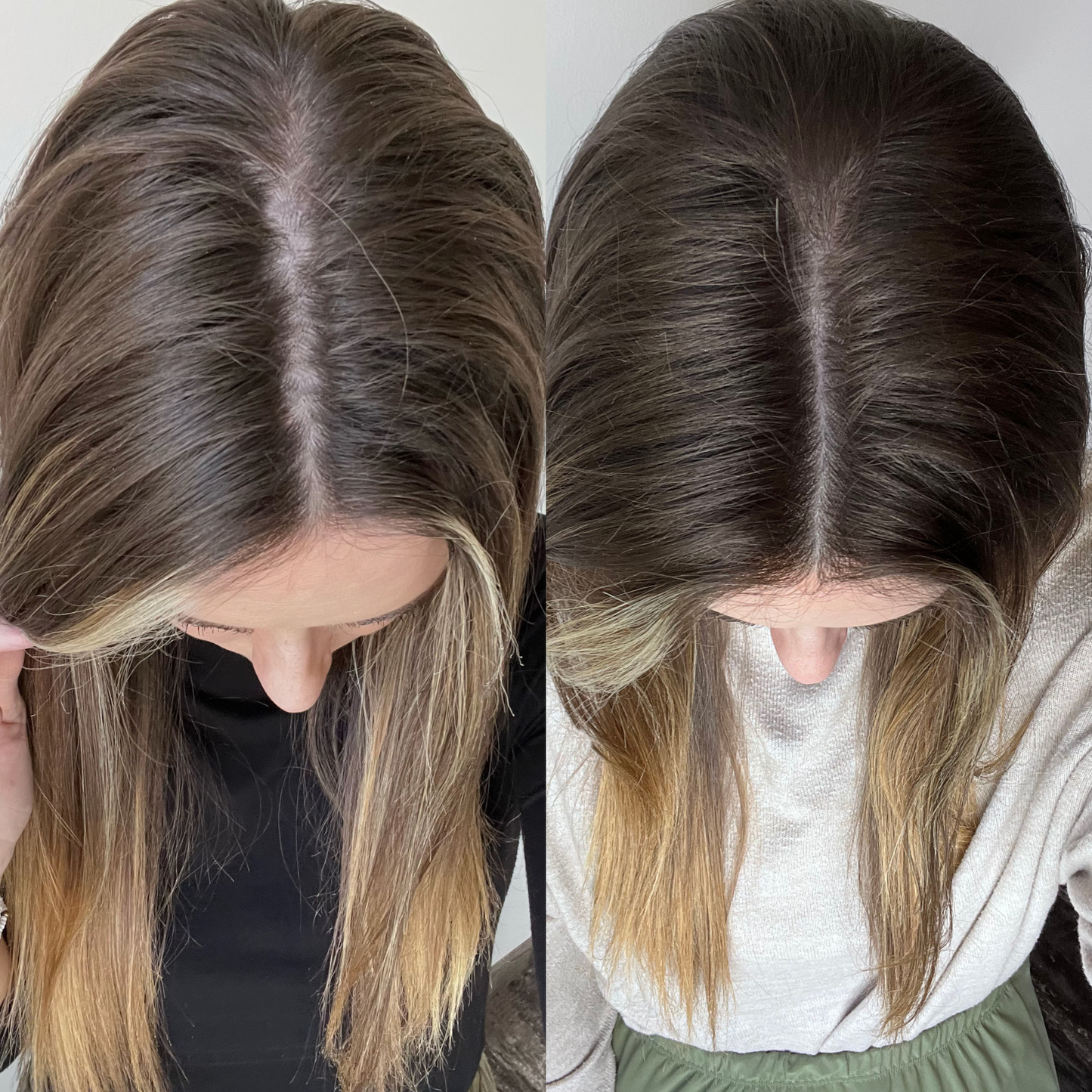
A well-formulated physical or chemical scalp scrub dissolves and lifts that congestion, leaving the follicles clear. The result most women notice first is that their hair looks cleaner for longer between washes. Over weeks, many also report reduced itching, a calmer scalp, and noticeably improved hair texture at the roots — which is exactly where it counts if you're concerned about thinning or shedding.
How Often to Use a Scalp Scrub by Scalp Type
There is no single universal answer to how often you should scrub, because the ideal frequency is deeply personal. The most reliable starting point is your scalp type, combined with how your scalp behaves between washes. The table below gives evidence-informed general ranges used by trichologists and used as a baseline when advising clients:
| Scalp Type | Recommended Frequency | Key Signs It's Time to Scrub |
|---|---|---|
| Oily / Seborrheic tendency | Once a week | Greasy roots within 24–48 hrs of washing; visible flakes that look waxy or yellow |
| Normal / Balanced | Every 10–14 days | Dullness at the roots; mild itching; product not absorbing well |
| Dry / Sensitive | Once every 2–3 weeks | Fine, powdery flakes; scalp feels tight after washing; redness after product use |
| Colour-treated hair | Once every 2–3 weeks max | Colour fading faster than usual; scalp itching after dyeing |
| Postpartum / Hormonal shift | Every 10–14 days initially | Increased shedding clumps at roots; notable shift in scalp oiliness |
These are starting ranges, not rules. The best approach is to begin at the more conservative end for your type and observe how your scalp responds over four to six weeks before moving to a higher frequency. Most women find their sweet spot within two to three wash cycles.

Uniquely UK Factors That Change the Equation
If you live anywhere in South East England, the East Midlands, or East Anglia, you are almost certainly washing your hair in hard water. The Thames Water and Anglian Water supply areas consistently register water hardness above 200 mg/l of calcium carbonate — well above the 60 mg/l threshold that starts to affect hair and scalp. That mineral load does not simply rinse away; it bonds to the hair cuticle and accumulates on the scalp surface over time, compounding the natural build-up your follicles produce on their own.
The practical consequence is that women in hard-water postcodes may need to exfoliate closer to the upper end of their type's frequency range. If you wash your hair every other day in London and notice persistent dullness and an itchy scalp despite regular shampooing, the water is a significant contributor — not a sign that your shampoo is failing. You can read more about this specific issue in our article on hard water and hair quality in the UK.
Seasonality is the other major UK-specific variable. During winter, central heating dramatically reduces indoor humidity, which dries the scalp and can trigger reactive sebum overproduction. Many women find they need to scrub more frequently from November through February, then scale back in spring. Conversely, summer humidity — even the mild British variety — can mean oilier roots and a slightly shorter interval between sessions.
Hormonal life stages matter enormously too. Perimenopause, postpartum recovery, and the weeks surrounding a change in contraception can all shift scalp oiliness unpredictably. During these periods, rather than sticking rigidly to a set schedule, it helps to check in with your scalp visually every few days and scrub when you notice the early signs of congestion rather than waiting for a fixed date on the calendar.
How to Use a Scalp Scrub Correctly
Even the best scrub will underdeliver — or worse, cause irritation — if the technique is off. The process is simpler than most people assume, but a few details make a meaningful difference to results.
Step-by-step method
- Pre-rinse your hair with lukewarm water for 30–60 seconds to open the follicle and soften any surface debris.
- Section your hair into four loose quadrants using your fingers or a wide-tooth comb. This ensures you reach the full scalp rather than just the top layer of hair.
- Apply the scrub directly to the scalp — not to the lengths — working through each section. For the Lumeyr Revive + Restore Scalp Scrub, a 5p-coin-sized amount per section is typically sufficient.
- Massage with your fingertips using small circular motions for 3–5 minutes. Avoid fingernails entirely — they break the skin barrier and introduce bacteria.
- Leave for 1–2 minutes if the formula includes active ingredients (such as salicylic acid or botanical enzymes) that benefit from a short dwell time.
- Rinse thoroughly until the water runs clear, then follow with your usual conditioner on the lengths only.
For an enhanced experience, consider pairing the scrub with a dedicated tool. The Lumeyr JUMBO Scalp Stimulator helps distribute the product evenly while providing consistent, gentle mechanical exfoliation across the entire scalp — particularly useful if you have thick or layered hair where fingertip access is limited.
Ready to Reset Your Scalp?
The Lumeyr Revive + Restore Scalp Scrub is formulated specifically for the UK scalp environment — hard water build-up, seasonal shifts, and all.
Shop the Scalp Scrub →Signs You Need to Adjust Your Frequency
Your scalp will tell you when the frequency is wrong — you just need to know what to look for. Over-exfoliation and under-exfoliation produce distinct but sometimes overlapping signals, and knowing the difference prevents you from overcorrecting in the wrong direction.
You may be scrubbing too often if you notice:
- Scalp that feels raw, tight, or stings during washing
- Redness or micro-irritation visible along the parting line
- Hair that feels rougher or more prone to static than usual
- An increase in shedding immediately after scrubbing (more than 50–100 hairs per session)
You may not be scrubbing enough if you notice:
- Persistent scalp itch that returns within a day or two of shampooing
- Hair that looks greasy at the roots but dry at the ends
- A slight odour at the scalp even after washing
- Serums or topical treatments seeming ineffective despite consistent use
- Fine white or yellowish flakes that are not resolved by anti-dandruff shampoo alone
If you're experiencing increased shedding alongside scalp congestion, it is worth considering whether your hair health routine covers the internal side as well. Scalp condition and nutritional status are closely linked — particularly levels of iron, zinc, and B vitamins. The Lumeyr Women daily supplement is designed to support hair growth from within, complementing what a topical scrub can achieve at the surface.

For best results, consider combining regular scalp scrubbing with scalp massage benefits for hair growth to maximise circulation and promote a healthier scalp environment.
For best results, use a scalp scrub once or twice weekly, though this frequency may vary depending on your scalp pH balance and individual hair type.
Understanding your scalp microbiome and hair health can help you determine the right frequency for using a scalp scrub tailored to your individual needs.
Frequently Asked Questions
Can I use a scalp scrub every time I wash my hair?
For most scalp types, daily or every-wash exfoliation is too frequent and will disrupt the skin barrier over time. Even oily scalps benefit from a rest between scrubbing sessions. The minimum recovery window most trichologists recommend is five to seven days, regardless of how frequently you shampoo.
Should I apply scalp scrub before or after shampoo?
Apply it before shampoo on damp, pre-rinsed hair. This order allows the scrub to break down sebum and product residue directly, which the subsequent shampoo then lifts away cleanly. Applying it after shampoo reduces its efficacy because the scalp has already been stripped of the surface layer the scrub is designed to work through.
Can a scalp scrub help with hair loss in the UK?
A scalp scrub does not directly treat hair loss, but it can create a better environment for hair growth by keeping follicles clear and improving blood circulation through massage. If you are concerned about shedding, it is worth reading our full guide on female hair loss causes and treatments to understand the broader picture. A topical routine works best when supported by appropriate internal care.
Is a scalp scrub safe for colour-treated hair?
Yes, when used at the correct frequency. Colour-treated hair should not be scrubbed more than once every two to three weeks, and you should wait at least 72 hours after colouring before exfoliating. This allows the colour molecules to settle fully into the cortex. Always check that the scrub formula does not contain high concentrations of sulphate-based surfactants, which can accelerate colour fade.
Will a scalp scrub help with dandruff?
It depends on the type of dandruff. Dry flaking caused by build-up or mild dehydration typically responds well to regular physical exfoliation. Flaking caused by Malassezia (a yeast overgrowth) requires an antifungal treatment first — physical exfoliation alone will not resolve it and may temporarily worsen redness. If you are unsure which type you have, speak with a trichologist before committing to a scrubbing routine.
How long before I see results from scalp scrubbing?
Most women notice an improvement in scalp comfort — less itching, lighter feeling at the roots — after the first one or two sessions. Visible changes in hair density or texture generally require four to eight weeks of consistent practice, because any follicle-level improvements take time to translate into measurable new growth.
The Short Answer
For most women in the UK, scrubbing once a week (oily scalp) or once every one to two weeks (normal to dry scalp) is the practical sweet spot. Living in a hard-water area, experiencing a hormonal shift, or heading into winter are all good reasons to nudge that frequency upward slightly — and your scalp will tell you clearly if you've gone too far in either direction. Keep the technique gentle, pair it with tools that support rather than scratch, and back it up with consistent internal nutrition. That combination — not any single product — is what actually moves the needle on scalp health over time.
This article follows our editorial & research standards. It is informational content, not medical advice.