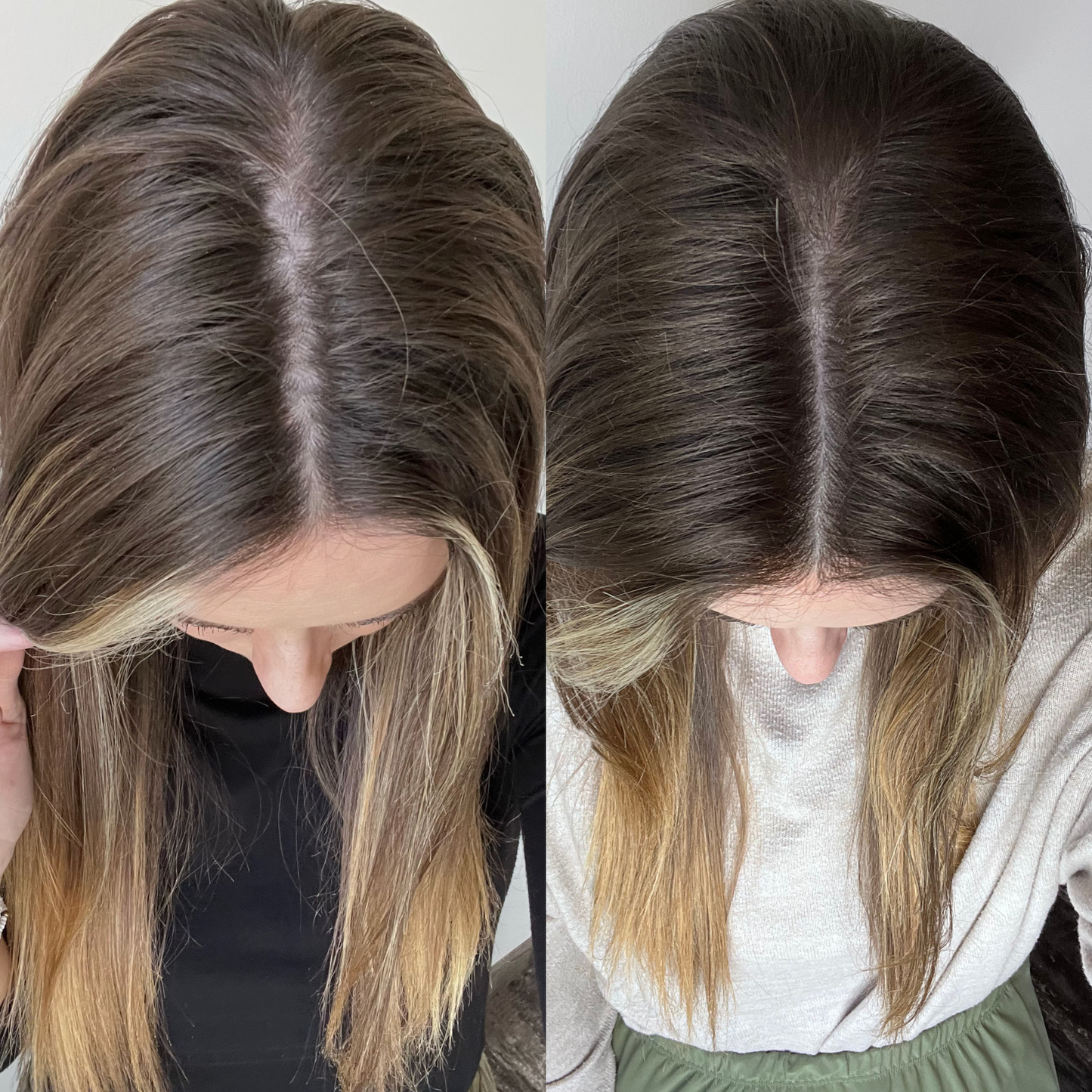
Marine Collagen for Hair: Benefits, Evidence & How to Use It


Interest in marine collagen for hair benefits in the UK has surged in recent years — but separating genuine nutritional science from marketing noise is harder than it sounds. This guide explains exactly what marine collagen is, how it interacts with your hair biology, who is most likely to benefit, and how to choose a product that actually delivers.
What is marine collagen and how does it differ from other types?
Collagen is the most abundant structural protein in the human body — the scaffolding that holds skin, connective tissue, bones, and scalp dermis together. It is built from a distinctive triple helix of amino acid chains, dominated by glycine, proline, and hydroxyproline. As we age, the body's own collagen synthesis declines gradually from our mid-twenties onward, meaning the raw material supply for skin and scalp tissue becomes progressively less reliable.
Marine collagen is sourced primarily from the skin, scales, and bones of fish — most commonly cod, tilapia, or pollock — and is virtually always sold in a hydrolysed form, meaning it has been broken down into shorter peptide chains (collagen peptides) that are far more readily absorbed in the small intestine than whole collagen protein. This hydrolysis step is what distinguishes a well-formulated supplement from simply eating a piece of fish.
In terms of collagen type, marine collagen is predominantly Type I — the same type that is most abundant in the dermis of the scalp and in the structural proteins of the hair shaft itself. Bovine collagen, by contrast, tends to supply a mixture of Type I and Type III. This makes marine collagen a particularly logical choice when hair and skin are the primary goals. It is also free from the cross-contamination concerns that accompany bovine sources for those following certain dietary preferences, though anyone with a fish allergy must avoid it entirely.
How marine collagen supports hair health
Hair does not grow in isolation. Each strand emerges from a follicle that is embedded in the scalp dermis — a collagen-rich layer that provides mechanical support, houses blood vessels supplying nutrients, and creates the microenvironment in which the dermal papilla cells that govern hair cycling operate. When this dermal matrix is well-nourished and structurally intact, follicles are better positioned to produce strong, consistently growing hair. When it degrades — due to age, oxidative stress, nutritional gaps, or chronic inflammation — the quality and density of hair can visibly suffer.
Supplying amino acids for keratin production
Hair is approximately 90% keratin, and keratin is itself a protein assembled from amino acids. While keratin and collagen are distinct proteins, they share several key amino acids — particularly proline and glycine. When marine collagen peptides are digested, those amino acids enter the bloodstream and become available as raw material for your body's own keratin-synthesising processes. This is not a direct shortcut — your body does not convert fish collagen straight into hair — but it does mean that a person with amino acid gaps in their diet may find their hair protein production constrained, and supplementing can help address that.
Antioxidant protection for follicle cells
One of the less-discussed but genuinely relevant mechanisms is the antioxidant contribution of certain marine collagen peptide fragments. Free radical damage to dermal papilla cells is believed to be one of the contributors to miniaturisation — the gradual thinning of each hair strand seen in pattern hair loss and age-related thinning. Some peptide sequences derived from fish collagen have demonstrated free-radical-scavenging activity in laboratory settings, suggesting a potential indirect protective role for follicle health, though this area of research is still maturing.
Supporting the scalp's structural integrity
Beyond the follicle itself, the broader dermal matrix of the scalp acts as a physical anchor and nutrient highway. Adequate collagen within this matrix supports the micro-circulation that brings iron, zinc, biotin, and other hair-critical nutrients to the follicle base. A compromised dermal layer is less efficient at this delivery function. For women experiencing thinning associated with hormonal changes or the normal ageing process, maintaining dermal collagen density is therefore a logical supporting strategy — not a standalone cure, but a meaningful piece of a broader approach. For a deeper look at how nutritional deficiencies and hormonal factors interact, our guide on female hair loss: causes, treatments and what actually works provides useful context.

Evidence and realistic expectations
It is worth being honest about the state of the evidence for marine collagen and hair. The broader body of research on collagen peptides and connective tissue is reasonably well-established — hydrolysed collagen is absorbed into the bloodstream as peptides that reach the dermis, and several small randomised trials have observed improvements in skin elasticity and hydration at doses generally in the range of 2.5–10 g per day over periods of 8–24 weeks. The scalp is skin, and the logic of these findings extends reasonably to scalp health.
However, large-scale, randomised controlled trials specifically measuring hair growth, hair diameter, or shedding rate in response to marine collagen supplementation are still limited in number. Most available data comes from smaller studies with varying methodologies, often funded by supplement manufacturers, which introduces bias risk. This does not mean marine collagen is ineffective — it means the evidence base is promising but not yet as robust as the marketing frequently implies.
What we can say with reasonable confidence, based on the available literature, is the following:
| Claimed Benefit | Likely Mechanism | Evidence Confidence |
|---|---|---|
| Improved scalp skin elasticity and hydration | Collagen peptides absorbed into dermis; stimulate fibroblast activity | Moderate — consistent findings in skin trials |
| Reduced hair shedding | Stronger dermal anchorage; improved follicle microenvironment | Preliminary — plausible, limited direct hair trials |
| Increased hair strand thickness | Amino acid supply for keratin; antioxidant protection of papilla cells | Preliminary — some small trials suggest benefit |
| Faster hair growth rate | Unclear — no strong direct mechanism identified | Weak — insufficient evidence to support this claim reliably |
| Antioxidant protection of follicle cells | Free-radical-scavenging peptide fragments | Preliminary — mostly in vitro; promising direction |
Who benefits most from marine collagen for hair?
Not everyone will notice a dramatic difference from marine collagen supplementation, and that is entirely normal — because not everyone is starting from the same baseline. The following groups tend to see the most meaningful response:
- Women in perimenopause and menopause: Oestrogen plays a significant role in maintaining skin and scalp collagen density. As oestrogen declines, collagen degradation accelerates — making supplementation a logical compensatory measure. If this resonates, our guide on hair loss during the menopause covers this topic step by step.
- Women over 35 with gradually thinning hair: Age-related collagen decline affects the dermal matrix from the mid-twenties, becoming more noticeable in the thirties and forties. Providing the body with additional collagen building blocks during this period supports structural integrity that would otherwise decrease naturally.
- Those with diets low in animal protein: Vegetarians, vegans (noting that marine collagen is not vegan), or those with restricted protein intake may have lower endogenous amino acid availability for collagen synthesis. Supplementation can help fill that gap — though vegans would need to look at plant-based amino acid alternatives instead.
- Women recovering from periods of high physiological stress: Physical illness, surgery, crash dieting, or prolonged emotional stress can deplete structural proteins and trigger telogen effluvium (diffuse shedding). Marine collagen during the recovery phase supports re-building the dermal scaffolding.
- Those with brittle, easily broken hair: Even if growth rate and density are within normal ranges, structural fragility of the hair shaft can be partly addressed through improved amino acid availability — particularly glycine and proline.
Conversely, if your diet is already rich in high-quality complete proteins, your hormonal profile is stable, and your bloodwork shows no nutritional deficiencies, the marginal benefit of adding marine collagen may be smaller — though it is unlikely to cause harm at typical doses.
Dose, timing, and what to combine it with
Most of the available research on hydrolysed collagen peptides uses doses in the range of 2.5 g to 10 g per day. Lower doses (2.5–5 g) appear relevant for skin-focussed outcomes; some hair-specific protocols use doses toward the higher end of this range. The format — powder stirred into water or coffee, capsules, or liquid shots — matters less than consistency. Daily use over a sustained period (a minimum of 8–12 weeks, ideally 3–6 months) is where the benefit accumulates.
The vitamin C pairing
Vitamin C is a non-negotiable co-factor in the body's collagen synthesis pathway. Without adequate vitamin C, the enzymatic processes that form the stable triple helix structure of collagen cannot function properly. This applies both to your body's own collagen production and to the utilisation of amino acids from supplemental collagen peptides. Including a vitamin C source — whether from food (citrus, berries, kiwi, peppers) or a supplement — alongside your marine collagen is strongly advisable.
Combining collagen with a comprehensive hair supplement
Marine collagen addresses one specific biological layer: the amino acid supply for structural protein synthesis. It does not supply the co-factor vitamins and minerals that hair follicles need for metabolic function — nutrients such as zinc, iron, selenium, biotin (in those who are genuinely deficient), and vitamin D. A well-designed women's hair supplement that combines these micronutrients with collagen precursors creates a far more complete approach than collagen alone.
The Lumeyr Women daily hair supplement is formulated with this layered approach in mind — bringing together targeted micronutrients that support follicle metabolism alongside structural building blocks. For those who also want dedicated collagen peptide support for skin and nails in addition to hair, Lumeyr Hair, Skin & Nails is worth exploring as a complementary option.

Ready to start your inside-out hair routine?
Lumeyr Women combines targeted micronutrients with structural support — formulated specifically for women experiencing hair thinning or loss. UK delivery available.
Shop Lumeyr Women →Whether you opt for marine collagen powder mixed into your daily routine or prefer the convenience of a ready-made supplement, understanding the differences between formats can help you make the best choice for your hair health, as explored in our guide on liquid hair supplements versus tablets.
Frequently asked questions
Does marine collagen actually help hair growth?
Marine collagen provides amino acids — particularly glycine, proline, and hydroxyproline — that are raw materials for keratin, the structural protein hair is made from. While it does not directly stimulate follicle activity in the same way as some targeted treatments, consistent intake supports the dermal matrix surrounding each follicle, which can improve hair strength, diameter, and resilience. Results typically require at least 8–12 weeks of daily use.
What is the difference between marine collagen and bovine collagen for hair?
Marine collagen is predominantly Type I collagen — the same type most abundant in the scalp's dermis and hair's structural proteins. Bovine collagen contains both Type I and Type III. Marine collagen peptides generally have a smaller average molecular weight, which may support more efficient absorption in the gut. Both can contribute useful amino acids, but marine is considered the more targeted choice for hair and skin specifically.
How long does it take to see results from marine collagen for hair in the UK?
Hair grows roughly 1–1.5 cm per month. Because collagen supports the scalp environment rather than instantly accelerating growth, most people report noticing changes in hair texture and shedding levels after 8–12 weeks. Visible changes in length and thickness are more likely at the 3–6 month mark with consistent daily use.
Is marine collagen safe to take every day?
Hydrolysed marine collagen peptides are generally well tolerated at typical supplement doses (commonly 2.5–10 g per day). They are a food-derived protein source. People with fish or shellfish allergies should avoid marine-sourced collagen and consult their GP. Those who are pregnant or breastfeeding should seek medical advice before starting any new supplement.
Can I take marine collagen alongside other hair vitamins?
Yes. Marine collagen works through a different mechanism than vitamins such as biotin, zinc, or iron — it supplies structural amino acids rather than enzymatic co-factors. Combining collagen with a broad-spectrum hair supplement addresses multiple aspects of hair health simultaneously. Be mindful of total daily protein intake and avoid exceeding safe upper limits for fat-soluble vitamins such as vitamin A.
Does vitamin C affect marine collagen absorption?
Vitamin C is a critical co-factor in your body's collagen synthesis pathway — it helps convert proline into hydroxyproline, which stabilises collagen's triple helix structure. Taking marine collagen alongside vitamin C (through food or a supplement) is widely recommended to help the body make best use of those amino acids.
The bottom line
Marine collagen for hair is neither a miracle cure nor a marketing gimmick — it sits somewhere usefully in between. For women experiencing age-related thinning, menopausal scalp changes, or dietary gaps in structural amino acids, consistent marine collagen supplementation provides a biologically logical layer of support for the dermal environment from which healthy hair grows. The key is managing expectations: this is a 3–6 month commitment that works best as part of a broader nutritional strategy, not a standalone fix.
Combine marine collagen with vitamin C, pair it with the micronutrients your follicles need to function properly, and give your body the time it needs to rebuild. For a complete picture of the vitamins and minerals that work alongside collagen for hair health, our guide on vitamins for hair loss in women is an excellent next step.
This article follows our editorial & research standards. It is informational content, not medical advice.