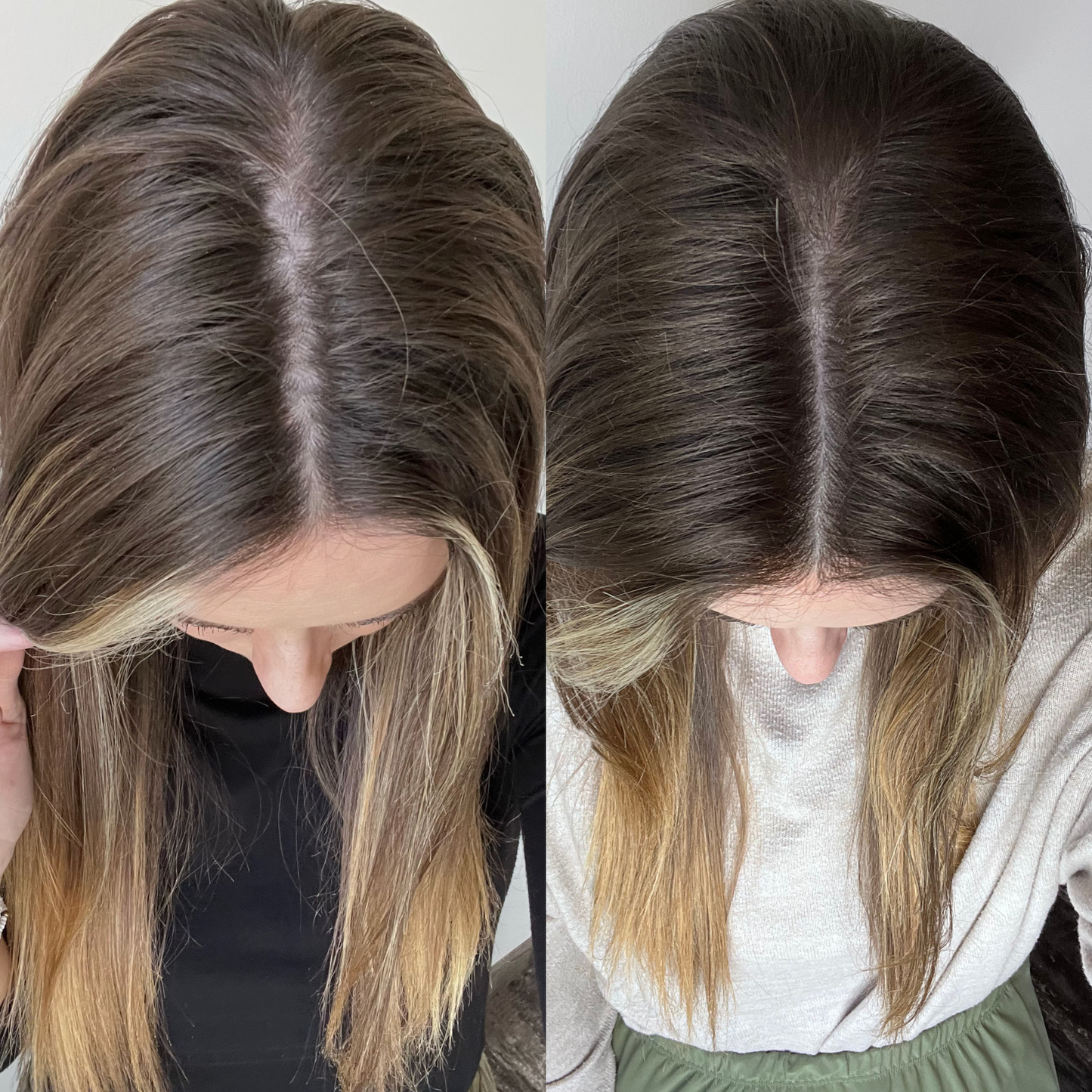
Alopecia Areata in Women: Support, Coping & Next Steps


Alopecia areata in women is far more common than most people realise, yet the support available — emotional, medical, and nutritional — is often fragmented and hard to navigate. This guide brings it all together in one place.
In this article
What Alopecia Areata Actually Is
Alopecia areata is an autoimmune condition in which the immune system mistakenly targets the hair follicle, disrupting the normal growth cycle and causing patchy hair loss. Unlike androgenetic (pattern) hair loss, the follicle itself is not destroyed — it remains alive beneath the scalp surface, which is why spontaneous regrowth is possible, even after prolonged shedding.
The condition presents in several distinct forms. The most common is patchy alopecia areata, where one or more coin-sized bald patches appear, typically on the scalp but occasionally on eyebrows, lashes, or the beard area. Alopecia totalis refers to total scalp hair loss, and alopecia universalis is the most extensive form, involving hair loss across the entire body. Most women experience the milder patchy form, though any variant warrants medical assessment.
Importantly, alopecia areata is not contagious, not caused by poor hygiene, and is not the same as female pattern hair loss (androgenetic alopecia). If you have been researching hair loss broadly and want to understand the distinctions between types, our guide on female alopecia: causes, types, and the best treatments covers the full spectrum clearly.
Why women may experience it differently
Hormonal fluctuations appear to play a role in the timing of flare-ups for some women. Events such as postpartum recovery, perimenopause, and thyroid dysfunction — all of which disproportionately affect women — have been associated with the onset or worsening of autoimmune conditions including alopecia areata. This does not mean hormones cause alopecia areata; rather, they may influence immune regulation in ways that affect its course.
There is also a documented overlap between alopecia areata and other autoimmune conditions such as thyroid disorders and vitiligo. Women are statistically more likely to develop autoimmune conditions generally, which may partly explain why alopecia areata feels more prevalent in female-dominated health communities.
The Emotional Impact on Women
For many women, hair is tied to identity, femininity, and professional confidence in a way that can make alopecia areata profoundly distressing. Research consistently shows that the psychological burden of hair loss in women tends to be greater than in men, and that quality-of-life measures — covering social anxiety, self-esteem, and depression — are frequently affected.
This is not vanity. It is a legitimate psychological response to a visible, unpredictable, and often stigmatised condition. Acknowledging the emotional weight is not weakness; it is the starting point for proper support. Many women describe the period between first noticing patches and receiving a diagnosis as particularly isolating, partly because alopecia areata is so poorly understood outside medical circles.
Anxiety about the unpredictability of the condition — not knowing whether patches will grow back, stay stable, or spread — is one of the most commonly reported stressors. Therapy, particularly cognitive behavioural approaches, has shown value in helping women develop coping frameworks for conditions with uncertain outcomes. Asking your GP for a referral to NHS talking therapies is a practical first step, and one that many women delay unnecessarily.

Medical Treatment Options in the UK
There is no single cure for alopecia areata, but a range of evidence-supported treatments can encourage regrowth and reduce the frequency of flare-ups. The right approach depends on the extent and duration of hair loss, age, and individual response, so a referral to a dermatologist is strongly recommended before starting any treatment.
| Treatment | How it works | Where to access (UK) |
|---|---|---|
| Intralesional corticosteroid injections | Injected directly into patches to suppress local immune activity | NHS dermatology / private clinic |
| Topical corticosteroids | Applied to affected areas to calm inflammation | GP prescription |
| Topical minoxidil | Promotes blood flow to follicles; may encourage regrowth | Pharmacy OTC or GP |
| Immunotherapy (DPCP) | Controlled allergic reaction redirects immune response | NHS specialist dermatology unit |
| JAK inhibitors (e.g. baricitinib) | Newer class of drugs that interrupt signalling pathway | NHS — currently assessed on severity; private options exist |
| Platelet-rich plasma (PRP) | Growth factors delivered to scalp via plasma injections | Private clinics |
The emergence of JAK inhibitors has been a significant development in alopecia areata treatment over recent years. These medications work by blocking specific pathways through which the immune system attacks hair follicles. Access on the NHS is currently gatekept by severity criteria, but awareness of these options is worth discussing with your dermatologist if topical treatments have not produced results.
Scalp Health and Nutritional Support
Nutrition cannot reverse the autoimmune mechanism behind alopecia areata, but it can meaningfully support the scalp environment and overall follicle resilience — particularly if deficiencies are present. Several micronutrients are consistently associated with hair follicle function: iron (especially ferritin), zinc, vitamin D, and B vitamins including biotin. Deficiencies in any of these do not cause alopecia areata, but they can exacerbate shedding and hinder the regrowth process.
Before taking supplements, it is worth asking your GP for a blood panel covering ferritin, vitamin D, thyroid function, and a full blood count. Many women with alopecia areata discover a co-existing deficiency that, once corrected, improves their overall hair health significantly. For a detailed breakdown of which nutrients matter and at what levels, see our article on vitamins for female hair loss: a complete scientific guide.
The quality of your washing water also matters more than most people expect. Hard water — which affects the majority of homes in south-east England — deposits calcium and magnesium ions on the scalp and hair shaft, creating a film that can disrupt the scalp microbiome and make already fragile hair more prone to breakage. Filtering your shower water is a simple, low-effort change with a potentially meaningful impact on scalp condition over time.

If you are looking to address nutritional gaps comprehensively, Lumeyr Women is formulated specifically for the micronutrient profile most relevant to women experiencing hair loss, combining key vitamins, minerals, and botanical extracts in clinically considered doses. It is not a treatment for alopecia areata, but it can form part of a well-rounded self-care approach during active management and recovery phases.
Support Your Follicles From Within
Lumeyr Women is formulated for the nutritional needs specific to women experiencing hair thinning and loss — a focused daily supplement to complement your care plan.
Shop Lumeyr Women →Practical Day-to-Day Coping Strategies
Living with alopecia areata involves navigating unpredictability on a daily basis. Beyond medical treatment and nutritional support, there are practical adjustments that many women find genuinely helpful in maintaining both scalp health and emotional stability during flare-up periods.
Managing stress proactively
Stress is one of the most consistently reported triggers for alopecia areata flare-ups, and it creates a frustrating feedback loop: hair loss causes stress, and stress may worsen hair loss. While eliminating stress entirely is not realistic, building consistent stress-management habits — adequate sleep, regular movement, mindfulness practices — can reduce the physiological burden on your immune system over time. Our article on stress-related hair loss and how to genuinely slow it down explores this mechanism in more depth.
Hair styling and scalp care during patches
During active phases, treat the scalp with the same care you would give sensitive skin. Avoid tight hairstyles that place traction on remaining hair, keep heat styling minimal, and choose sulphate-free products to preserve the scalp's natural moisture balance. Regular, gentle exfoliation of the scalp — using a product like the Revive + Restore Scalp Scrub — can help clear product build-up and keep follicle openings clear without disruption.
Covering options and confidence
Wigs, toppers, hairpieces, and scarves are all valid choices — not signs of giving up. Many women find that having a reliable cosmetic solution in place reduces daily anxiety significantly while waiting for regrowth or pursuing medical treatment. Alopecia UK maintains a directory of wig specialists experienced with alopecia patients, and some NHS prescriptions for wigs are available following a dermatology referral. There is no correct way to respond to your own hair loss; the right approach is whichever one protects your wellbeing and autonomy.
Keeping perspective on the timeline
Regrowth, when it occurs, tends to happen gradually — often over months rather than weeks. Fine, colourless regrowth (often called "vellus" hairs) frequently precedes visible pigmented strands, which can be easy to miss or dismiss. Photographing affected areas monthly in consistent lighting is a practical way to track progress that is otherwise difficult to perceive in the mirror day to day.
Frequently Asked Questions
Can alopecia areata in women be permanent?
In many cases, hair does regrow — even after extended periods of loss — because the follicle itself is not destroyed. However, in a smaller proportion of cases, particularly extensive forms such as alopecia totalis or universalis, regrowth can be unpredictable and partial. A dermatologist is best placed to discuss your individual prognosis.
Is alopecia areata more common in women than men?
Alopecia areata affects people of all sexes at broadly similar rates across a lifetime. Research suggests it affects roughly 2% of the global population at some point, with no clear consistent gender dominance, though the psychological impact tends to be reported as greater in women.
What triggers alopecia areata flare-ups in women?
Common reported triggers include significant physical or emotional stress, illness, hormonal shifts (such as postpartum changes or perimenopause), and nutritional deficiencies. Triggers vary widely between individuals and are not fully understood, which makes avoidance strategies difficult to standardise.
Can supplements help with alopecia areata?
Supplements cannot treat the autoimmune mechanism behind alopecia areata directly. However, correcting nutritional deficiencies — such as low iron, zinc, or vitamin D — may support the scalp environment and overall follicle health. Always discuss supplement use with your GP or trichologist before starting, particularly if you are already taking prescribed medications.
Where can I find emotional support for alopecia areata in the UK?
Alopecia UK (alopecia.org.uk) is the primary charity offering peer support, helplines, and community events specifically for people living with all forms of alopecia. Your GP can also refer you to NHS talking therapies if the emotional impact is significant.
Should I see a GP or a trichologist first?
Either is a valid starting point. A GP can arrange blood tests to rule out thyroid disorders and iron deficiency, and can refer you to a dermatologist on the NHS. A trichologist offers a specialist scalp and hair assessment, often with shorter waiting times privately. Both can run concurrently, and for many women the fastest route to clarity is to pursue both in parallel.
Conclusion
Alopecia areata in women is a complex, often emotionally difficult condition — but it is one with genuine support available. The most effective approach combines early medical assessment, attention to nutritional status, careful scalp care, and consistent emotional support. No single intervention delivers everything, but a well-constructed personal care plan — informed by both clinical guidance and your own lived experience — puts you firmly in the driving seat of your own recovery.
For a broader view of all the factors involved in female hair loss and how to address them systematically, our cornerstone guide on female hair loss: causes, treatments and what actually works is a useful next read. And if you are considering targeted nutritional support as part of your approach, explore the full Lumeyr Women formulation to understand what each ingredient contributes.

Head of Editorial Content — Lumeyr. Eight years in wellness, beauty and women's hair health.
This article follows our editorial & research standards. It is informational content, not medical advice.