How Much Hair Fall Is Normal Per Day? A Clear Guide


 Raquel Domínguez
— Scalp & Hairdressing Technique Specialist
Updated: 10 June 2025
Reading time: ~8 min
Raquel Domínguez
— Scalp & Hairdressing Technique Specialist
Updated: 10 June 2025
Reading time: ~8 min
Wondering how much hair fall is normal per day? The short answer is 50 to 100 strands — but the fuller picture is far more reassuring, and knowing it can spare you a great deal of unnecessary worry.
What the Normal Range Actually Means
The figure of 50 to 100 hairs per day is cited widely — and for good reason. It represents the average number of follicles that transition out of their active growth phase and shed naturally in a 24-hour period. On a head with roughly 100,000 follicles, losing up to 100 strands amounts to just 0.1 per cent of your total hair. That is not a dramatic loss — it is a healthy cycle at work.
What throws many women off is the visible nature of shedding. Finding strands on your pillow, in the shower drain, or wound around a hairbrush feels alarming. But those hairs were almost certainly already in the shedding phase before they detached. They did not fall because you moved your head or touched your hair — they were simply ready to go.
It is also worth noting that the 50-to-100 range is an average, not a ceiling. Women with longer or thicker hair may shed hairs that appear more voluminous in a brush, creating the impression of greater loss. Counting hairs precisely is almost impossible in daily life, so focus on longer-term patterns rather than individual days.
The Hair Growth Cycle Explained Simply
Every strand on your head is on its own individual timetable, moving through four distinct phases. Understanding these phases is the single clearest way to understand why shedding is not only normal but essential.
- Anagen (growth phase): This is the active growing period, lasting anywhere from two to seven years. At any given moment, roughly 85 to 90 per cent of your follicles are in anagen. The longer this phase, the longer your potential hair length.
- Catagen (transition phase): A short transition period of around two to three weeks during which the follicle shrinks and detaches from its blood supply. Only around 1 to 2 per cent of follicles are here at any time.
- Telogen (resting phase): The follicle rests for roughly two to four months. Around 10 to 15 per cent of follicles sit in telogen simultaneously. These are the hairs that will soon shed.
- Exogen (shedding phase): The old hair detaches and falls. New anagen growth begins beneath it, pushing the cycle forward.
The daily shed of 50 to 100 hairs comes almost entirely from follicles completing their telogen and exogen phases. No follicle is lost — it simply rests and then starts growing again. Problems arise when something disrupts this rhythm, pushing an unusually high proportion of follicles into telogen at the same time.

Factors That Temporarily Change Shedding
Shedding does not stay at a fixed 50 to 100 strands every single day. Several entirely normal variables shift the daily count up or down without indicating any underlying problem.
| Factor | Effect on Shedding | Typical Duration |
|---|---|---|
| Wash day | Appears higher — collecting multiple days’ shed at once | Single day event |
| Autumn / seasonal shift | Noticeably increased shedding for many women | 6 to 8 weeks |
| Post-pregnancy (telogen effluvium) | Significant increase, often dramatic | 3 to 6 months, typically resolves |
| High psychological stress | Increased shedding 6 to 12 weeks after stressor | Resolves once stress reduces |
| Crash dieting or low protein intake | Increased shed due to nutritional deprivation | Ongoing until diet improves |
| Illness with high fever | Temporary spike in shedding weeks after illness | Usually 1 to 3 months |
| Infrequent brushing | Collected shed appears alarming but is normal volume | Single event |
Seasonal shedding deserves a specific mention for women in the UK. Many people notice their drain filling more in September and October. This is thought to relate to changes in day length influencing the hair cycle — similar mechanisms have been observed in other mammals. It is temporary, predictable, and does not require intervention in the vast majority of cases.
When Shedding Becomes Something to Address
There is a meaningful difference between normal daily shedding and the kind of hair loss that warrants attention. The key is pattern and persistence, not a single alarming morning. Here is what to watch for over a period of four or more consecutive weeks:
- Noticeably wider parting when you pull hair back
- A ponytail that feels measurably thinner in circumference
- More scalp visible when hair is wet and laid flat
- Thinning primarily at the crown or temples (which may suggest a hormonal pattern rather than general shedding)
- Handfuls rather than individual strands when you run fingers through dry hair
These signs suggest the shed-to-regrowth balance has been disrupted. The most common culprits in women include iron or ferritin deficiency, low vitamin D levels, thyroid irregularities, hormonal changes around the menstrual cycle or perimenopause, and chronic psychological stress. For a thorough breakdown of how hormonal patterns affect hair specifically, our guide to female hair loss: causes, treatments and what actually works covers each mechanism in detail.
What You Can Do About Excessive Shedding
Once you have established that your shedding exceeds the normal range consistently, the approach is two-pronged: address what is happening internally at the follicle level, and optimise what is happening externally at the scalp surface. Both matter — and neither replaces the other.
Internal Support: Nutrition and Supplementation
Hair follicles are among the most metabolically active structures in the body. They are exquisitely sensitive to nutritional shortfalls. Key nutrients linked to normal hair growth include iron and ferritin, zinc, biotin, selenium, and vitamins D, C, and B-complex. Getting these consistently through diet alone is challenging, particularly for women with busy lifestyles or those following plant-based diets.
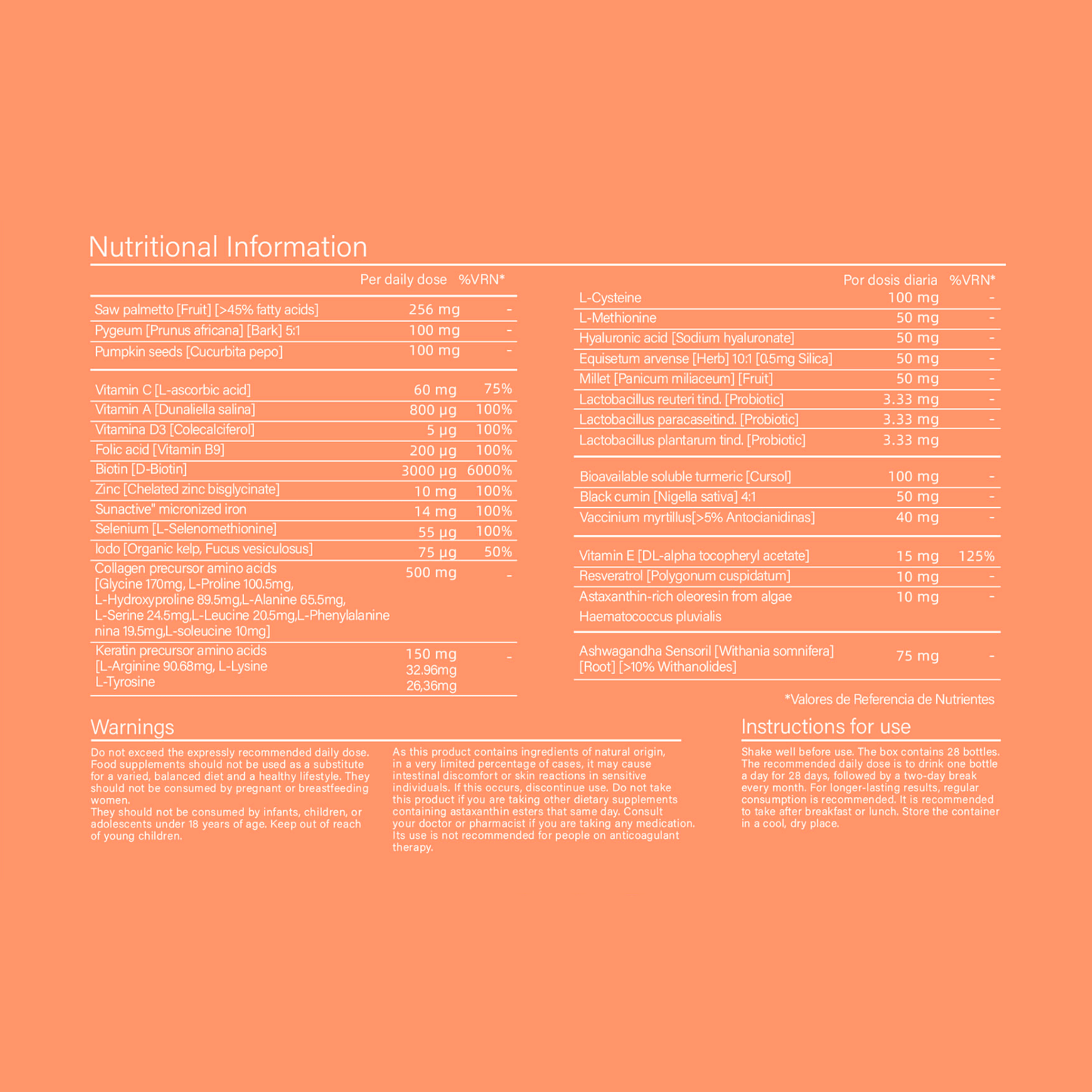
A well-formulated supplement tailored to women's hair loss specifically can bridge those gaps. Lumeyr Women is designed with this in mind — combining clinically relevant nutrients at meaningful doses to support the follicle from within. It is the internal cornerstone of any sensible anti-shedding routine. If you want to compare options before committing, our independent review of female pattern hair loss treatment options walks through the evidence for each approach.

External Support: The Scalp Routine
Supplements work from the inside out. A scalp routine works from the outside in. The scalp is skin, and it deserves the same considered care you would give your face. Dead skin cell build-up, product residue, and poor circulation at the follicle opening can all impede healthy regrowth — even when nutrition is excellent.
A weekly exfoliation with the Revive + Restore Scalp Scrub clears the follicle opening and creates an optimal environment for regrowth. Pairing this with regular scalp massage — ideally using a tool like the JUMBO Scalp Stimulator — can improve local circulation, which is thought to encourage follicles to remain in the anagen phase for longer.
For women in hard water areas across the UK, there is an additional consideration: limescale deposits and chlorine from tap water can roughen the hair cuticle and irritate the scalp over time, compounding the appearance of shedding. Filtering your shower water is a surprisingly effective step that many overlook.
Ready to Support Your Hair From Within?
Lumeyr Women is formulated specifically for women experiencing daily shedding above the normal range. Targeted nutrients, no fillers, designed to support your follicle cycle.
Explore Lumeyr Women →Whilst losing 50-100 hairs daily is typically considered normal, certain nutritional deficiencies such as those discussed in our guide on the vitamin D and hair loss link may cause excessive shedding.
Whilst understanding normal hair loss is crucial, exploring pumpkin seed oil dosage for hair regrowth may help those concerned about excessive shedding.
Whilst losing 50–100 hairs daily is entirely normal, if you're concerned about excessive shedding, it's worth exploring evidence-backed solutions like rosemary oil for hair growth.
Whilst understanding normal hair loss is essential, maintaining a healthy scalp through regular cleansing with products like those reviewed in our guide to the best scalp scrub UK 2026 can help minimise excessive shedding.
Frequently Asked Questions
How much hair fall is normal per day?
Losing between 50 and 100 hairs per day is considered within the normal range for most adults. On days when you wash your hair, that number can temporarily appear higher as shed hairs are collected all at once rather than throughout the day.
Is it normal to lose more hair in the shower?
Yes. Washing loosens hairs that have already completed the shedding phase and were held in place by styling or a dry scalp environment. You are not losing more hair — you are simply gathering it at one moment rather than across the day. If you wash every few days, expect to see more in the drain each time.
When does daily hair shedding become a problem?
If you are consistently losing noticeably more than 100 hairs per day over several weeks, seeing wider partings, or noticing patches of thinning, it is worth speaking to a GP or trichologist. Persistent shedding above normal ranges may indicate telogen effluvium, hormonal changes, or nutritional deficiencies — all of which are addressable with the right support.
Does brushing your hair cause extra hair loss?
Brushing does not cause hair loss in healthy hair. It simply collects hairs that have already naturally shed and detached from the follicle. However, aggressive brushing on wet hair — when strands are more elastic and vulnerable — can cause mechanical breakage, which is different from true follicular hair loss.
Can nutrition affect how much hair you shed?
Absolutely. Deficiencies in iron, ferritin, zinc, biotin, and vitamin D are commonly associated with increased shedding in women. Supporting your nutritional intake with a supplement designed for women’s hair health can help address the gaps that push more follicles into the resting and shedding phase prematurely.
Does seasonal shedding affect women in the UK?
Yes. Many women notice increased shedding in autumn, broadly between September and November, and sometimes again in early spring. This appears to relate to shifts in day length influencing hair cycle timing. It typically resolves within six to eight weeks without any specific intervention, though maintaining good nutritional support through those months is sensible.
Conclusion
How much hair fall is normal per day comes down to your individual biology, the season, your wash routine, and what is happening internally with your nutrition and hormones. The 50-to-100-strand guideline is a reliable starting point — not a rigid daily target. What matters most is whether the pattern changes over time. If your ponytail is getting thinner, your parting is widening, or you are consistently finding far more than seems usual, take it seriously and act early. The combination of smart internal support through a targeted supplement like Lumeyr Women and a considered scalp routine gives your follicles the best possible environment to keep cycling normally — season after season.
This article follows our editorial & research standards. It is informational content, not medical advice.