Pumpkin Seed Oil Dosage for Hair Regrowth: What the Science Says


If you have been researching pumpkin seed oil dosage for hair regrowth, you have already done more homework than most — but the dosage question is precisely where the internet gets vague, contradictory, or simply wrong. This article gives you the specific numbers, the reasoning behind them, and the practical protocol to follow.
Why Dosage Matters More Than the Ingredient Itself
There is a persistent misconception in the supplement space that the ingredient is the variable that counts. It is not — dose and bioavailability are. You could take the most rigorously studied botanical compound on earth and achieve nothing if the quantity is insufficient, or take it in a form your body cannot absorb. Pumpkin seed oil is no exception to this rule.
Pumpkin seed oil is thought to support hair health primarily through its influence on 5-alpha reductase, the enzyme responsible for converting testosterone into dihydrotestosterone (DHT). DHT is the androgen most closely linked to follicular miniaturisation — the gradual shrinking of hair follicles that underlies androgenetic alopecia in both men and women. To read more about the broader family of natural 5-alpha reductase inhibitors and how they compare, see our guide on natural 5-alpha reductase inhibitors.
The oil's active constituents — including delta-7-sterols, linoleic acid, oleic acid, and tocols — need to be present in meaningful concentrations to exert a measurable effect at the follicular level. A 100 mg capsule of poorly standardised pumpkin seed oil and a 400 mg softgel of cold-pressed, standardised extract are categorically different products, even if both carry the same name on the label.
What the Research Actually Says About Dose
The evidence base for pumpkin seed oil in hair loss is modest but real. The most frequently cited clinical work used a dose in the region of 400 mg per day of pumpkin seed oil extract, delivered in divided doses over a period of roughly 24 weeks. Participants in that research were men with androgenetic alopecia, and the results — while not dramatic — showed a statistically meaningful improvement in hair count versus placebo. It is important to be transparent: this is a single trial with a relatively small sample size, and replication in larger, mixed-gender cohorts is still needed.
Beyond that landmark work, broader nutritional research on the fatty acid and phytosterol content of pumpkin seed oil suggests that meaningful physiological effects on steroid metabolism require consistent daily intake rather than sporadic use. General ranges reported across the literature and practitioner guidelines sit between 400 mg and 1,000 mg daily, with the lower end of that range being the most commonly investigated in controlled settings.
It is worth noting that pumpkin seed oil is also used in urology research — particularly for bladder health — and the doses explored there often overlap with those used in hair studies. This parallel body of evidence gives us additional confidence that the 400–1,000 mg range is physiologically relevant and generally safe for long-term use in healthy adults.
| Dose Range | Context | Evidence Level | Practical Notes |
|---|---|---|---|
| 400 mg/day | Androgenetic alopecia (men, 24 weeks) | Single RCT, small sample | Most cited dose; good starting point |
| 500–800 mg/day | General practitioner guidance, DHT inhibition protocols | Observational / practitioner consensus | Mid-range often used in combined hair supplement formulas |
| 1,000 mg/day | Upper range; bladder / urinary research overlap | Multiple small trials in related areas | May be appropriate for persistent cases; confirm with a GP |
| <200 mg/day | Many budget supplements | Below studied thresholds | Unlikely to produce meaningful follicular effect |
Your Practical Dosage Guide: Form, Timing & Duration
Choosing the Right Form
Pumpkin seed oil is available as liquid oil (drizzled onto food), capsules filled with unrefined oil, and standardised softgel extracts. For hair-specific use, standardised softgel capsules are strongly preferable for three reasons. First, dosage precision: each softgel delivers an exact, measured quantity. Second, oxidation protection: the fatty acids in pumpkin seed oil — particularly linoleic acid — degrade rapidly on exposure to air and light. A nitrogen-flushed or sealed softgel maintains potency far better than an open bottle of liquid oil. Third, palatability: not everyone finds the flavour of raw pumpkin seed oil appealing at therapeutic quantities.
When to Take It
As a fat-soluble supplement, pumpkin seed oil is absorbed most efficiently when taken alongside dietary fat. The practical advice is simple: take your softgel with your largest meal of the day, which for most people in the UK is lunch or dinner. If you are splitting a higher dose across two capsules, take one with breakfast and one with your evening meal to maintain a steadier plasma concentration of the active phytosterols throughout the day.
How Long to Continue
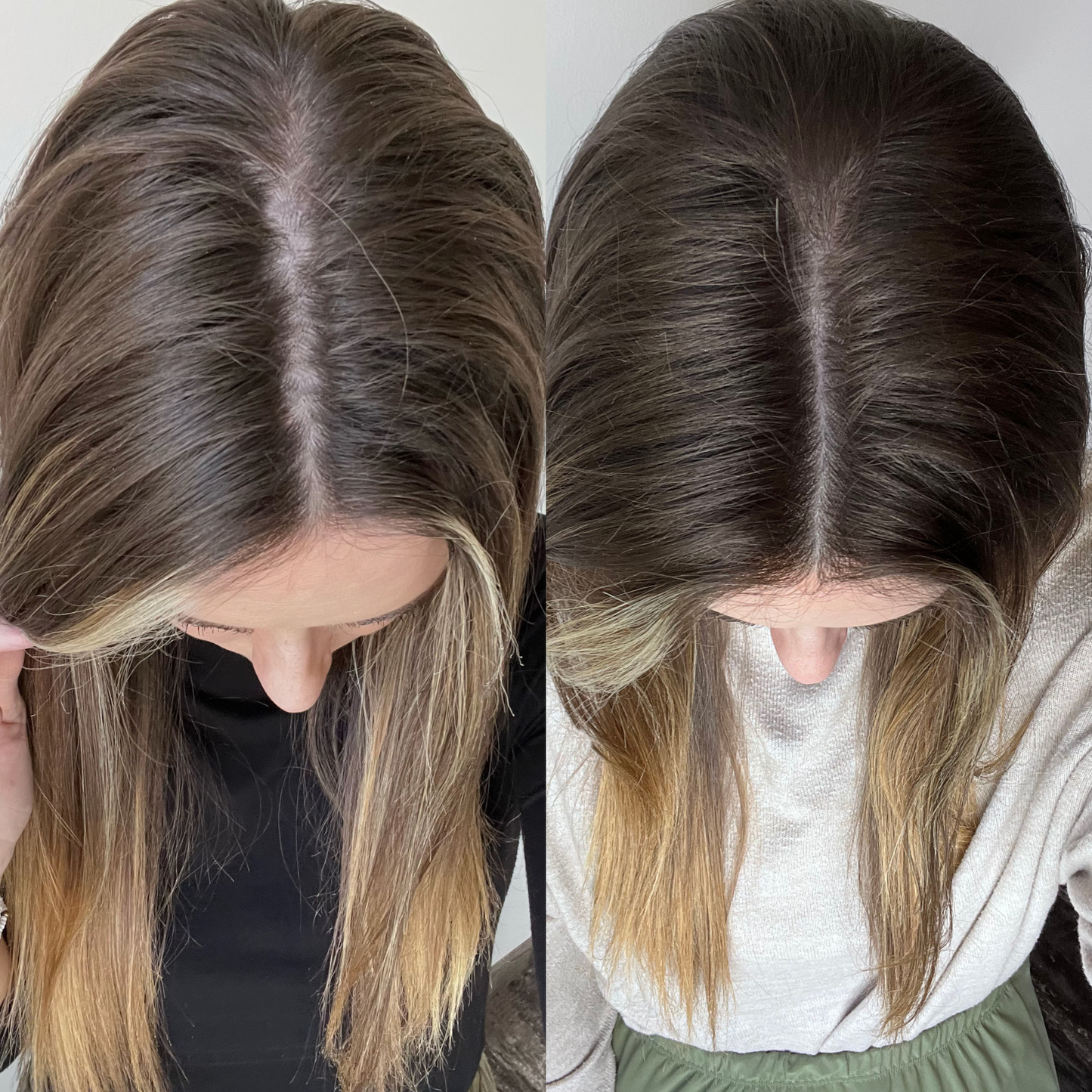
Hair growth operates on a biological clock that cannot be rushed. The anagen (growth) phase, catagen (transition) phase, and telogen (resting) phase together span anywhere from three to seven months per follicle. This means that even if pumpkin seed oil begins modulating DHT activity within weeks of starting supplementation, the visual evidence — reduced shedding, renewed density — will lag behind. Commit to a minimum of three months before making any assessment, and ideally photograph your hairline or parting under the same lighting conditions once a month so you have an objective reference point.

Pumpkin Seed Oil Dosage for Women's Hair Loss
The majority of published pumpkin seed oil trials enrolled male participants, which means women are often left wondering whether the findings translate. The short answer is: probably yes, with some nuance. Androgenic hair thinning in women — sometimes called female pattern hair loss or androgenetic alopecia — involves the same 5-alpha reductase pathway, just with a different hormonal baseline. DHT still plays a meaningful role in follicular miniaturisation, even in women who have normal circulating androgen levels, because follicular sensitivity to DHT varies between individuals.
From a dosage standpoint, there is no strong evidence that women require a categorically different dose. The 400–1,000 mg daily range is widely adopted in clinical practice for both sexes. However, women considering pumpkin seed oil supplementation should be aware of two additional factors. First, hormonal hair loss in women is frequently multifactorial — deficiencies in iron, ferritin, vitamin D, and B12 are common contributors that pumpkin seed oil will not address on its own. If you have not yet had bloods checked, this is a meaningful first step. For a broader view of female hair loss and its causes, our detailed article on female hair loss: causes, treatments and what actually works is a useful companion read.
Second, women who are pregnant or breastfeeding should not self-prescribe pumpkin seed oil at therapeutic doses without speaking to their GP or midwife first. The phytosterol content, while mild, represents a hormone-adjacent compound and the evidence base in pregnancy specifically is very limited.
For women experiencing hair thinning that may be linked to DHT, combining pumpkin seed oil with other evidence-adjacent natural actives — such as saw palmetto, a fellow 5-alpha reductase modulator — is a common approach. If you are researching saw palmetto alongside pumpkin seed oil, our article on saw palmetto for women's hair: what the science says covers the evidence in comparable depth.
Why the Quality of Your Supplement Changes Everything
Pumpkin seed oil is not a tightly regulated pharmaceutical — it sits in the food supplement category. This means product quality varies enormously between brands. Key markers of a quality pumpkin seed oil supplement for hair include: the cold-press extraction method (which preserves heat-sensitive fatty acids and tocols), standardisation to a defined level of active phytosterols, and a clearly stated mg quantity per serving — not just a vague proprietary blend weight.
Capsule integrity matters too. The oil should be sealed inside a softgel rather than exposed to air in a powder blend or open capsule. Oxygen degrades linoleic acid rapidly, turning it rancid and stripping the product of much of its biological activity before it ever reaches your follicles. A supplement that smells noticeably rancid or fishy has been oxidised — discard it.

Lumeyr's Pumpkin Seed Oil Softgels are formulated specifically with hair-health dosing in mind, using a cold-pressed extract delivered in an oxidation-resistant softgel format. If you are looking to combine pumpkin seed oil with a broader micronutrient and botanical protocol — including biotin, zinc, and additional DHT-modulating actives — the Lumeyr Women formula brings these together in a single daily routine designed for women experiencing hair thinning.
Try Lumeyr Pumpkin Seed Oil Softgels
Cold-pressed. Standardised. Formulated at a hair-relevant dose. No fillers, no ambiguity on the label.
Shop Pumpkin Seed Oil Softgels →Whilst pumpkin seed oil shows promise for hair regrowth, it's worth comparing its effects with other botanical oils, such as those discussed in our article on rosemary oil for hair growth.
Whilst pumpkin seed oil may support hair regrowth from within, it's also worth considering external factors such as hard water and hair quality in the UK, which can significantly impact the overall effectiveness of any hair treatment regimen.
Whilst pumpkin seed oil shows promise as a natural remedy, it works best when combined with other DHT-blocking approaches, such as those detailed in our guide to best natural DHT blocker supplements for women UK.
For those seeking to optimise their intake, our guide to the best pumpkin seed oil supplements for hair in the UK (2026) provides evidence-based recommendations on quality products that can help you achieve the dosages discussed in this article.
Whilst pumpkin seed oil shows promise for hair regrowth, it works best as part of a comprehensive approach that may also include the best hair vitamins for women in the UK.
Whilst pumpkin seed oil shows promise in blocking DHT production, understanding DHT and female hair loss is essential for determining the optimal dosage needed to achieve meaningful hair regrowth results.
Whilst pumpkin seed oil shows promise for hair regrowth, it's worth noting that hormonal contraceptives like Rigevidon can also trigger hair loss through entirely different mechanisms.
Whilst pumpkin seed oil shows promise for hair regrowth, it's worth considering other hormonal factors that may be contributing to hair loss, such as those discussed in our guide on best contraceptive pill for hair loss UK.
Frequently Asked Questions
What is the recommended pumpkin seed oil dosage for hair regrowth?
Available research and clinical use generally points to a range of 400–1,000 mg of standardised pumpkin seed oil per day, typically split across one or two capsules taken with food. The most commonly referenced dose in the published literature sits around 400 mg daily, though some formulations use higher amounts. Always follow the dosage stated on your chosen product and consult a healthcare professional if you are unsure.
How long does pumpkin seed oil take to show results for hair loss?
Because the human hair growth cycle spans approximately three to six months per phase, most researchers and practitioners suggest allowing at least three to six months of consistent supplementation before evaluating results. Some users report noticing reduced shedding earlier, but measurable density changes typically require longer-term, uninterrupted use.
Can women take pumpkin seed oil for hair loss?
Yes. While early research focused largely on men, pumpkin seed oil's proposed mechanism — partial inhibition of the 5-alpha reductase enzyme that converts testosterone to DHT — is relevant to women experiencing androgenic hair thinning too. Individual results vary, and a broader assessment of contributing factors (ferritin, vitamin D, thyroid function) is advisable alongside supplementation.
Should I take pumpkin seed oil capsules with food?
Yes — pumpkin seed oil is fat-soluble. Taking your softgel capsule with a meal that contains some healthy fat improves absorption meaningfully. Breakfast with eggs, or lunch with avocado, olive oil, or oily fish are all practical pairings.
Are there any side effects of pumpkin seed oil supplements?
Pumpkin seed oil is generally well tolerated at hair-relevant doses. Mild gastrointestinal discomfort has been occasionally reported, particularly when taken on an empty stomach. Those who are pregnant, breastfeeding, or taking antihypertensive medication should seek medical advice before starting.
Is liquid pumpkin seed oil or a softgel capsule better for hair?
For consistent therapeutic use, a standardised softgel capsule is generally preferred. It offers precise dosing and protects the oil from oxidation. Liquid oil added to cold foods is an alternative, but accurate dosing is harder and heat during cooking degrades the heat-sensitive fatty acids that contribute to the oil's activity.
The Bottom Line
Pumpkin seed oil is one of the more credibly researched natural options for androgen-related hair loss — but its efficacy hinges on getting the dose right. The evidence points to a minimum of 400 mg of standardised extract daily, taken consistently with food for at least three to six months. Below that threshold, and with low-quality, oxidised, or poorly standardised products, you are unlikely to see meaningful results.
For women, the same dose range applies, but hair loss is rarely a single-factor problem. A well-formulated pumpkin seed oil supplement is a valuable tool, not a standalone solution. Pair it with good nutrition, a full blood panel to rule out deficiencies, and — if DHT is a confirmed factor — consider a broader botanical protocol. The complete guide to pumpkin seed oil for women's hair growth is the next logical read if you want to go deeper on the mechanism and the evidence.

This article follows our editorial & research standards. It is informational content, not medical advice.