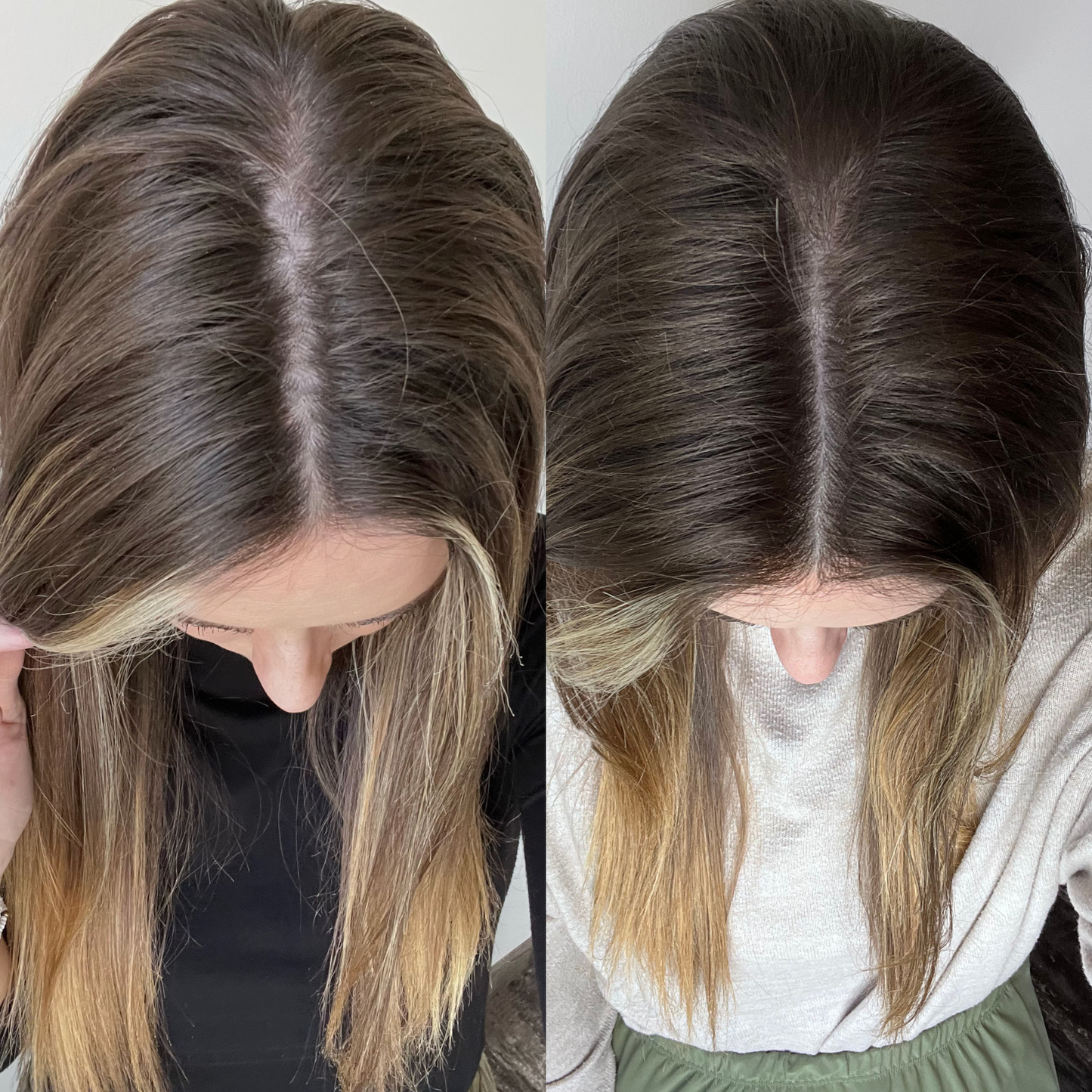
Hair Loss After Menopause: UK Solutions That Actually Work


Hair loss after menopause affects a significant proportion of women in the UK, yet most are told it is simply "part of ageing" and sent away with little practical guidance. This article explains precisely why oestrogen loss reshapes the hair growth cycle, and walks you through the evidence-based solutions — from targeted nutrition and scalp care to daily supplementation — that can genuinely make a difference.
Why Menopause Causes Hair Loss
During the reproductive years, oestrogen and progesterone act as natural brakes on the hair follicle's sensitivity to androgens — particularly dihydrotestosterone (DHT). These hormones help extend the anagen (growth) phase, keeping individual hairs on the scalp longer before they shed. As women transition through perimenopause and into post-menopause, circulating oestrogen levels fall substantially — sometimes by more than 70% from peak values — and this protective buffer disappears almost overnight in biological terms.
With that buffer gone, DHT — a potent derivative of testosterone produced by the enzyme 5-alpha-reductase — becomes proportionally more influential at the follicle level. In genetically susceptible follicles, typically those along the crown and parting, DHT progressively shortens the growth phase and miniaturises the hair shaft. Each successive cycle produces a finer, shorter hair until, in severe cases, the follicle becomes dormant. This process is clinically known as female androgenetic alopecia, and it accelerates markedly in the years immediately following the final menstrual period.
It is worth noting that not all post-menopausal hair loss is androgenetic. Thyroid dysfunction — particularly subclinical hypothyroidism, which becomes more prevalent after the age of 50 — nutritional insufficiencies, and chronic low-grade inflammation can each trigger or compound shedding. A GP referral for bloodwork (ferritin, TSH, B12, vitamin D, and a full blood count) is an essential first step before committing to any treatment strategy.
Recognising Post-Menopausal Hair Thinning
Post-menopausal hair thinning differs visually from the dramatic shedding many women associate with stress-related telogen effluvium. Rather than clumps of hair appearing in the shower drain suddenly, androgenetic thinning tends to be slow and diffuse — most noticeable as a widening central parting, reduced ponytail circumference, or increased scalp visibility under bright light. The hairline at the temples may recede slightly, though the frontal hairline is usually better preserved in women than in men.
A useful self-assessment is the simple pull test: grasp roughly 40–60 hairs between two fingers, apply gentle traction along the full length of the shaft, and count how many release. Consistently losing more than 5–6 hairs per pull in multiple areas of the scalp may indicate active miniaturisation or increased shedding and warrants a trichology consultation. For a more detailed breakdown of what to look for, our guide to female androgenetic alopecia symptoms covers the clinical presentation in depth.
The Main Solutions: A Practical Overview
Managing hair loss after menopause is most effective when approached as a multi-layered strategy rather than a single fix. No product — pharmaceutical or natural — works in isolation. The table below summarises the main solution categories available to UK women, their primary mechanism of action, and realistic timeframes for visible results.
| Solution Category | Primary Mechanism | Realistic Timeframe | Notes for UK Women |
|---|---|---|---|
| Targeted nutritional supplementation | Addresses deficiencies; supports follicle metabolism | 3–6 months for visible change | Vitamin D deficiency is widespread in the UK due to limited sunlight |
| DHT-modulating botanicals | Gently inhibits 5-alpha-reductase activity | 4–6 months consistent use | Pumpkin seed oil and saw palmetto have the strongest evidence base |
| Topical minoxidil (2% or 5%) | Prolongs anagen phase; vasodilatory | 4–6 months minimum | Available OTC in the UK; dermatologist guidance recommended |
| HRT (Hormone Replacement Therapy) | Restores circulating oestrogen; reduces DHT influence | 6–12 months for hair benefit | NICE guidelines updated 2023 — discuss risks/benefits with GP |
| Scalp stimulation & circulation | Increases follicular blood flow; clears follicle-blocking sebum | 3–6 months | Particularly relevant where hard water deposits compound scalp buildup |
| Dietary optimisation | Provides amino acids, minerals and antioxidants for follicle function | Ongoing maintenance | Protein intake often declines post-menopause; iron absorption worsens with age |
Nutrition & Supplementation
Nutritional adequacy is non-negotiable for hair follicle health at any age, but the stakes rise considerably after menopause. The follicle is one of the most metabolically active structures in the body, and it is exquisitely sensitive to shortfalls in iron, zinc, biotin, and the full spectrum of B vitamins. Post-menopausal women in the UK face a particular challenge: absorption of several key micronutrients (notably iron, B12, and vitamin D) declines with age, while dietary variety often narrows. Additionally, the UK's northerly latitude means that between October and March, sunlight is insufficient to stimulate meaningful vitamin D synthesis — making deficiency the norm rather than the exception.
Protein deserves special attention. Hair is composed almost entirely of keratin, a structural protein, and yet protein intake frequently drops in women over 50 who are eating less overall or reducing animal products for health reasons. Aim for adequate daily protein spread evenly across meals, prioritising complete sources such as eggs, fish, legumes and dairy. Crash diets and very low calorie approaches are a well-recognised trigger for telogen effluvium in this age group and should be avoided.
For women seeking a convenient, evidence-informed supplement designed specifically for post-menopausal hair concerns, Lumeyr Women brings together a carefully selected blend of nutrients — including bioavailable iron, zinc bisglycinate, marine collagen peptides, and botanical DHT modulators — in a single daily shot format. It is formulated around the specific nutrient gaps most commonly seen in women over 45, rather than offering a generic one-size-fits-all vitamin blend. You can also explore our detailed breakdown of the vitamins most relevant to female hair loss to understand the science behind each ingredient choice.

Two botanical ingredients merit particular mention in the context of post-menopausal hair loss. Pumpkin seed oil (Cucurbita pepo) contains phytosterols that have demonstrated 5-alpha-reductase inhibitory activity in clinical research, reducing the conversion of testosterone to DHT at the follicle level. Saw palmetto (Serenoa repens) acts through a similar pathway and has been studied in women with androgenetic alopecia with encouraging results. Our full guides on pumpkin seed oil for women's hair growth and saw palmetto for female hair loss go into considerable detail on dosage and mechanisms. Both are available as standalone supplements; Lumeyr's Pumpkin Seed Oil Softgels offer a concentrated, standardised dose that is straightforward to incorporate into a daily routine.
Scalp Health & Topical Approaches
Many women focus exclusively on what they ingest and overlook the scalp environment itself. The scalp is the soil from which hair grows, and in post-menopausal women it undergoes its own hormonal changes: sebum production often decreases (making the scalp drier and more prone to flaking), while simultaneously the follicle opening can accumulate dead skin cells and product residue more readily. This combination creates a physical impediment to healthy hair emergence and, in some cases, a low-grade inflammatory environment that compounds follicle miniaturisation.
Regular, gentle exfoliation is one of the most underutilised tools in post-menopausal hair care. A well-formulated scalp scrub used once or twice per week can clear follicle-blocking debris, improve micro-circulation, and create a more receptive environment for topical treatments and nutrient delivery. The Revive + Restore Scalp Scrub is designed specifically for this purpose, combining physical and enzymatic exfoliation in a formula gentle enough for regular use on sensitive, hormonally-changed skin.
Mechanical stimulation via scalp massage also has a growing evidence base. Studies in small populations suggest that consistent daily massage — even as little as four minutes per day — can increase hair thickness over time, likely by stretching dermal papilla cells and upregulating hair-thickening genes. For a more systematic approach, a purpose-built tool such as the JUMBO Scalp Stimulator makes the technique more consistent and comfortable to maintain as a daily habit.

One topical issue specific to the UK context is water quality. Approximately 60% of England is classified as a hard or very hard water area, meaning tap water contains elevated levels of calcium and magnesium carbonate minerals. Over time, these minerals deposit on the scalp and hair shaft, raising the cuticle, causing increased breakage, and potentially disrupting scalp pH. This is not a trivial concern for women already dealing with fragile, thinning hair. Our article on hard water and hair quality in the UK covers this in full. Filtering your shower water with a solution like The Lumeyr Filtered Showerhead™ can make a meaningful difference to hair texture and scalp health, particularly for women in London, the South East, and the Midlands.
Lifestyle Factors Unique to UK Women
Beyond products and supplements, several lifestyle variables have a direct bearing on post-menopausal hair retention that are worth addressing honestly. Sleep quality often deteriorates around menopause due to night sweats, anxiety, and shifting cortisol rhythms. Chronically elevated cortisol is a potent driver of telogen effluvium — it signals to follicles that the body is under stress and accelerates the transition from growth to resting phase. Prioritising sleep hygiene is therefore a legitimate hair health strategy, not merely a wellness cliché.
Stress management matters for the same reason. The HPA axis (the body's stress response system) and the HPG axis (which governs reproductive hormones) interact directly, meaning that psychological stress can compound the hormonal disruption already occurring during menopause. Regular moderate exercise — walking, swimming, yoga — has been shown in general population studies to reduce cortisol, improve insulin sensitivity (relevant because insulin resistance worsens androgenetic hair loss), and support sleep. These benefits are cumulative and compound over months.
Smoking deserves a brief mention: the evidence linking smoking to accelerated androgenetic alopecia is consistent across multiple population studies. Smoking constricts scalp microvasculature, increases DHT levels, and generates free radicals that damage follicle DNA. For women already experiencing post-menopausal thinning, it is one of the few genuinely modifiable risk factors with a meaningful effect size. NHS Stop Smoking Services remain freely available across the UK.
Built for Post-Menopausal Hair
Lumeyr Women combines bioavailable nutrients, DHT-modulating botanicals and marine collagen in a single daily shot — formulated around the specific gaps most commonly seen in women over 45.
Explore Lumeyr Women →Whilst hormonal changes during menopause are a common trigger for hair loss in women, it's worth noting that other conditions like PCOS can also cause similar hair thinning, so identifying the root cause is essential before pursuing treatment.
If you're experiencing hair loss after the menopause, exploring DHT blockers for women: safe natural options that work may help you regain the thickness and vitality your hair has lost.
Whilst hormonal changes during menopause are a primary culprit, it's worth noting that birth control pills can similarly trigger hair loss through hormonal fluctuations, making it essential to understand how your body responds to various hormonal shifts.
Understanding your scalp microbiome and hair health becomes particularly important during menopause, as hormonal changes can significantly alter the bacterial balance on your scalp and contribute to post-menopausal hair loss.
One often-overlooked factor in post-menopausal hair loss is water quality, which is why investing in a best filtered showerhead for hair in the UK can help reduce breakage and protect your scalp during this sensitive time.
Many women find that supplements like Viviscal can offer promising results, which is why our honest 2026 buying guide for women examines whether this popular option is worth considering as part of your post-menopausal hair loss strategy.
Many women find that combining targeted treatments with hair growth supplements that actually work in the UK can significantly improve their results during this challenging transition.
Many women find that addressing nutritional deficiencies through targeted supplementation can make a significant difference, which is why our Best Vitamins for Female Hair Loss UK (2026 Guide) outlines the most effective micronutrients for post-menopausal hair regrowth.
If you're struggling with post-menopausal hair thinning, exploring the best supplements for menopause hair loss in the UK could provide the nutritional support your hair follicles need during this transitional phase.
Many women find that combining hormone-supportive treatments with targeted nutrition can yield better results, which is why exploring the best supplements for hair thinning in women alongside medical interventions is often recommended by UK specialists.
Many women find that hormonal contraceptives like Rigevidon can trigger hair loss, making it crucial to discuss your full medical history with your GP when addressing post-menopausal hair shedding.
Whilst hormonal fluctuations during menopause are a common culprit, it's worth noting that hair loss from birth control can similarly disrupt your hair growth cycle, making it essential to understand the hormonal triggers behind post-menopausal hair thinning.
For menopausal women seeking natural remedies, comparing options like pumpkin seed oil versus saw palmetto for hair loss can help identify which supplement might be most effective for your individual needs.
Frequently Asked Questions
Will my hair grow back after menopause?
It depends on the degree of follicle miniaturisation. Hair follicles that have miniaturised but not yet become fully dormant can respond to treatment — nutrition, DHT modulation, topical approaches, and in some cases HRT — and produce thicker, healthier growth over a 6–12 month period. Truly dormant follicles (those that have been inactive for many years) are unlikely to regrow hair without medical intervention such as PRP therapy. The earlier you address the thinning, the better the odds of meaningful recovery.
Is HRT the best solution for post-menopausal hair loss in the UK?
HRT can be highly effective for hair retention because it partially restores the oestrogen environment that protects follicles from DHT. However, it is not appropriate for every woman, and the NICE guidelines on menopause (updated 2023) recommend an individualised discussion with a GP or menopause specialist weighing personal risk factors. HRT should be considered as part of a broader conversation about menopausal health, not pursued solely for hair reasons.
How long does it take to see results from hair supplements?
Because of how the hair growth cycle works — the anagen (growth) phase lasts 2–7 years, while the catagen and telogen phases are relatively short — any benefit from a supplement has to translate through the cycle before you see it at shaft level. Most trichologists and clinical trial protocols use a minimum of 90 days as the assessment window, with 6 months being the more realistic timeframe for visible density improvement. Consistency every day is more important than the size of the dose.
Can vitamin D deficiency cause hair loss after menopause?
Yes. Vitamin D receptors are present in hair follicle cells, and deficiency has been associated in research with both telogen effluvium (diffuse shedding) and alopecia areata. In the UK, the NHS recommends that all adults consider a vitamin D supplement between October and March. Post-menopausal women — particularly those with darker skin tones or limited sun exposure — are at elevated risk of deficiency year-round and may benefit from supplementation throughout the year. Getting your 25-OH vitamin D level checked via a GP blood test is straightforward and highly informative.
Is there a difference between hair loss from menopause and stress-related hair loss?
Yes, though they often co-exist. Menopausal androgenetic hair loss is diffuse, gradual, and patterned — worst at the crown and parting. Stress-related telogen effluvium tends to present as a sudden increase in shedding (often 2–4 months after a significant stressor) that is more uniform across the scalp. The distinction matters because the timeline and treatment differ. Our article on how to stop stress-related hair loss covers telogen effluvium in detail.
Are women's hair supplements different from general multivitamins?
Meaningfully, yes. General multivitamins are formulated to meet broad RDA thresholds across a wide population. Hair-specific supplements for post-menopausal women, by contrast, are designed around the particular nutrients most commonly deficient in this group (iron, zinc, vitamin D, biotin, marine-sourced amino acids) and often include botanical ingredients such as pumpkin seed oil or saw palmetto that address the androgenetic mechanism specifically. A well-designed product like Lumeyr Women will do far more targeted work than a generic multivitamin. For a broader comparison, see our guide to female hair loss causes and treatments.
In Summary
Hair loss after menopause is driven primarily by the withdrawal of oestrogen's protective influence over DHT-sensitive follicles, but it is rarely a single-cause problem. The most effective approach for UK women combines targeted nutritional supplementation to correct common deficiencies, DHT-modulating botanicals for the androgenetic component, consistent scalp care to optimise the follicle environment, and practical lifestyle adjustments. Results require patience — a minimum of three to six months of consistent effort — but the biology is firmly on the side of women who start early and stay consistent. If you are unsure where to begin, speaking to a trichologist or GP for bloodwork is always the right first step.

Lucía leads editorial at Lumeyr. With over eight years writing and editing in wellness, beauty and women's hair health, she focuses on the intersection of science and daily routine. Read more
This article follows our editorial & research standards. It is informational content, not medical advice.