PCOS Hair Loss Treatment Options for Women: A Complete Guide


PCOS hair loss treatment options for women are more varied — and more hopeful — than many GP waiting rooms suggest. Understanding why polycystic ovary syndrome triggers shedding in the first place is the foundation of every effective plan.
In This Article
Why PCOS Causes Hair Loss
Polycystic ovary syndrome is fundamentally a hormonal disorder, and hormones sit at the heart of hair cycling. In women with PCOS, the ovaries often produce higher-than-normal levels of androgens — male-pattern hormones such as testosterone and, crucially, dihydrotestosterone (DHT). It is DHT that does the most damage to hair follicles.
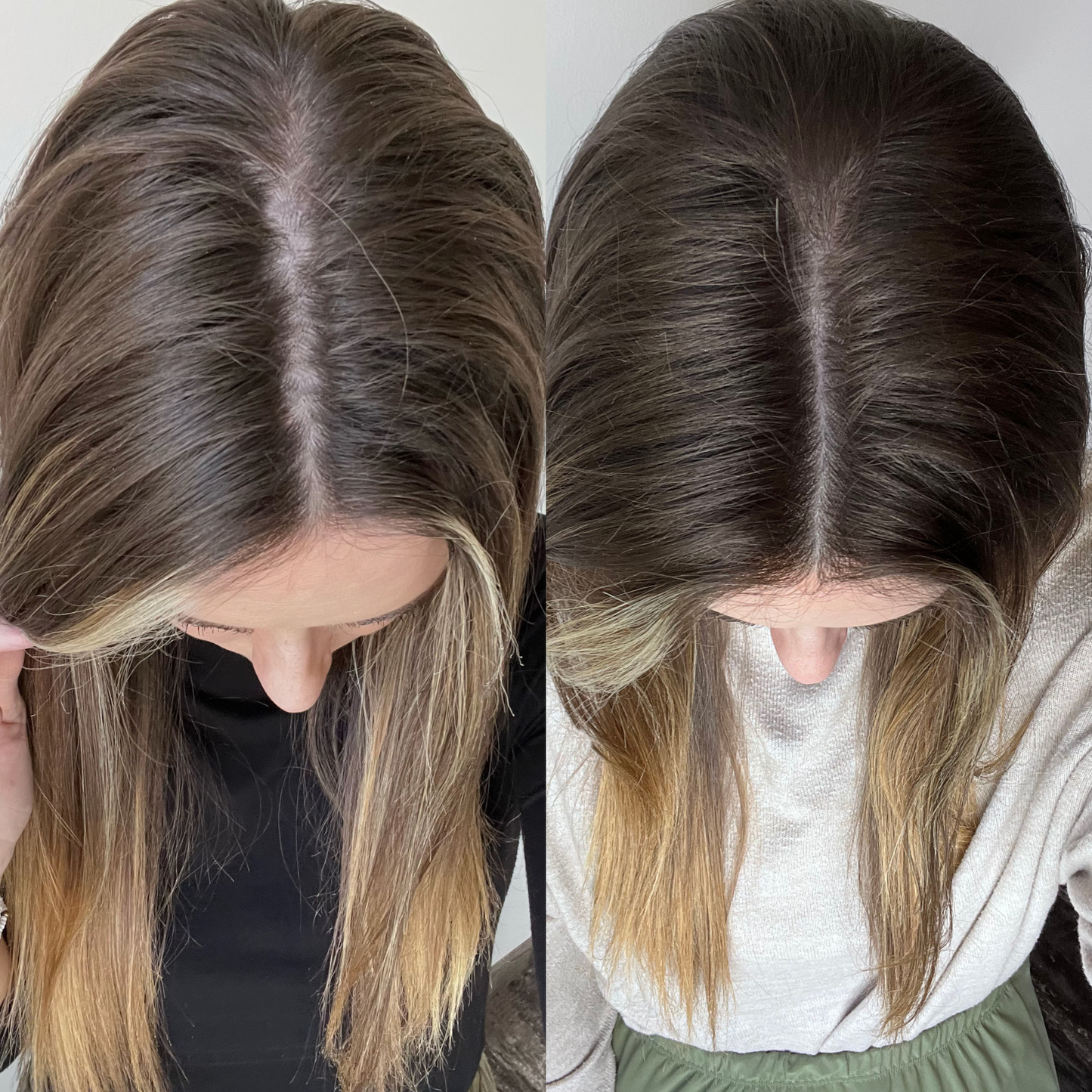
DHT binds to androgen receptors in scalp follicles and progressively shrinks them — a process called follicular miniaturisation. Over successive growth cycles, each hair produced becomes finer and shorter until, in advanced cases, the follicle stops producing a visible hair altogether. Because this process is gradual, many women with PCOS notice diffuse thinning — particularly along the parting or crown — rather than the dramatic front recession more commonly seen in men.
Insulin resistance, which affects the majority of women with PCOS regardless of body weight, compounds the problem. Elevated insulin stimulates the ovaries to produce even more androgens, reinforcing the cycle. Chronic low-grade inflammation — another hallmark of PCOS — can additionally disrupt the growth phase of the follicle cycle. This is why treating only one aspect of PCOS rarely resolves hair loss on its own.
Medical & Prescription Treatments
For many women, medical intervention forms the first and most powerful layer of a PCOS hair loss strategy. It is always worth discussing these options with a GP, gynaecologist, or dermatologist who understands the interplay between PCOS and hair health.
Combined Oral Contraceptives
Certain combined contraceptive pills contain progestogens with anti-androgenic properties. By suppressing ovarian androgen production and raising sex-hormone-binding globulin (SHBG) — which binds free testosterone and renders it inactive — they can substantially reduce DHT activity at the follicle. Hair improvement typically becomes noticeable after several months of consistent use.
Anti-Androgen Medications
Spironolactone (prescribed off-label in the UK) and cyproterone acetate (available within certain combined pills) work by blocking androgen receptors directly. They are often considered when contraceptive pills alone prove insufficient. Both require medical supervision and are not appropriate during pregnancy.
Topical Minoxidil
Minoxidil widens blood vessels in the scalp, increasing nutrient and oxygen delivery to follicles and extending the growth phase. It is available over the counter in 2% and 5% formulations and is a licensed treatment for female pattern hair loss in the UK. It does not address the hormonal root cause but can meaningfully slow shedding and support regrowth while other treatments act on the underlying drivers.
Metformin
Although primarily prescribed for blood glucose management, metformin improves insulin sensitivity in PCOS and can indirectly lower androgen levels. Some women report improved hair density as a secondary benefit. It is not a hair-loss medication per se, but its hormonal knock-on effects are clinically relevant.
Nutritional & Supplement Support
Nutrition is where women with PCOS can take meaningful daily action. Several micronutrients are disproportionately depleted in PCOS — not because of poor diet alone, but because of altered metabolism and increased physiological demand.

| Nutrient | Why It Matters in PCOS Hair Loss | Common Food Sources |
|---|---|---|
| Iron (ferritin) | Low ferritin is among the most common reversible causes of diffuse hair shedding; PCOS often accompanies heavy or irregular periods that deplete iron stores | Red meat, lentils, spinach, pumpkin seeds |
| Zinc | Inhibits 5-alpha reductase (the enzyme that converts testosterone to DHT) and supports follicle cell division | Oysters, beef, chickpeas, hemp seeds |
| Vitamin D | Vitamin D receptors are present in hair follicles; deficiency is extremely common in the UK and correlated with hair cycle disruption | Oily fish, egg yolks, fortified foods, sunlight |
| Inositol (myo & D-chiro) | Improves insulin sensitivity in PCOS, which indirectly lowers androgen production; emerging research suggests follicle benefits | Citrus fruits, wholegrains, beans — though supplemental doses far exceed dietary intake |
| B Vitamins (B6, B12, Biotin) | Support keratin infrastructure and red blood cell formation; B6 helps regulate hormones; biotin is necessary for keratin synthesis | Eggs, meat, legumes, nutritional yeast |
| Omega-3 Fatty Acids | Anti-inflammatory action may reduce the scalp inflammation that disrupts follicle cycling in PCOS | Mackerel, sardines, walnuts, flaxseed |
Getting all of these nutrients consistently from food alone is challenging, particularly for women managing the blood sugar demands of PCOS alongside busy lives. A targeted supplement designed specifically for women's hormonal hair health can bridge those gaps reliably. Lumeyr Women was formulated with precisely this profile in mind — combining key micronutrients in evidence-informed doses to support the follicle environment from the inside out.
For a detailed breakdown of which vitamins matter most and why, our guide to vitaminas para la caída del cabello en mujeres provides a thorough scientific overview of each nutrient's role in the hair cycle.
Scalp Care & Lifestyle Strategies
No amount of oral supplementation will fully compensate for a scalp environment that is working against you. PCOS is associated with increased sebum production (driven by androgens), which can clog follicle openings, create an inflammatory microenvironment, and impair the natural hair cycle. Addressing scalp health is a frequently overlooked but high-impact part of treatment.
Regular Scalp Exfoliation
Gentle exfoliation removes build-up of sebum, product residue, and dead skin cells that can physically obstruct follicle openings. The Revive + Restore Scalp Scrub offers a targeted way to do this without stripping the scalp barrier — an important distinction, since over-aggressive cleansing can worsen inflammation in sensitive, androgen-affected scalps.
Scalp Stimulation
Mechanical stimulation of the scalp increases local blood flow, delivering more of the oxygen and nutrients that follicles need during the growth phase. Regular use of a quality scalp massager as part of your washing routine is a low-effort, cumulative habit. Many women find it reduces tension headaches triggered by hormonal fluctuation as a pleasant secondary benefit.
Water Quality
Hard water — prevalent across much of England, particularly London and the South East — leaves calcium and magnesium deposits on the hair shaft and scalp. Over time, this mineral build-up can contribute to scalp irritation and make hair appear thinner and more brittle. Filtering your shower water is a straightforward intervention that many women notice the difference from within weeks. For a deeper look at this often-overlooked factor, read our piece on hard water and hair quality in the UK.
Stress Management
Chronic psychological stress elevates cortisol, which in turn further disrupts hormonal balance and can push follicles into the resting (telogen) phase prematurely — a condition called telogen effluvium. For women with PCOS, who already carry an elevated hormonal burden, unmanaged stress adds meaningfully to hair loss risk. Sleep quality, exercise, and boundary-setting are not soft lifestyle recommendations; they are physiologically relevant interventions.

Natural Plant-Based Approaches
Interest in plant-based compounds that interact with androgen metabolism has grown considerably, and the science — while still maturing — offers meaningful signals worth taking seriously.
Pumpkin Seed Oil
Pumpkin seed oil contains phytosterols — particularly delta-7 sterols — that appear to inhibit 5-alpha reductase, the enzyme responsible for converting testosterone into the more potent DHT. Several small trials have reported reduced hair loss and modest density improvements in men; extrapolation to women with androgen-driven loss is biologically plausible, though larger female-specific trials are still needed. Our detailed guide to pumpkin seed oil for women's hair growth covers the available evidence thoroughly. Lumeyr's Pumpkin Seed Oil Softgels provide a standardised, convenient daily dose.
Saw Palmetto
Saw palmetto extract has a longer history of use in androgen-related conditions and similarly targets 5-alpha reductase. It is generally well tolerated and increasingly included in hair supplement formulations. Like pumpkin seed oil, it is best understood as a complementary layer rather than a standalone treatment.
Spearmint Tea
Spearmint (Mentha spicata) has attracted attention for its anti-androgenic properties. A small number of trials have found that regular spearmint tea consumption modestly reduced free testosterone in women with PCOS. The effect size is unlikely to be transformative, but it is an accessible, low-risk addition to a broader strategy.
Building Your Personal Treatment Plan
The most effective PCOS hair loss plan is a layered one. Because the condition affects multiple biological pathways simultaneously — hormone production, insulin signalling, inflammation — no single pill or product will address every driver. The good news is that you do not need to do everything at once. A phased, consistent approach is both more manageable and more effective.
Step 1 — Get diagnosed and tested properly. Confirm your PCOS diagnosis with a GP. Request a full hormonal panel (including free and total testosterone, DHEAS, SHBG, LH, FSH), a ferritin test, and vitamin D levels. This gives you a baseline and identifies the specific drivers at play in your case.
Step 2 — Address insulin resistance through diet. A lower-glycaemic diet — emphasising whole grains, legumes, vegetables, and lean protein — reduces insulin spikes and, over time, lowers androgen production. This is the most impactful lifestyle lever available and costs nothing beyond dietary adjustment.
Step 3 — Fill nutritional gaps with targeted supplementation. Use your blood test results to identify specific deficiencies and address them. A women's hair supplement formulated for hormonal hair loss provides a reliable daily foundation across iron, zinc, vitamin D, B vitamins, and supportive botanicals.
Step 4 — Optimise your scalp environment. Introduce weekly scalp exfoliation, consistent gentle cleansing, and consider filtering your shower water if you live in a hard water area. Reduce chemical and heat damage as far as practically possible.
Step 5 — Discuss medical options with your doctor. If shedding is significant or accelerating, anti-androgen medications or topical minoxidil may be appropriate and can be combined with nutritional and lifestyle measures safely under medical guidance.
Step 6 — Be patient and consistent. Hair cycling means that even a perfectly executed plan takes three to six months to show visible results. Shedding reduction typically comes before regrowth. Track changes with monthly photographs taken in the same lighting rather than relying on day-to-day perception, which is prone to anxiety-driven bias.
For a broader overview of female hair loss beyond PCOS, our cornerstone guide to female hair loss: causes, treatments and what actually works provides context for how PCOS-driven thinning fits within the wider landscape.
Support Your Hair From the Inside Out
Lumeyr Women is formulated specifically for the nutritional profile of women experiencing hormonal hair thinning — combining key micronutrients and plant-based actives in evidence-informed doses, without fillers or empty promises.
Explore Lumeyr Women →For those seeking to address hormonal imbalances underlying hair loss, DHT blockers for women offer safe natural options that work to complement other PCOS management strategies.
Whilst hormonal contraceptives are sometimes prescribed to manage PCOS symptoms, it's important to understand the potential side effects, which is why we've explored the connection between birth control pills and hair loss in detail.
Whilst PCOS-related hair loss often manifests as androgenetic alopecia, it's worth understanding other hair loss conditions like telogen effluvium recovery time, as some women may experience overlapping forms of shedding.
For women with PCOS seeking to regain thicker hair, exploring hair growth supplements that actually work in the UK can complement medical treatments and lifestyle adjustments recommended by healthcare professionals.
For women with PCOS experiencing hair loss, incorporating the best vitamins for female hair loss UK into your daily routine can be an effective complementary approach alongside medical treatments.
For women experiencing hair loss due to PCOS, combining topical treatments with the best drinkable hair supplements available in the UK may provide additional nutritional support to complement your overall treatment plan.
For women seeking hormonal solutions, exploring the best contraceptive pill for hair loss in the UK may offer an effective way to manage PCOS-related hair loss by regulating androgens.
For women taking hormonal contraceptives like Rigevidon and experiencing hair loss, it's important to discuss with your doctor whether your current medication may be contributing to PCOS-related hair shedding.
Whilst hormonal contraceptives can sometimes trigger hair loss in susceptible women, understanding how to stop hair loss from birth control may help those seeking alternative management strategies alongside PCOS-specific treatments.
For women exploring natural remedies, it's worth comparing the efficacy of different supplements, as outlined in our detailed analysis of pumpkin seed oil versus saw palmetto for hair loss.
Frequently Asked Questions
Can PCOS hair loss be reversed?
In many cases, hair density can meaningfully improve once the hormonal environment is addressed. Complete reversal depends on how long follicles have been in miniaturisation, but early and consistent intervention — combining medical treatment, targeted nutrition, and scalp care — gives the best chance of regrowth. Follicles that have been dormant for years are harder to reactivate, which is why acting early matters.
How long does it take to see results from PCOS hair loss treatments?
Hair grows roughly 1–1.5 cm per month, and a full follicle cycle takes around three to six months. Most women only notice visible change — reduced shedding first, then new growth — after three to six months of consistent treatment. Expecting results in weeks is unrealistic and leads to premature abandonment of strategies that are actually working.
Is minoxidil safe for women with PCOS?
Topical minoxidil (2% or 5%) is generally considered safe for women and is a licensed treatment for female pattern hair loss in the UK. However, it addresses the symptom rather than the hormonal root cause, so it is most effective when used alongside treatments that target androgen excess. Always consult a GP or dermatologist before starting, particularly if you are trying to conceive.
Which nutrients are most important for PCOS-related hair loss?
Iron (specifically ferritin), zinc, vitamin D, and B vitamins — particularly biotin and B6 — are commonly depleted in women with PCOS and are all essential to healthy hair cycling. Inositol is also frequently cited for its role in improving insulin sensitivity, which indirectly supports hormonal balance and reduces androgen-driven shedding.
Does losing weight help PCOS hair loss?
For women with PCOS who carry excess weight, even modest weight reduction — around 5–10% of body weight — can meaningfully improve insulin sensitivity and lower circulating androgen levels, which in turn may slow or reduce hair shedding. Diet quality matters as much as caloric restriction; a lower-glycaemic dietary pattern supports both metabolic and hormonal health.
Are natural DHT blockers effective for PCOS hair loss?
Certain plant-based compounds — including pumpkin seed oil and saw palmetto — have shown preliminary promise in inhibiting 5-alpha reductase activity. They are not a replacement for medical care but may complement a broader hair health routine, particularly for women who prefer or need to avoid prescription medications. The evidence base is still growing, and results vary between individuals.
Conclusion
PCOS hair loss is driven by a specific, well-understood hormonal mechanism — and that means there are specific, evidence-informed ways to interrupt it. The most successful approaches combine medical management of androgens and insulin resistance with targeted nutritional support, consistent scalp care, and realistic time expectations. No single product or pill is a cure, but a layered, sustained strategy gives follicles the best possible environment in which to recover. Start with your blood work, address the gaps, and build from there.

This article follows our editorial & research standards. It is informational content, not medical advice.