Birth Control Pill & Hair Loss: What's Really Happening


The birth control pill and hair loss connection is one of the most searched — and most misunderstood — topics in women's hair health. If you've noticed more strands in the shower since starting, switching, or stopping hormonal contraception, this guide explains exactly why it happens and what you can do about it.
How the Pill Affects Your Hair Growth Cycle
Hair does not grow continuously. Instead, each follicle cycles through three distinct phases: anagen (active growth, lasting two to six years), catagen (a short transitional phase), and telogen (a resting phase of roughly three months before the hair sheds naturally). Under normal circumstances, around 85–90% of your follicles are in anagen at any given time, which is why most people lose only 50–100 hairs per day without noticing a visible difference.
Hormonal contraceptives work by introducing synthetic versions of oestrogen and progesterone — or progesterone alone in the case of the mini-pill — to prevent ovulation. These synthetic hormones interact with androgen receptors throughout the body, including in the scalp. Androgens, particularly dihydrotestosterone (DHT), are well established as the primary driver of follicle miniaturisation in genetically susceptible women. When the balance between oestrogen and androgens shifts — as it does on certain pill formulations — follicles that are already predisposed to sensitivity can be nudged prematurely into the telogen phase.
The result is a condition called telogen effluvium: a diffuse, widespread shedding that typically appears two to four months after the hormonal trigger. The delay is the reason many women don't immediately link their hair loss to the pill — by the time shedding becomes visible, the hormonal shift that caused it can feel like distant history.
High-Androgen vs Low-Androgen Pills: Why the Pill Type Matters
Not all contraceptive pills carry the same hair risk. The key variable is the androgenic activity of the synthetic progestogen used in the formulation. Some progestogens — particularly older-generation ones such as levonorgestrel, norgestrel, and norethisterone — have a relatively higher androgenic activity. This means they can partially mimic testosterone's effects on androgen-sensitive tissues, including hair follicles.
By contrast, newer-generation progestogens such as drospirenone, desogestrel, and norgestimate have much lower androgenic activity and may even have mild anti-androgenic properties. For women with a family history of hair thinning or androgenetic alopecia, choosing a formulation with a lower androgenic index — always in consultation with a GP or gynaecologist — can make a meaningful difference to scalp health.
| Progestogen Type | Androgenic Activity | Potential Hair Impact |
|---|---|---|
| Levonorgestrel, Norgestrel | Higher | Greater risk of DHT-related shedding in susceptible women |
| Norethisterone | Moderate | Intermediate risk; varies by individual sensitivity |
| Drospirenone | Anti-androgenic | May help reduce DHT activity at the follicle |
| Desogestrel, Norgestimate | Low | Lower androgenic burden; generally better tolerated by follicles |
| Mini-pill (progestogen-only) | Varies by type | Depends on specific progestogen; check with your GP |
It is also worth noting that oestrogen itself has a broadly positive effect on hair density. Combined pills that contain a meaningful oestrogen component often help maintain follicle longevity by prolonging the anagen phase — which is why some women actually notice thicker hair on the pill. The real disruption, as the next section explains, often comes when they stop.

Post-Pill Shedding: What Happens When You Stop
For many women, the most alarming experience is not shedding on the pill — it's shedding after they come off it. When exogenous oestrogen is removed abruptly, the body undergoes a temporary hormonal adjustment. Oestrogen levels fall before the ovaries resume their natural cycle, and during this transitional window, a higher-than-normal proportion of follicles can enter telogen simultaneously. The result is often a very noticeable burst of diffuse shedding roughly six to twelve weeks after the last pill is taken.
This type of post-pill telogen effluvium is almost always temporary, provided no underlying androgenetic alopecia is present. In most cases, the natural cycle re-establishes itself within six to twelve months and shedding normalises. However, for women who are genetically predisposed to female pattern hair loss, stopping the pill can act as an unmasking event — the protective hormonal environment is removed, and the underlying androgenetic process becomes visible for the first time.
This distinction — between temporary telogen effluvium and the unmasking of an ongoing androgenetic process — is clinically significant. Understanding which type you're dealing with determines whether you need a short-term support strategy or a longer-term approach to managing follicle sensitivity. Our deeper guide on female alopecia: causes, types and the best treatments walks through how to distinguish between the two.
Who Is Most at Risk of Pill-Related Hair Loss?
Not every woman who takes or stops the contraceptive pill will experience meaningful hair loss. Several factors increase individual susceptibility, and understanding them can help you take proactive steps rather than reactive ones.
- Family history: Women with a mother, grandmother, or maternal aunt who experienced female pattern hair loss carry a higher genetic risk of androgen-sensitive follicles.
- Previous post-partum shedding: If your follicles responded strongly to the hormonal shift after childbirth, they are likely more reactive to other oestrogen changes, including those triggered by the pill.
- Nutritional deficiencies: Low ferritin (stored iron) is consistently found alongside accelerated shedding. Women on the pill may have altered absorption of certain B vitamins and minerals, compounding the risk.
- Chronic stress: Cortisol and androgens share overlapping biosynthetic pathways. Sustained psychological stress can amplify androgen activity at the scalp, worsening any pill-related effect.
- Rapid switching or stopping: Abrupt hormonal changes carry a greater telogen effluvium risk than gradual transitions.
What You Can Do: A Practical Approach
Whether you're experiencing shedding on the pill, after stopping it, or simply want to protect your hair while on hormonal contraception, a structured approach makes a real difference. The following framework addresses the three main levers: nutritional support, scalp environment, and androgen management.
1. Address Nutritional Foundations First
Hair follicles are among the most metabolically active structures in the body and are highly sensitive to nutritional shortfalls. The combined oral contraceptive pill is associated with reduced circulating levels of folate, vitamin B6, vitamin B12, zinc, and magnesium — all of which have documented roles in follicle function. Before investing in topical treatments, ensure these foundational gaps are addressed. A targeted supplement formulated specifically for women's hair concerns is often the most practical route.
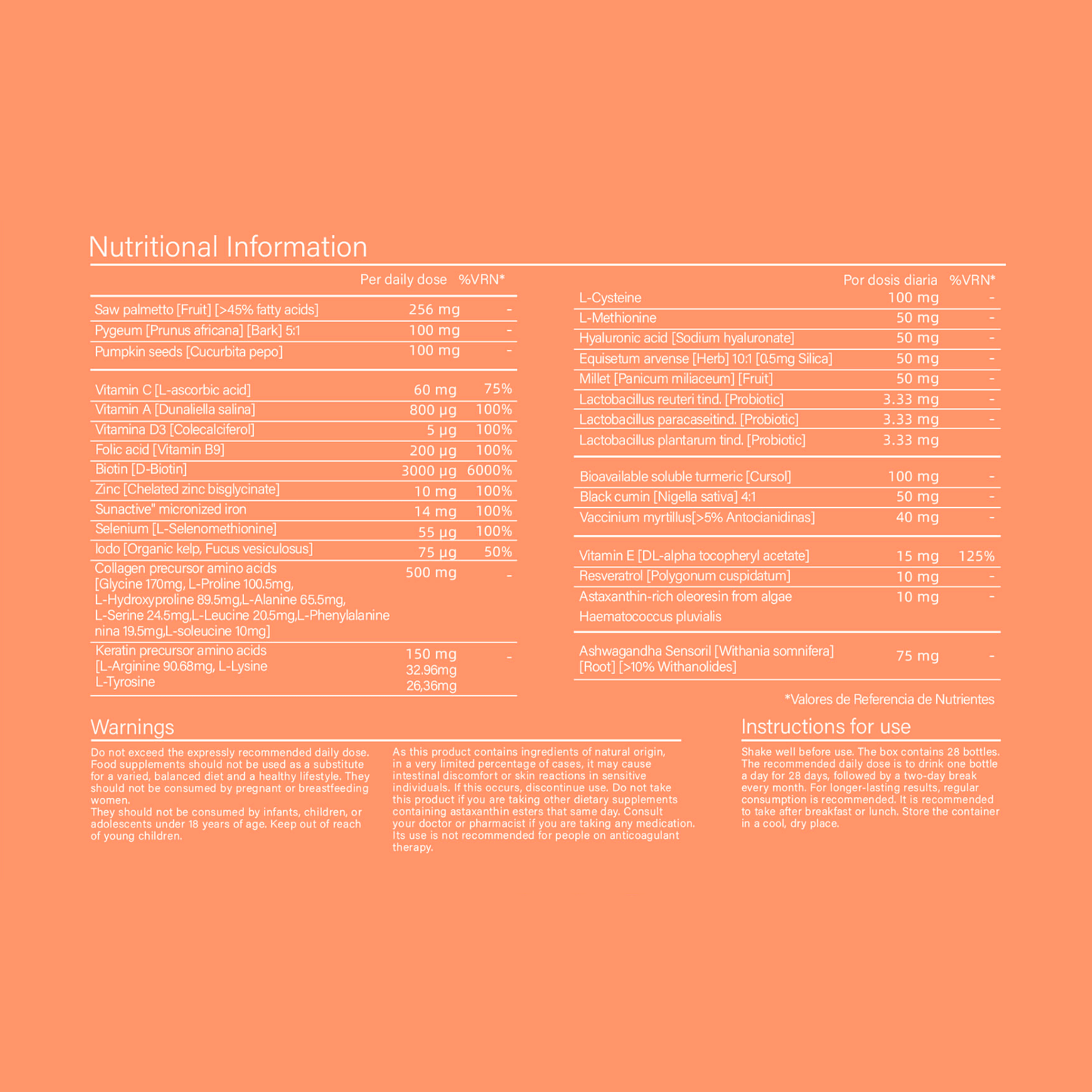
Lumeyr Women was developed specifically for this purpose: a daily liquid shot delivering biotin, zinc, selenium, vitamin D3, and a blend of botanical actives including pumpkin seed oil and saw palmetto — ingredients with growing evidence for supporting follicle health in women navigating hormonal challenges. For an additional targeted approach to micronutrient coverage, the Hair Skin Nails supplement provides a complementary blend of food-grown vitamins to support the follicle from within.

2. Support the Scalp Environment
Hormonal fluctuations can increase sebum production and scalp inflammation — both of which create a hostile environment for healthy follicle cycling. A clean, well-circulated scalp allows follicles to function at their best. Regular gentle exfoliation removes product build-up and excess sebum without stripping the scalp's natural barrier. The Revive + Restore Scalp Scrub is designed for exactly this purpose, combining exfoliation with soothing botanicals suited to a reactive scalp.
Scalp massage and mechanical stimulation have also demonstrated promising effects on hair density in small-scale investigations, with researchers suggesting that increased blood flow to the papilla — the base of the follicle — may help maintain anagen duration. Incorporating a tool such as the JUMBO Scalp Stimulator into your routine for five minutes daily is a low-effort, evidence-adjacent step worth adding to your stack.
3. Consider DHT-Modulating Botanicals
For women whose hair loss is being driven not just by telogen effluvium but by an underlying androgenetic sensitivity, managing DHT activity at the follicle becomes important. Pumpkin seed oil has attracted attention for its capacity to modestly inhibit 5-alpha reductase — the enzyme that converts testosterone to the more potent DHT. Saw palmetto operates through a broadly similar mechanism. Our article on female pattern hair loss treatment options explores these and other approaches in depth.
Ready to Support Your Follicles From Within?
Lumeyr Women is a daily liquid hair shot formulated for women navigating hormonal hair loss — biotin, zinc, selenium, pumpkin seed oil and more in one convenient serving.
Shop Lumeyr Women →Whilst hormonal contraceptives can affect hair growth cycles, it's worth noting that hair loss after pregnancy follows a similar hormonal mechanism and may be a more familiar experience for many women.
If you're experiencing hair shedding after starting the pill, understanding the underlying mechanism can help you determine whether you're dealing with telogen effluvium recovery time and what to expect.
While hormonal contraceptives can contribute to hair shedding in some women, exploring complementary approaches such as scalp massage benefits for hair growth may help support overall hair health alongside medical advice.
If you're experiencing hair loss whilst on the contraceptive pill, you might also want to explore natural remedies like the best pumpkin seed oil supplements for hair in the UK, which have shown promise in supporting hair health.
If you're experiencing hair loss whilst on the pill, some women find relief through natural supplements such as saw palmetto, which may help block DHT production.
Whilst hormonal changes from the pill can contribute to hair shedding, addressing nutritional deficiencies through the best vitamins for female hair loss in the UK may help support hair health during this time.
Whilst hormonal contraceptives can sometimes trigger hair shedding, addressing nutritional deficiencies through targeted supplementation may help support hair health, and our guide to the best drinkable hair supplements UK explores evidence-based options worth considering.
If you're experiencing hair loss whilst taking the contraceptive pill, you might also want to explore the best supplements for hair thinning in women as a complementary approach to managing your symptoms.
If you're concerned about contraceptive-related hair loss, our guide on the best contraceptive pill for hair loss UK offers practical recommendations for choosing a formulation that may minimise this unwanted side effect.
Whilst hormonal contraceptives like Rigevidon have been linked to hair loss in some users, the relationship between birth control pills and hair shedding remains complex and varies significantly between individuals.
If you're experiencing hair shedding whilst taking the pill, our guide on how to stop hair loss from birth control offers practical solutions to help you manage this common side effect.
If you're experiencing thinning hair after starting contraception, our guide on how to stop hair loss from birth control offers practical strategies to help restore your hair's health.
If you're concerned about hormonal contraceptives affecting your hair, our guide to the best contraceptive pill for hair loss UK can help you identify safer options for your individual needs.
For those seeking natural alternatives to manage hormonal hair loss, saw palmetto for women's hair loss has emerged as a popular option, though evidence for its effectiveness remains limited.
Frequently Asked Questions
- Can the contraceptive pill cause permanent hair loss?
- In most cases, pill-related hair loss is temporary. Telogen effluvium triggered by hormonal changes typically resolves within six to twelve months once the hormonal environment stabilises. However, if the pill unmasks an underlying genetic predisposition to androgenetic alopecia — female pattern hair loss — that underlying process may continue. This is why it's important to differentiate between the two with a GP or trichologist.
- How long after starting the pill does hair loss begin?
- Because of the natural delay in the hair cycle, shedding typically becomes noticeable two to four months after a hormonal trigger. If you started a new pill formulation and are now experiencing increased shedding, the connection may indeed be hormonal — but it is worth ruling out other causes such as iron deficiency or thyroid changes before assuming the pill alone is responsible.
- Will switching to a different pill stop the hair loss?
- Switching from a higher-androgenic to a lower-androgenic formulation can reduce the androgenic burden on follicles and may help — but the switch itself constitutes another hormonal change, which can trigger a short-term transitional shed. Any decision to switch formulations should be made with your GP, who can assess your full hormonal picture and medical history.
- Is post-pill hair loss the same as post-partum hair loss?
- They share the same underlying mechanism — a sudden drop in oestrogen causing synchronised follicle entry into telogen — but they differ in scale. Post-partum oestrogen levels are dramatically higher during pregnancy, so the subsequent drop is more pronounced and the shed is often more dramatic. Post-pill shedding is generally milder, though still distressing, and follows a similar recovery timeline.
- Should I take a supplement while on the pill to protect my hair?
- Nutritional support is a sensible step, particularly given that combined oral contraceptives can deplete certain B vitamins, zinc, and magnesium. A hair-specific supplement formulated for women — such as Lumeyr Women — ensures the follicle has the building blocks it needs regardless of what hormonal changes are occurring. Always check with your GP if you are taking any prescription medications to avoid interactions.
- Can the pill ever improve hair?
- Yes. Some women find that combined pills with anti-androgenic progestogens (such as drospirenone) actually reduce shedding, particularly if they were previously experiencing androgen-driven hair loss. The oestrogen component also prolongs anagen, which can result in perceptibly thicker, longer hair. Individual responses vary considerably, which is why one-size-fits-all advice rarely holds.
In Summary
The birth control pill and hair loss connection is real, but it is rarely straightforward. Whether you are shedding because a high-androgenic formulation is sensitising your follicles, because stopping the pill has triggered a transitional effluvium, or because the pill has unmasked a latent androgenetic tendency, the starting point is the same: understand which mechanism is at play, address any nutritional gaps, keep the scalp environment healthy, and give any intervention at least three to six months to show its effect.
If you're looking for a structured, evidence-informed approach, explore our comprehensive guide to female hair loss: causes, treatments and what actually works — and when you're ready to take action, Lumeyr Women is formulated with exactly this hormonal challenge in mind.

This article follows our editorial & research standards. It is informational content, not medical advice.