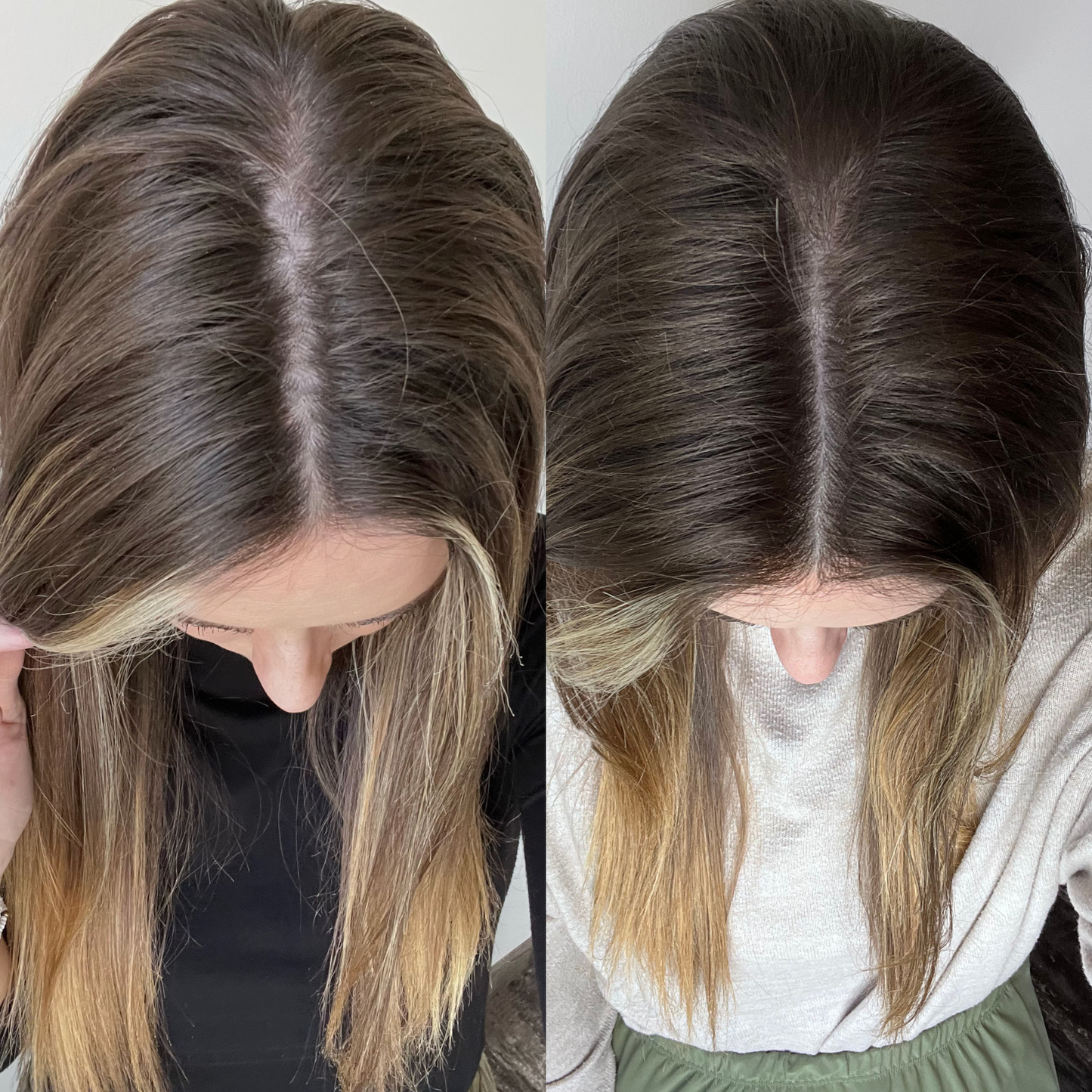
Saw Palmetto for Women's Hair Loss: What the Evidence Says


Saw palmetto women hair loss evidence is patchy, often misrepresented, and almost always written with men in mind — this article changes that. Here we examine the mechanism, assess what the available research actually shows for women specifically, and explain where saw palmetto sits relative to other natural DHT inhibitors.
Contents
Why DHT Matters for Women’s Hair
It is tempting to file DHT under “men’s problems”. That would be a mistake. Dihydrotestosterone is a potent androgen produced in both sexes via the conversion of testosterone by the enzyme 5-alpha reductase (5-AR). In people with a genetic sensitivity in their hair follicles, DHT binds to androgen receptors in the dermal papilla and progressively miniaturises the follicle — shortening the anagen (growth) phase until the hair becomes too fine to surface through the scalp.
For women, the picture is more nuanced than in men. Female pattern hair loss (androgenetic alopecia) typically presents as diffuse thinning across the crown rather than a receding hairline, and it frequently occurs even when serum androgen levels sit within the conventional laboratory reference range. Why? Because follicular sensitivity — determined partly by the density of androgen receptors and the local activity of 5-AR — can be elevated independently of circulating hormone levels. You can read more about this in our overview of female androgenetic alopecia symptoms.
Hormonal transitions amplify the problem. During perimenopause and menopause, oestrogen levels fall, which effectively unmasks the relative androgenic environment at the follicle. This is why many women first notice significant shedding in their late forties or early fifties, even if they have had subclinical follicle sensitivity for decades. The case for targeting the DHT pathway in women is, therefore, genuinely strong — and saw palmetto is one of the most studied natural tools for doing so.
What Saw Palmetto Actually Does at the Follicle
Saw palmetto (Serenoa repens) is a fan palm native to the south-eastern United States. Its small, dark berries contain a complex mixture of free fatty acids (including oleic, lauric and myristic acid) and phytosterols such as beta-sitosterol. It is these compounds that are pharmacologically active, not the berry itself in crude form — which is why the quality and standardisation of any extract matters enormously.
The primary mechanism of action is competitive inhibition of 5-alpha reductase. Saw palmetto’s fatty acid fraction binds to 5-AR and reduces its capacity to convert testosterone into DHT. Importantly, in laboratory settings it appears to inhibit both type I and type II isoforms of the enzyme. Type II is the dominant isoform in scalp follicles, making it the pharmacologically relevant target for hair retention. By contrast, the pharmaceutical drug finasteride selectively inhibits only type II, meaning saw palmetto may offer a different, though generally milder, inhibitory profile across both isoforms.
A secondary mechanism involves beta-sitosterol’s potential to compete with DHT at the androgen receptor level itself, offering a complementary layer of activity beyond mere enzyme inhibition. It is worth noting that the evidence for this receptor-level effect is largely preclinical; human trials have focused predominantly on the 5-AR inhibition pathway. Neither mechanism is as potent as pharmaceutical 5-AR inhibitors — but for women, who must be cautious about aggressive hormonal intervention, this milder action is often precisely what is wanted.
Reviewing the Evidence in Women
Here is where honesty is essential. The bulk of published clinical evidence on saw palmetto and hair loss has been conducted in men with androgenetic alopecia. The few trials that have included women tend to be small, of short duration, or use saw palmetto as part of a multi-ingredient formula, making it difficult to attribute effects to the single botanical. This is a genuine limitation that any responsible article must acknowledge.
That said, the mechanistic rationale for women is identical to men: if DHT-pathway sensitivity is driving follicle miniaturisation, then inhibiting that pathway — however mildly — should slow the process. Several small open-label studies and practitioner-reported outcomes suggest that women with androgenetic alopecia who supplemented with standardised saw palmetto extracts over periods of three to six months reported reduced daily shedding counts and modest improvements in hair density ratings. Effect sizes were generally modest and not dramatic, consistent with what you would expect from a 5-AR inhibitor of this potency class.
One important nuance: women whose hair loss is primarily driven by iron deficiency, thyroid dysfunction, nutritional gaps, or stress-induced telogen effluvium are unlikely to see meaningful benefit from saw palmetto. It is not a universal hair loss solution — it is specifically relevant to DHT-mediated follicle miniaturisation. If you are unsure of your root cause, our guide to female hair loss causes and treatments is a useful starting point before committing to a supplement protocol.

Comparing Natural DHT Inhibitors
Saw palmetto does not operate in isolation within the world of plant-based DHT inhibitors. Understanding how it compares to other studied botanicals helps you make an informed decision about whether to use it alone, in combination, or as part of a broader supplement strategy.
| Compound | Primary Mechanism | Evidence Quality (Hair) | Key Consideration |
|---|---|---|---|
| Saw Palmetto (Serenoa repens) | 5-AR type I & II inhibition; possible AR competition | Moderate (mostly male trials; some mixed-sex data) | Requires lipid-standardised extract for efficacy |
| Pumpkin Seed Oil | Delta-7 sterols; 5-AR inhibition & AR receptor blockade | Moderate (one RCT in men; mechanistic data in women) | Well tolerated; complementary to saw palmetto |
| Beta-Sitosterol | Competes with DHT at androgen receptor | Preliminary (preclinical & small human data) | Found naturally in both saw palmetto and pumpkin seed |
| Green Tea (EGCG) | Partial 5-AR inhibition; antioxidant at follicle | Low-moderate (limited human hair data) | Anti-inflammatory benefits may support scalp health |
| Stinging Nettle Root | SHBG binding; mild 5-AR modulation | Low (mostly prostate data extrapolated) | Often combined with saw palmetto in formulations |
Pumpkin seed oil deserves particular attention here because its evidence base, while still modest, is arguably the most compelling among plant-based options. It is the subject of our dedicated guide on pumpkin seed oil for hair: research, dosing and results, and it forms the basis of Lumeyr’s Pumpkin Seed Oil Softgels — formulated specifically for the doses referenced in the available literature.
How to Use Saw Palmetto: Dosing, Form and Timing
The most common doses used in published trials range between 160 mg and 320 mg per day of a standardised liposterolic extract. Lower doses of crude berry powder are unlikely to deliver the active fatty acid fraction in meaningful amounts because these compounds are both fat-soluble and degradable. For this reason, taking saw palmetto with a meal containing dietary fat is advisable to maximise absorption.
Consistency matters more than dose escalation. Because hair grows slowly — typically around one centimetre per month — and because the anagen phase of each follicle must complete before you see the result of any intervention, three months is an absolute minimum assessment window. Six months is more meaningful. Many practitioners and researchers who work with phytosterol protocols recommend photographing the hairline and crown area at baseline and at three-month intervals under consistent lighting to track changes objectively, since subjective perception of hair volume is notoriously unreliable.
There is no strong evidence favouring morning versus evening dosing for saw palmetto specifically. The practical priority is choosing a time you will take it reliably every day. Split dosing (for example, 160 mg twice daily) is theoretically logical for maintaining steadier plasma levels of the active compounds but is unproven to be meaningfully superior to a single daily dose in practice.
Combining Saw Palmetto with Pumpkin Seed Oil: A Layered Approach

The concept of “layered” DHT inhibition is gaining traction among trichologists who prefer plant-based protocols. Rather than relying on a single compound to do all the work, the approach combines ingredients that act at different points along the same pathway: one primarily inhibiting the enzyme that creates DHT, another competing at the receptor where DHT causes damage. Saw palmetto and pumpkin seed oil are arguably the most evidence-backed pairing for this strategy.
Pumpkin seed oil’s delta-7 sterol content appears to exert a receptor-level effect that complements saw palmetto’s enzyme-level inhibition. Both also share beta-sitosterol activity, providing an additive component. There is no published head-to-head or combination trial of these two specific compounds for female hair loss, so the argument is mechanistic rather than proven in controlled conditions. However, both are well tolerated, share no known adverse interactions, and address the DHT problem from different angles — which makes their combination a rational choice within a conservative supplement protocol.
Lumeyr’s Pumpkin Seed Oil Softgels provide a clean, lipid-standardised pumpkin seed oil in the dose range supported by the available literature. For a broader approach that also addresses nutritional gaps often seen alongside androgenetic hair loss, Lumeyr Women combines multiple evidence-informed ingredients in a single daily supplement designed specifically for women navigating hair thinning. You may also find it useful to explore our complete guide to natural 5-alpha reductase inhibitors for a wider view of this botanical category.
Support Your Hair from the Root
Lumeyr’s Pumpkin Seed Oil Softgels deliver the lipid-standardised phytosterol dose referenced in the research — a clean, straightforward companion to saw palmetto for women targeting the DHT pathway naturally.
Explore Pumpkin Seed Oil SoftgelsWhilst saw palmetto shows promise for female hair loss, other botanical remedies such as pumpkin seed oil dosage for hair regrowth have also demonstrated encouraging results in scientific studies.
While saw palmetto shows promise for certain types of hair loss, many women also explore comprehensive hair supplement formulations like those reviewed in our Nutrafol UK Review 2026: Best Hair Supplements for Women to address multiple nutritional factors contributing to hair health.
Whilst saw palmetto shows promise for addressing hormonal hair loss in women, other supplements like Viviscal offer an alternative approach backed by different clinical evidence.
Whilst saw palmetto may help address hormonal factors contributing to hair loss, it's worth considering whether environmental factors such as hard water and its impact on hair quality in the UK might also be playing a role in your hair concerns.
Whilst saw palmetto is often promoted as a natural solution, it's worth exploring the best natural DHT blocker supplements for women in the UK to understand how it compares with other evidence-based alternatives.
De manera similar a lo que ocurre con el aceite de semilla de calabaza para el cabello, la palma enana americana también ha despertado interés en el tratamiento natural de la alopecia femenina, aunque los estudios disponibles aún resultan limitados.
Whilst saw palmetto is often promoted for hair loss, it's worth exploring the best supplements for menopause hair loss in the UK to understand how it compares with other evidence-backed options for women experiencing hormonal hair thinning.
Whilst saw palmetto is often discussed as a potential hair loss remedy, a more comprehensive approach to supporting hair health may involve considering the best hair vitamins for women in the UK, which can work alongside other treatments to address nutritional deficiencies.
For those seeking alternatives to mainstream supplements, our guide on the best Nutrafol alternative UK (2026) for women explores other evidence-based options that may complement or replace saw palmetto in a hair loss regimen.
Whilst saw palmetto is often promoted as a natural remedy for hair loss, understanding how DHT and female hair loss interact is essential to evaluating whether this supplement may actually benefit women experiencing thinning hair.
Frequently Asked Questions
Does saw palmetto actually work for women’s hair loss?
The evidence is promising but still emerging. Saw palmetto contains fatty acids and phytosterols that inhibit 5-alpha reductase, reducing DHT conversion at the follicle level. Several small-scale trials suggest it may reduce hair shedding and modestly improve density, though large-scale randomised controlled trials in women specifically remain limited. The mechanistic rationale is sound; the clinical evidence base needs strengthening.
Is saw palmetto safe for women to take?
Saw palmetto is generally well tolerated at typical supplemental doses. Because it has mild hormonal activity via 5-AR inhibition, women who are pregnant, breastfeeding, or using hormonal contraceptives or HRT should consult a GP before use. Gastrointestinal discomfort is the most commonly reported side effect and usually resolves when taken with food.
How long does saw palmetto take to show results for hair loss?
Hair growth cycles mean you should allow a minimum of three months before expecting visible changes, with six months being a more realistic and honest assessment window. Because hair grows roughly one centimetre per month, even if saw palmetto successfully reduces shedding from week four, the cosmetic improvement in density takes time to manifest at the surface.
Can saw palmetto and pumpkin seed oil be taken together?
Yes, and this pairing makes logical sense. Both compounds operate within the DHT pathway but at different points: saw palmetto primarily inhibits the 5-AR enzyme, while pumpkin seed oil’s delta-7 sterols may also act at the androgen receptor level. There are no known adverse interactions between the two.
What dose of saw palmetto is used in hair loss research?
Published trials have used a broad range, generally between 160 mg and 320 mg per day of a lipid-based (liposterolic) extract. Raw berry powder is unlikely to deliver the active fatty acid fraction reliably and should not be considered equivalent to a standardised extract at the same labelled weight.
Does female pattern hair loss always involve DHT?
Not always, but often. Female pattern hair loss frequently involves elevated follicular sensitivity to DHT even when serum androgen levels appear normal on a blood test. This is why DHT-pathway supplements can be relevant even for women whose GP has told them their hormones look “fine” — the problem may be local receptor sensitivity rather than elevated circulating androgens.
The Bottom Line
Saw palmetto is not a miracle cure for women’s hair loss, and anyone telling you otherwise is overstating the evidence. What it is: a well-tolerated, mechanistically coherent botanical with a plausible and partially supported role in slowing DHT-mediated follicle miniaturisation in women. The quality of the extract matters more than most product labels admit. Three to six months of consistent use at an appropriate dose of a lipid-standardised extract is the minimum meaningful trial period.
Used alongside complementary phytosterols like pumpkin seed oil — and supported by adequate nutrition and targeted supplementation where deficiencies exist — saw palmetto forms a rational part of a conservative, plant-based approach to managing androgenetic hair thinning. It is not a replacement for medical assessment, but for women who want to act proactively within evidence-informed parameters, it is a reasonable first-line natural option.
For a broader picture of natural approaches in this category, explore our full guide to female pattern hair loss treatment options, or see how our formulated supplement compares in our Lumeyr Women product page.

This article follows our editorial & research standards. It is informational content, not medical advice.