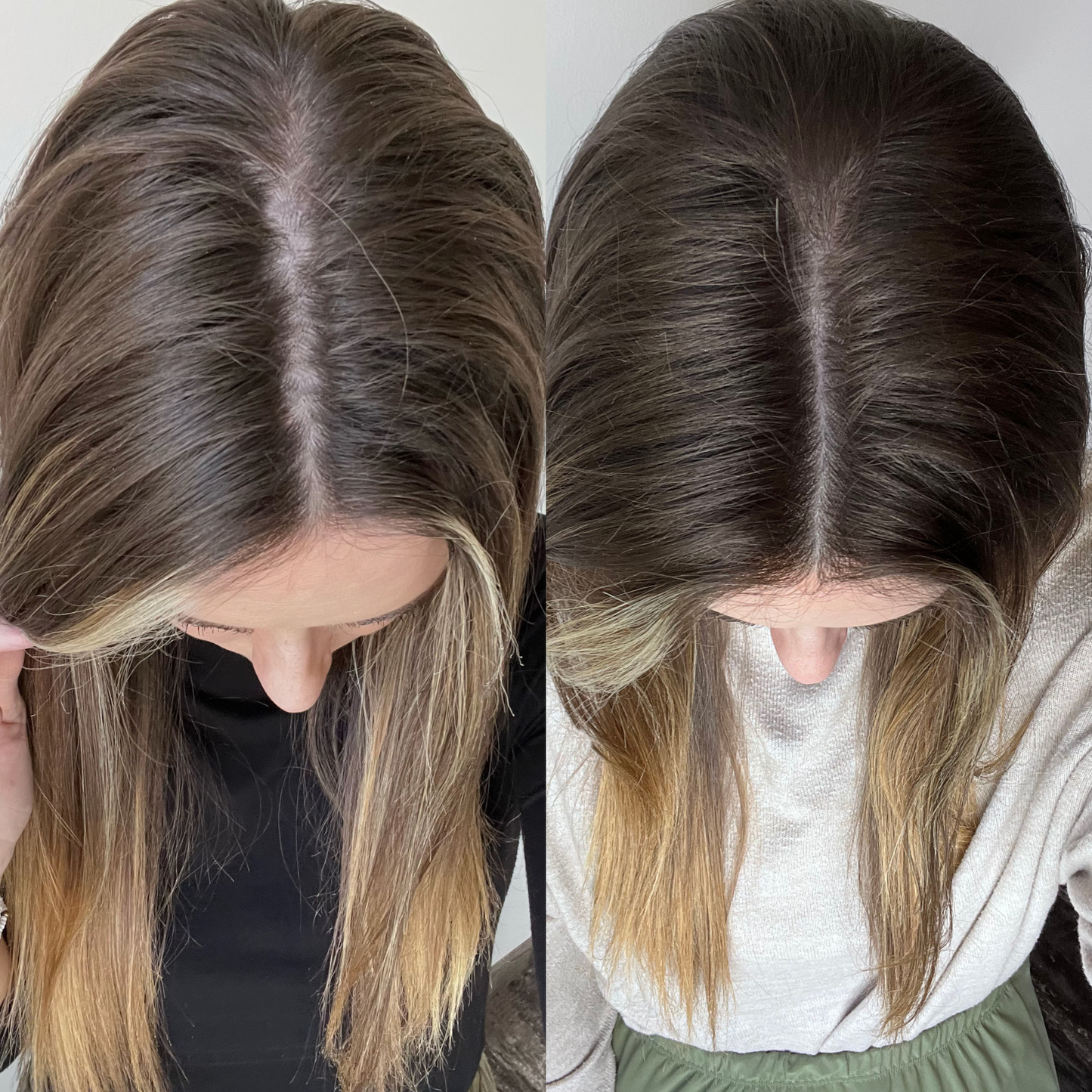
DHT and Female Hair Loss: The Complete Guide

- DHT miniaturises hair follicles in women who are genetically sensitive to androgens, causing gradual crown thinning.
- Menopause, high stress, and certain medical conditions increase DHT's impact on the scalp.
- Natural 5-alpha reductase inhibitors (pumpkin seed oil, saw palmetto, rosemary) show meaningful evidence at 24+ weeks.
- A GP assessment is essential before treatment — other conditions mimic DHT hair loss.

DHT and female hair loss are more closely linked than most women — and many GPs — realise. This complete guide explains exactly how dihydrotestosterone drives follicle miniaturisation in women, which signs distinguish it from other causes, and what the current evidence says about natural and medical interventions.

What is DHT and why do women produce it?
Dihydrotestosterone — almost universally abbreviated to DHT — is a steroid hormone derived from testosterone. It is classified as an androgen, meaning it has masculinising biological effects, yet it is present in every woman's body at low but physiologically relevant concentrations. Understanding where it comes from and what it does is the essential first step to understanding female androgenetic hair loss.
The enzyme responsible for producing DHT is called 5-alpha reductase (5-AR). It exists in two main isoforms: type 1, found predominantly in sebaceous glands and liver tissue, and type 2, concentrated in hair follicles, the prostate, and genital skin. When 5-AR encounters testosterone in those tissues, it converts it to DHT — a molecule that binds to androgen receptors roughly five times more powerfully than testosterone itself.
In women, the primary sources of testosterone — the raw material for DHT — are the ovaries and the adrenal glands, with smaller contributions from peripheral conversion in fat and skin tissue. Healthy adult women typically have circulating DHT levels far below those of men, but this does not mean follicles are immune to its influence. The sensitivity of the androgen receptor within each individual follicle can amplify the effect of even modest DHT concentrations, which is why some women with entirely normal blood androgen levels still experience androgenetic hair loss.
How DHT causes hair loss: the follicle miniaturisation process
The hair follicle is not a static tube. It cycles through three main phases: anagen (active growth, lasting two to seven years), catagen (a brief transitional phase), and telogen (resting, followed by shedding). In a healthy scalp, roughly 85–90% of follicles are in anagen at any given time, producing the full density most people associate with healthy hair.
When DHT binds to androgen receptors in the dermal papilla — the cluster of specialised cells at the base of the follicle that governs its growth signals — it initiates a cascade of changes that progressively shortens the anagen phase. Each successive growth cycle becomes a little shorter than the last. The follicle also physically shrinks, a process called miniaturisation. Terminal hairs (thick, pigmented, full-length) are gradually replaced by vellus-like hairs (thin, short, barely pigmented). Over months and years, these fine hairs become so small they are effectively invisible, leaving the scalp looking thinner even though the follicle itself has not been destroyed — at least not initially.
This distinction matters enormously for treatment: in the early and middle stages of androgenetic hair loss, the follicle is still alive and capable of producing a terminal hair if DHT's influence is reduced. Once follicular fibrosis sets in after years of severe miniaturisation, the window for meaningful recovery narrows significantly. This is why early intervention consistently produces better outcomes than waiting for hair loss to become advanced.

Recognising DHT-driven hair loss in women
Female androgenetic alopecia (FAGA) — the clinical term for DHT-driven hair loss in women — presents differently from the male pattern most people recognise. Rather than a receding hairline or bald crown, women typically experience diffuse thinning across the top and crown of the scalp, with the frontal hairline often preserved or only mildly affected. A widening central parting is frequently the first visible clue, and many women notice it when styling their hair or looking at photographs over time.
Shedding is another early indicator. Normal hair loss is generally considered to be up to roughly 50–100 hairs per day; during the accelerated cycling that accompanies follicle miniaturisation, this can increase noticeably, particularly during washing or brushing. However, increased shedding alone is not diagnostic of androgenetic hair loss — it is also a feature of telogen effluvium triggered by stress, nutritional deficiency, or illness.
For a reliable picture, the pattern of loss and the condition of individual hairs matter. In FAGA, close inspection of the scalp (or trichoscopy performed by a specialist) reveals hairs of varying diameter in the same follicular unit — so-called hair shaft diversity — which is a hallmark of miniaturisation. If you notice this pattern alongside crown thinning and can see the scalp through previously dense hair, DHT sensitivity is a probable contributor. See our detailed guide to female androgenetic alopecia symptoms for a fuller breakdown of diagnostic clues.
| Feature | DHT / Androgenetic Alopecia | Telogen Effluvium | Alopecia Areata |
|---|---|---|---|
| Pattern | Diffuse crown thinning, preserved frontal hairline | Diffuse all-over shedding | Patchy, well-defined bald areas |
| Onset | Gradual, often over years | Rapid, often 2–3 months after trigger | Can be sudden |
| Hair shaft | Variable diameter (miniaturised + terminal) | Uniform diameter, telogen bulb at root | Exclamation-mark hairs at patch edges |
| Reversibility | Partially, if treated early | Usually fully reversible once trigger resolved | Variable; often regrows spontaneously |
| Blood tests | May be normal; check androgens, thyroid, ferritin | Often reveals deficiency or hormonal shift | Autoimmune markers investigated |
Triggers that raise DHT activity in women
Even in women with a genetic predisposition to androgen-sensitive follicles, DHT-driven hair loss is rarely inevitable or fixed. A range of physiological and lifestyle factors can meaningfully raise DHT activity or lower the threshold at which follicles respond to it. Identifying your personal triggers is a key part of addressing the problem effectively.
Hormonal transitions
The two most significant hormonal triggers in women are pregnancy/post-partum and the perimenopause and menopause transition. During pregnancy, oestrogen levels are very high and hair growth is often unusually lush; after delivery, oestrogen drops sharply and a wave of shedding (post-partum telogen effluvium) follows, which can unmask underlying androgenetic sensitivity. During perimenopause, oestrogen declines progressively while androgens decline more slowly or not at all, shifting the hormonal balance in a direction that favours DHT's action on the follicle. For a step-by-step approach to this specific phase, see our guide on hair loss during the menopause.
PCOS and hyperandrogenism
Polycystic ovary syndrome is one of the most common endocrine conditions in women of reproductive age and is characterised by elevated androgens including testosterone and its DHT derivative. Women with PCOS are significantly more likely to experience scalp hair thinning alongside other androgen-excess signs such as acne and hirsutism. Managing underlying PCOS through a GP or endocrinologist is therefore central to managing PCOS-related hair loss — no supplement or topical treatment can adequately compensate for unmanaged hormonal dysregulation.
Chronic stress and cortisol
The connection between stress and hair loss is well established, though the precise mechanisms are multiple. Elevated cortisol from chronic psychological or physiological stress can stimulate adrenal androgen production, increasing the pool of precursors available for DHT conversion. Separately, stress directly disrupts the hair cycle through neurogenic pathways involving substance P and other mediators expressed in the scalp. The result is a compounding effect: DHT and stress together can push more follicles into telogen simultaneously, accelerating visible thinning. Our article on stopping stress-related hair loss covers this interaction in detail.
Nutritional status
Several micronutrient deficiencies amplify DHT-driven hair loss without themselves being the primary cause. Iron deficiency is particularly relevant: ferritin (stored iron) is essential for normal anagen phase duration, and when levels are low, follicles are more susceptible to early catagen entry — which synergises poorly with the shortening effect of DHT. Zinc is a cofactor for 5-alpha reductase regulation, and both deficiency and excess have been linked to hair loss. Adequate vitamin D, B vitamins, and protein intake support the follicle's resilience against androgenic stress.
Natural DHT blockers: what the evidence actually says
The term "DHT blocker" is widely used in the supplement industry, sometimes loosely and sometimes misleadingly. For the purposes of this guide, a meaningful natural DHT blocker is a compound that demonstrably inhibits 5-alpha reductase activity or modulates androgen receptor binding in ways that reduce DHT's effect on the follicle — and that has at least some human clinical data, not just cell-culture or rodent studies.
Pumpkin seed oil
Pumpkin seed oil is currently the most clinically supported natural 5-AR inhibitor for hair loss. A 24-week randomised, double-blind, placebo-controlled trial (Cho et al., 2014) in men with androgenetic alopecia found that participants taking 400 mg of pumpkin seed oil daily had approximately 40% more hair count at the end of the study compared with a 10% increase in the placebo group. While the trial used a male population, the 5-AR inhibitory mechanism is androgen-pathway mediated and relevant to women. The fatty acid profile of pumpkin seed oil — including delta-7-sterols — is thought to competitively inhibit 5-AR type 1 and 2. Lumeyr's Pumpkin Seed Oil Softgels provide a standardised dose in a format that mirrors what the clinical literature has studied. For a deep dive into the research, see our guide on pumpkin seed oil for women's hair growth.
Saw palmetto
Saw palmetto (Serenoa repens) extract is one of the most widely studied plant-based 5-AR inhibitors. Its active compounds — primarily free fatty acids and phytosterols — inhibit both type 1 and type 2 isoforms of 5-AR, giving it a mechanistic profile similar to the pharmaceutical finasteride, though at a fraction of the potency and without finasteride's systemic hormonal effects. Several small trials and a pooled analysis suggest improvements in hair density and shedding reduction with saw palmetto supplementation over 12–24 weeks in individuals with androgenetic alopecia, though most trials are small and further large-scale replication in female populations specifically is needed. Our dedicated article on saw palmetto for women's hair reviews the current evidence in detail.
Rosemary extract
Rosemary (Rosmarinus officinalis) extract, particularly when applied topically, has attracted serious research attention. A 2015 randomised controlled trial (Panahi et al., 2015) comparing rosemary oil against 2% minoxidil over 6 months found comparable increases in hair count between the two interventions, with rosemary producing significantly less scalp itching. The proposed mechanism involves carnosic acid, which stimulates nerve growth factor expression and may improve scalp circulation. This does not make rosemary a direct DHT blocker in the way pumpkin seed oil or saw palmetto are, but it supports follicle viability and resilience in a way that complements DHT-modulating strategies.
Spearmint and green tea (EGCG)
Both spearmint and green tea extract (via epigallocatechin gallate, or EGCG) have been studied in the context of androgen modulation. Spearmint tea has shown antiandrogenic activity in small trials involving women with PCOS, reducing free testosterone. EGCG inhibits 5-AR in vitro and has demonstrated some promise in preliminary human studies for scalp health. These compounds are interesting additions to a broader strategy but should be considered supporting rather than primary interventions at the current evidence level.

| Ingredient | Primary mechanism | Quality of evidence (human) | Typical studied duration |
|---|---|---|---|
| Pumpkin seed oil | 5-AR type 1 & 2 inhibition | 1 RCT (men); mechanistic plausibility for women | 24 weeks |
| Saw palmetto | 5-AR inhibition; anti-inflammatory | Several small trials; pooled analyses | 12–24 weeks |
| Rosemary extract (topical) | Nerve growth factor; circulation | 1 RCT vs minoxidil | 6 months |
| Spearmint | Androgen reduction (free testosterone) | Small trials in PCOS women | 30 days–3 months |
| Green tea (EGCG) | 5-AR inhibition (in vitro); antioxidant | Mostly preclinical; limited human data | Variable |
| Zinc | 5-AR cofactor regulation; follicle support | Observational; some supplementation trials | 8–24 weeks |
Tackle DHT-related thinning from within
Lumeyr Women combines pumpkin seed oil, saw palmetto, and key micronutrients in a daily format designed specifically for women experiencing androgenetic hair thinning.
Shop Lumeyr Women →Medical treatments for DHT-related hair loss
Natural interventions form an important part of a comprehensive strategy, but women with moderate to significant androgenetic hair loss should also understand the medical treatment landscape. The following are the most commonly used prescription and over-the-counter medical options in the UK. This section is informational; all prescription treatments require assessment and prescription from a qualified clinician.
Minoxidil
Minoxidil is currently the only topical treatment licensed specifically for female pattern hair loss in the UK. Available over the counter in 2% and 5% formulations, it works primarily as a vasodilator — improving blood supply to the follicle and prolonging the anagen phase — rather than as a direct DHT blocker. Studies suggest that consistent daily use over 4–6 months is needed before meaningful changes in hair density can be assessed. Minoxidil must be used continuously; hair loss typically resumes within several months of stopping. Side effects are generally mild (scalp irritation, initial increased shedding in the first few weeks) but a small number of women experience unwanted facial hair growth with the 5% concentration.
Spironolactone
Spironolactone is a prescription diuretic with significant anti-androgenic properties. It blocks androgen receptors and reduces adrenal androgen production, making it one of the most commonly used systemic treatments for female androgenetic alopecia and PCOS-related hair loss in clinical practice. It is typically prescribed at doses ranging from 50–200 mg per day and is not suitable for use during pregnancy. Women considering spironolactone should discuss risks, monitoring requirements, and interactions with their GP or dermatologist.
Finasteride and dutasteride
These pharmaceutical 5-AR inhibitors are well-established in male androgenetic alopecia but are used only in specific circumstances in post-menopausal women in the UK, as they carry significant teratogenic risk. Some dermatologists prescribe low-dose finasteride (1–2.5 mg) off-label in post-menopausal women with significant androgenetic hair loss when other options have been insufficient. This requires careful specialist assessment.
Combined oral contraceptives
For pre-menopausal women, certain combined oral contraceptives — particularly those containing anti-androgenic progestogens such as drospirenone or cyproterone acetate — can reduce androgen levels and slow androgenetic hair loss. The effect on hair is secondary to their primary contraceptive action, and hair benefits must be weighed against cardiovascular and other risks in consultation with a GP.

Scalp environment and DHT: the overlooked connection
Most conversations about DHT and female hair loss focus on systemic hormone levels and oral supplements. The scalp environment itself receives far less attention, yet it plays a meaningful role in modulating DHT's local impact and supporting whatever other interventions a woman pursues.
Sebum, DHT, and scalp inflammation
DHT is particularly concentrated in sebum, the oily substance produced by sebaceous glands adjacent to the follicle. Scalps that produce excess sebum effectively bathe follicle openings in DHT-rich secretion. When sebum combines with dead skin cells and environmental pollutants, it creates a build-up that can block follicle mouths and contribute to a low-grade inflammatory environment. This inflammation — sometimes called microinflammation or perifollicular inflammation — is increasingly recognised as a factor that accelerates follicle miniaturisation beyond what DHT alone would produce. Regular, gentle exfoliation of the scalp to remove this build-up is therefore not merely cosmetic but physiologically relevant. Lumeyr's Revive + Restore Scalp Scrub is formulated specifically to clear follicle-clogging debris without disrupting the scalp's natural barrier.
Circulation and nutrient delivery
The dermal papilla — the DHT-targeted control centre of the follicle — is entirely dependent on capillary blood supply for nutrient delivery and waste removal. Poor scalp circulation reduces the delivery of the micronutrients (zinc, iron, biotin, amino acids) that follicle cells need to maintain normal cycling. Mechanical stimulation of the scalp through massage or tools that increase local blood flow can complement nutritional and DHT-modulating strategies by improving this delivery. Lumeyr's JUMBO Scalp Stimulator is designed for regular scalp massage use, which some small studies suggest may support anagen retention when used consistently over several months.
Water quality and scalp health
UK water — particularly in the South East — is predominantly hard, containing elevated calcium and magnesium mineral salts. While there is no direct evidence that hard water raises DHT levels, mineral deposits can disrupt the scalp's microbiome and pH balance, contributing to the inflammatory environment that compounds DHT-driven damage. If you live in a hard water area, this is worth factoring into your scalp care routine. Our article on hard water and hair quality in the UK provides practical guidance on managing this.
Limitations of the evidence: what natural DHT blockers won't do
Honesty about the evidence base is essential on a topic as emotionally significant as hair loss. The natural DHT-blocking category has grown considerably over the past decade, and with that growth has come a degree of overclaiming that does women a disservice. Here is what the current data genuinely does and does not support.
Sample sizes and trial populations
The majority of trials on pumpkin seed oil and saw palmetto for hair loss have been conducted in small populations — often 40–100 participants — and most have used predominantly or exclusively male subjects. Extrapolating results to women assumes that the hormonal mechanism is sufficiently similar, which is biologically plausible for 5-AR inhibition but not definitively proven in adequately powered female trials. Until larger, female-specific randomised controlled trials are conducted and replicated, the evidence for natural DHT blockers in women remains promising but preliminary.
Combined formulations
Many commercial supplements — including Lumeyr Women — contain multiple active ingredients simultaneously. This is strategically sensible (combining complementary mechanisms) but makes it scientifically difficult to attribute observed outcomes to any single ingredient. The active ingredient that is driving benefit in a multi-component formula may not be the one with the most prominent marketing, and individual responses to specific ingredients vary considerably.
What natural interventions cannot reverse
Advanced follicular fibrosis — the stage at which years of severe miniaturisation have caused permanent structural scarring of the follicle — is not reversible through natural supplementation. Natural DHT-modulating strategies are genuinely useful for slowing progression, potentially stabilising hair density, and supporting the follicle environment in earlier-stage androgenetic hair loss. They are not a substitute for medical assessment and are unlikely to produce dramatic regrowth in women with longstanding, significant hair loss without concurrent medical treatment. Similarly, any hair loss caused primarily by causes other than androgens (thyroid disease, nutritional deficiency, autoimmune conditions) will not respond meaningfully to DHT-modulating strategies until the underlying cause is addressed.
For a broader view of all treatment options available to women in the UK — including medical, cosmetic, and procedural approaches — our comprehensive guide to female pattern hair loss treatment options is a useful companion to this article. Our overview of natural 5-alpha reductase inhibitors also goes deeper on the mechanism science if you want to understand the biochemistry in more detail.

Support your follicles from every angle
Whether you're targeting DHT from within or caring for your scalp environment, Lumeyr's Hair Skin Nails range supports the complete picture of female hair health.
Explore Hair, Skin & Nails →Frequently asked questions
Can DHT really cause hair loss in women?
Yes. Women produce small amounts of DHT naturally, and in those with androgen-sensitive follicles, elevated DHT or heightened receptor sensitivity causes progressive follicle miniaturisation, producing the gradual thinning characteristic of female androgenetic alopecia. The degree of sensitivity varies considerably between individuals, which is why some women are significantly affected and others with similar hormone levels are not.
What is DHT and where does it come from in women?
DHT (dihydrotestosterone) is a potent androgen produced when the enzyme 5-alpha reductase converts testosterone into DHT. In women, this conversion occurs mainly in the ovaries, adrenal glands, skin, and scalp tissue itself. Normal female DHT levels are far lower than in men, but the scalp follicles can still respond strongly to even modest amounts — particularly in women with inherited androgen receptor sensitivity.
How do I know if DHT is causing my hair loss?
DHT-related hair loss in women typically presents as diffuse thinning across the crown and top of the scalp, with the frontal hairline usually preserved. A widening part line is a common early sign. Diagnosis requires a GP or trichologist assessment; blood tests can measure androgen levels and rule out other causes such as thyroid disorders or iron deficiency. Trichoscopy — the examination of scalp and hairs under magnification — can identify the variable hair shaft diameters characteristic of miniaturisation.
Does menopause make DHT-related hair loss worse?
Yes, menopause commonly worsens DHT-driven thinning. As oestrogen levels fall, the relative balance between oestrogen and androgens shifts, leaving DHT's effects on follicles less counteracted. Many women who had stable hair throughout their thirties and forties first notice significant thinning in perimenopause or after menopause. This is one reason that post-menopausal women are often the group that responds best to anti-androgenic medical treatments.
What natural ingredients can help block DHT?
Several natural compounds act as mild 5-alpha reductase inhibitors. Pumpkin seed oil, saw palmetto, and rosemary extract have the most clinical support. A 24-week randomised trial (Cho et al., 2014) found pumpkin seed oil supplementation associated with significantly increased hair count versus placebo. These are not substitutes for medical treatment but can form a meaningful part of a broader hair health strategy, particularly in earlier-stage androgenetic loss.
How long does it take to see results from DHT-blocking supplements?
Hair growth cycles are slow, so meaningful visible changes from any supplement typically require consistent use over at least 3 to 6 months. Studies on natural DHT-modulating ingredients generally run for 24 weeks or longer before measuring outcomes. Expect gradual improvements in density and reduced shedding rather than rapid regrowth — and maintain realistic expectations about the degree of change achievable without concurrent medical treatment in moderate-to-severe cases.
Are DHT-blocking supplements safe for women?
Most plant-based 5-alpha reductase inhibitors such as pumpkin seed oil and saw palmetto are generally well-tolerated at studied doses. However, women who are pregnant, breastfeeding, or taking hormonal contraceptives or HRT should consult a GP or pharmacist before adding any supplement that may influence androgen metabolism. Never self-treat significant hair loss without professional assessment — missed underlying diagnoses are a real risk in this area.
Can stress make DHT-related hair loss worse?
Chronic stress can worsen hair loss through multiple pathways. Cortisol dysregulation can influence adrenal androgen production, potentially increasing the substrate available for DHT conversion. Stress also independently triggers telogen effluvium, causing sudden diffuse shedding that can be confused with or compound androgenetic hair loss. Managing stress is therefore an important part of any hair health plan, not a peripheral consideration.
For women concerned about hormonal triggers, it's worth understanding that hormonal contraceptives can sometimes contribute to hair loss, which may be related to DHT sensitivity in genetically predisposed individuals.
Whilst DHT plays a significant role in androgenetic alopecia, it's worth noting that certain contraceptives like Rigevidon can also trigger hair loss through different hormonal mechanisms.
For women experiencing DHT-related hair loss, exploring hormonal solutions may be beneficial, and our guide on the best contraceptive pill for hair loss UK offers detailed information on pharmaceutical options that can help manage this condition.
Conclusion
DHT and female hair loss are inseparably linked for a significant proportion of women — yet the relationship is more nuanced than a simple "more DHT = more hair loss" equation. Follicle receptor sensitivity, local scalp DHT production, hormonal transitions, nutritional status, and scalp health all modulate how aggressively the hormone affects any individual woman's hair density.
The evidence base for natural intervention is genuinely encouraging, particularly for pumpkin seed oil and saw palmetto as mild 5-alpha reductase inhibitors and for rosemary as a topical follicle support agent. These interventions work best when started early, used consistently over months, and combined with good scalp hygiene, adequate nutrition, and — where appropriate — medical management. They are not miracle cures, and honesty about their limitations is essential for women making informed decisions about their hair health.
If you are experiencing noticeable hair thinning, the most valuable first step is a GP assessment to confirm the cause and rule out treatable conditions. With a clear diagnosis in hand, a layered strategy — targeting DHT through supplementation, supporting the follicle environment topically, and addressing any lifestyle factors that amplify androgenic sensitivity — gives women the best realistic chance of slowing progression and preserving the density they have.
Explore Lumeyr's scalp care collection and Lumeyr Women daily supplement as part of your own evidence-informed approach to managing DHT-related hair thinning.
Sources
- Cho et al. (2014) — Effect of pumpkin seed oil on hair growth in men with androgenetic alopecia: a randomised, double-blind, placebo-controlled trial. Evidence-Based Complementary and Alternative Medicine.
- Panahi et al. (2015) — Rosemary oil vs minoxidil 2% for the treatment of androgenetic alopecia: a randomised comparative trial. Skinmed.
- Sinclair R et al. (2011) — Hair loss in women: medical and cosmetic approaches to increase scalp hair fullness. British Journal of Dermatology.
- Olsen EA (2001) — Female pattern hair loss. Journal of the American Academy of Dermatology.
- Shapiro J, Price VH (1998) — Hair regrowth: therapeutic agents. Dermatologic Clinics.
This article follows our editorial & research standards. It is informational content, not medical advice.