Scalp Massage Benefits for Hair Growth: What Really Works


The scalp massage benefits for hair growth conversation has shifted from spa indulgence to genuine trichological interest — and for good reason. Used consistently and correctly, scalp massage is one of the few entirely free, low-risk habits that may meaningfully support the conditions your follicles need to thrive.
How Scalp Massage Actually Works on the Follicle
To appreciate why scalp massage might help hair grow, it helps to understand what the hair follicle needs moment to moment. Each follicle is a tiny metabolic engine — it relies on a constant supply of oxygen and nutrients delivered through the dermal papilla, a dense cluster of capillaries nestled at the follicle's base. When circulation in the scalp is sluggish, that nutrient pipeline narrows, and the follicle may shift prematurely from its active growing phase (anagen) into the resting or shedding phases.
Mechanical pressure from massage causes local vasodilation — blood vessels in the treated area widen briefly, increasing flow. Repeated over time, this stimulus may encourage the formation of new capillary networks, a process called angiogenesis. The scalp is also home to a layer of connective tissue called the galea aponeurotica. Chronic tension in this tissue — common in people who carry stress in the jaw and forehead — can compress superficial vessels and restrict flow. Regular massage works this tension out in much the same way that a deep-tissue massage addresses knots in shoulder muscles.
There is also a mechanical stretch component worth noting. Research groups have proposed that physical deformation of follicle cells during massage may trigger gene expression changes that encourage the follicle to stay in the anagen phase longer. This is a compelling hypothesis, though it is still being explored. What is well established is that a healthy, well-perfused scalp simply creates better conditions for growth than a tight, under-nourished one.
What the Evidence Says (and What It Doesn't)
The science around scalp massage is genuinely promising, but it is worth being honest about its current scope. A handful of small studies — primarily from Japanese and Korean research groups — have observed that standardised daily scalp massage over periods of roughly 24 weeks was associated with increased hair shaft thickness in participants. Hair count improvements were less consistent, but thickness changes are significant because finer hair is a hallmark of follicular miniaturisation, the process underlying most female pattern thinning.
These studies used tightly controlled massage protocols delivered by devices — which is partly why tool-based massage tends to outperform informal finger rubbing in research settings. The pressure was measured and consistent. In practice, that level of precision is hard to replicate by hand alone, which is one strong argument for using a purpose-built tool rather than relying solely on fingertips.
What the evidence does not yet support is the claim that scalp massage alone can reverse established hair loss conditions with a significant hormonal or genetic driver. If you are experiencing noticeable thinning, massage is best understood as a supportive habit within a wider strategy — not a standalone cure. For a fuller picture of female hair loss and available approaches, our guide to female hair loss causes and treatments is a useful starting point.

Technique, Timing and Tools
The right pressure
Firm-but-comfortable is the standard most practitioners recommend. You should feel a definite, pleasant pressure — enough to slightly move the scalp over the skull beneath it. If you are pressing so hard that it is uncomfortable, or so lightly that the scalp does not shift at all, you are likely outside the effective window. Think of it as somewhere between a gentle head rub and a firm kneading motion.
Where to start and how to move
Begin at the nape of the neck, where tension often accumulates, and work forward in small circular or back-and-forth motions. Cover the temples, the crown, and the hairline systematically. If you are using a tool, divide the scalp into four quadrants and spend roughly equal time in each. The goal is whole-scalp coverage, not just the areas where you have noticed thinning — healthy follicles benefit from good circulation too, and you want to maintain what you have as much as encourage regrowth.
Frequency and duration
Daily is ideal. The benefits of massage are cumulative and largely dependent on consistent repetition — occasional sessions are unlikely to produce the same capillary adaptations as a daily habit. A session of 4–10 minutes is achievable during a shower, whilst watching television, or as part of a wind-down routine before bed. The exact timing matters less than the regularity.
| Massage Method | Best For | Approximate Pressure Control | Notes |
|---|---|---|---|
| Fingertips only | Travel, quick sessions | Variable — hand fatigue common | Effective but inconsistent over long sessions |
| Rubber scalp brush | In-shower use with shampoo | Moderate and even | Good for product distribution; gentler on scalp |
| Silicone stimulator tool | Daily dry or wet massage | Consistent, adjustable by hand pressure | Easiest to use long-term; covers more surface area |
| Electric vibrating device | Relaxation-focused sessions | Fixed (device-dependent) | Less mechanical stretch; more sensory stimulation |
For everyday use, a high-quality silicone stimulator strikes the best balance between ease of use and effective pressure delivery. The Lumeyr JUMBO Scalp Stimulator is designed with wider-spaced, firm silicone tines that grip the scalp tissue rather than just the hair — making it considerably more effective than a standard shower brush for the mechanical stimulation that matters to follicle health.
Ready to Make Scalp Massage a Daily Habit?
The Lumeyr JUMBO Scalp Stimulator is built for whole-scalp coverage with consistent, follicle-level pressure — dry or in the shower.
Shop the JUMBO Scalp StimulatorBuilding It Into a Complete Scalp Routine
Scalp massage works best as one component of a layered approach rather than a solitary intervention. Think of your scalp the same way you think about facial skincare: cleansing, treatment, and protection all play distinct roles, and skipping one weakens the whole system.
Step 1: Cleanse and exfoliate
Product build-up, excess sebum, and dead skin cells can block follicle openings and create a hostile environment for growth. A weekly scalp exfoliation before your shampoo removes this debris and prepares the scalp to respond better to massage. The Revive + Restore Scalp Scrub combines gentle physical exfoliation with calming botanicals — use it once or twice per week as the first step of your wash routine, followed immediately by your scalp massage whilst the shampoo is working.
Step 2: Massage
Work your stimulator through damp hair immediately after applying shampoo or a treatment. The product reduces friction and allows the tool to glide whilst still maintaining the pressure that drives circulation benefits. Four to five minutes at this stage counts as your daily session — you are essentially getting two tasks done at once.
Step 3: Nourish from within
The scalp delivers nutrients to the follicle through the bloodstream. If your diet or lifestyle leaves key micronutrients in short supply — iron, biotin, vitamin D, and zinc are the most commonly implicated in hair thinning among UK women — massage can optimise delivery, but there is less to deliver. Supporting this internally with Lumeyr Women, a daily supplement formulated specifically around the nutritional needs of women experiencing hair loss, gives the follicle the raw materials it needs alongside the improved circulation massage provides.

Step 4: Protect against environmental damage
If you live in a hard water area — which covers much of England — the minerals in your tap water can deposit on the scalp and hair shaft, weakening the surface and contributing to dryness. This is a factor many women do not connect to their hair health, but it is significant. Our article on hard water and hair quality in the UK covers this in detail, including filtration options worth considering as part of a full scalp routine.
Common Mistakes That Cancel Out the Benefits
Done incorrectly, scalp massage can create more problems than it solves. These are the errors most commonly seen — and most worth avoiding.
- Inconsistency: A five-minute session every ten days will not produce the capillary adaptations that consistent daily practice can. Treat it like tooth brushing — non-negotiable, not occasional.
- Too much pressure on an inflamed scalp: If your scalp is actively flaky, sore, or irritated, vigorous massage can exacerbate inflammation. Address the scalp condition first, then reintroduce massage gently.
- Using fingernails: Long nails applied with pressure can micro-scratch the scalp surface and introduce bacteria. Use the pads of your fingers or a smooth-tipped tool.
- Ignoring the nape and temples: Most people concentrate on the crown. The hairline, temples, and nape are often where early miniaturisation begins in women, and they deserve equal attention.
- Expecting quick results: Hair grows in cycles lasting months. You will not see meaningful density or thickness changes in two or three weeks. Commit to at least three months of consistent practice before evaluating progress.
Whilst scalp massage can stimulate blood flow to hair follicles, maintaining the correct scalp pH balance for healthier hair is equally crucial for achieving optimal growth results.
Whilst scalp massage can certainly improve circulation and promote relaxation, understanding your scalp microbiome and hair health is equally crucial for achieving meaningful, long-term hair growth results.
Whilst scalp massage can stimulate blood flow to hair follicles, combining this technique with nutrient-rich supplements like those featured in our guide to best pumpkin seed oil supplements for hair in the UK may provide more comprehensive results for promoting healthy hair growth.
Whilst scalp massage can stimulate blood flow to hair follicles, it's equally important to protect your hair during washing with a best filtered showerhead for hair in the UK, as chlorine and hard water can counteract your growth efforts.
Whilst scalp massage can improve circulation to the hair follicles, combining this technique with the right hair growth supplements that actually work in the UK may provide more comprehensive results for promoting hair growth.
Frequently Asked Questions
How long does it take to see hair growth results from scalp massage?
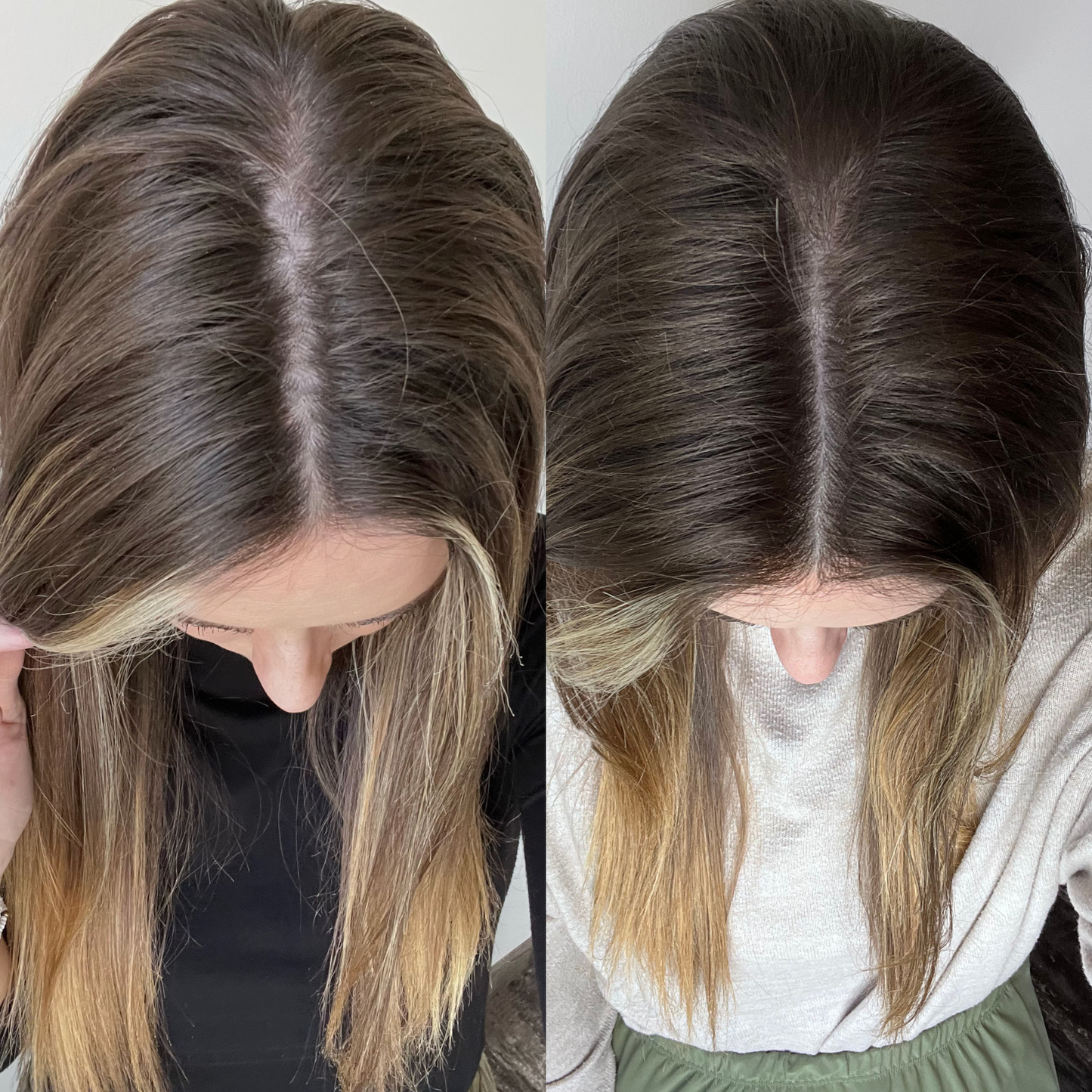
Most trichologists suggest allowing at least 12–24 weeks of consistent daily massage before expecting visible changes in density or thickness. Hair grows roughly 1–1.5 cm per month, so patience is essential. Photograph your parting every four weeks in the same lighting to track subtle progress that is easy to miss day to day.
How many minutes of scalp massage per day is recommended?
A widely cited range is 4–10 minutes of firm but gentle pressure daily. Splitting this into two shorter sessions — morning and evening — is a practical approach for busy schedules and still falls within the range associated with measurable scalp circulation changes in observational literature.
Is a scalp massager tool better than using fingers?
Both methods stimulate circulation, but a dedicated tool such as the Lumeyr JUMBO Scalp Stimulator allows you to apply more consistent, even pressure across the scalp without tiring your hands. Research protocols that have shown positive outcomes have generally used standardised mechanical devices rather than manual massage, suggesting that consistency of pressure is a meaningful variable.
Can scalp massage help with female pattern hair loss?
Scalp massage can support the overall scalp environment and may help maintain healthy follicle conditions, but female pattern hair loss has hormonal and genetic components that typically require additional interventions. It works best as part of a broader routine. For more on this, our guide to female pattern hair loss treatment options covers what the evidence supports across different approaches.
Should I massage my scalp on wet or dry hair?
Both are effective for circulation. Dry massage is convenient for daily use away from the shower, while massaging on a wet scalp during shampooing helps distribute product evenly and tends to feel more comfortable. Avoid aggressive rubbing on soaking-wet hair, as the shaft is more vulnerable to mechanical damage when saturated.
Can I combine scalp massage with a hair growth supplement?
Absolutely — and this combination is arguably more effective than either approach alone. Massage optimises the scalp's blood supply and the physical environment around the follicle; a quality supplement such as Lumeyr Women provides the nutritional building blocks the follicle needs to remain in its active growth phase. Addressing both the external environment and the internal nutritional picture is the most comprehensive non-clinical strategy available.
The Bottom Line
Scalp massage benefits for hair growth are real, but they are most meaningful when the practice is consistent, correctly executed, and embedded within a wider routine that addresses scalp hygiene, environmental factors, and nutritional support. A few minutes a day with the right tool — and the patience to stick with it for several months — is a genuinely accessible investment in your hair's long-term health. The follicle is a resilient structure; give it circulation, nourishment, and a clean environment, and it has every reason to perform at its best.

This article follows our editorial & research standards. It is informational content, not medical advice.