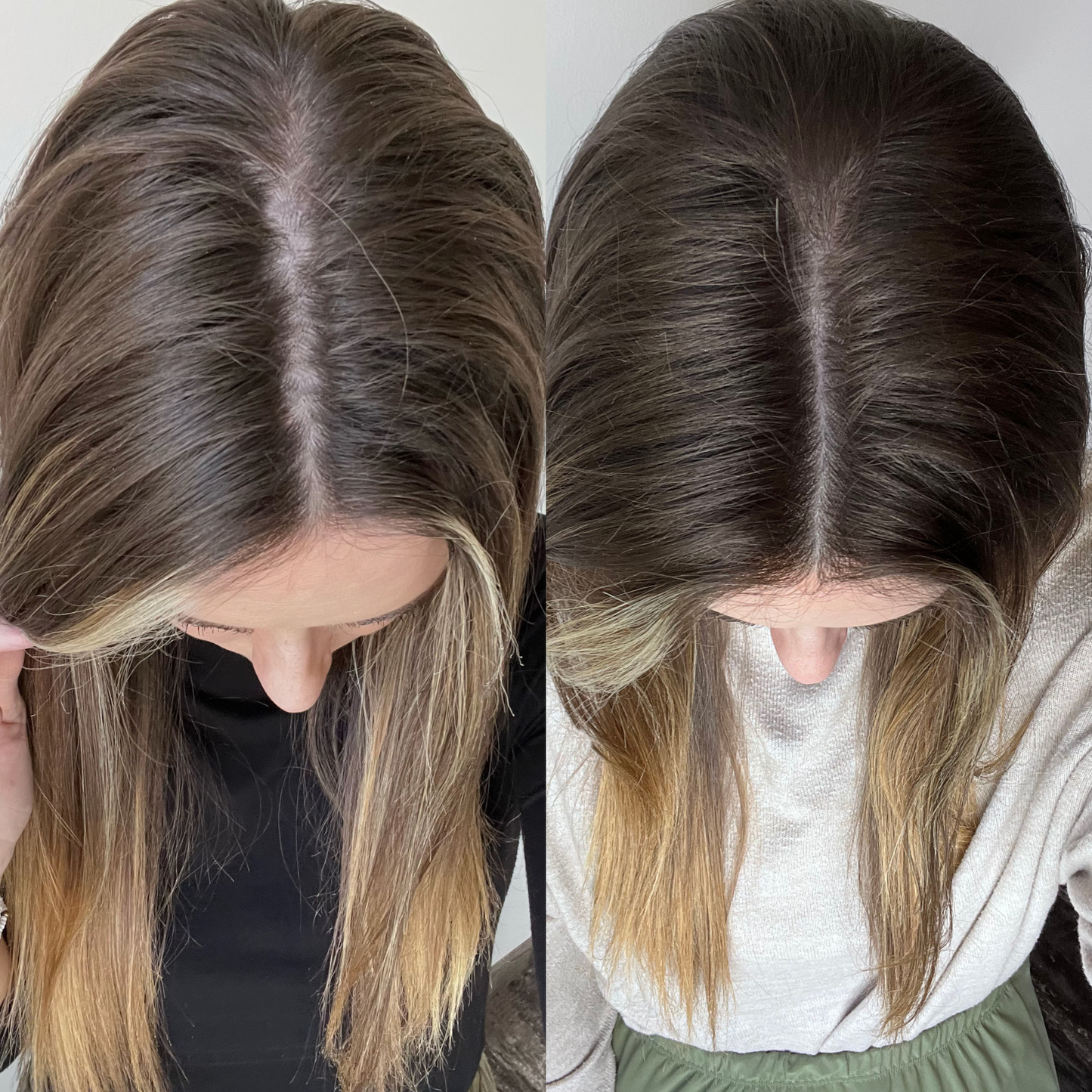
How to Stop Hair Loss from Birth Control

- Birth control can trigger telogen effluvium — a temporary shed — or worsen androgen-sensitive hair loss depending on the progestogen type used.
- Switching to a lower-androgenic or oestrogen-dominant pill (with your GP's guidance) is often the first practical step.
- Nutritional support — particularly biotin, zinc, iron and amino acids — helps rebuild shed hair during the recovery phase.
- Most contraceptive-related shedding resolves within three to six months once the hormonal trigger is addressed.

Hair loss from birth control is more common than most GPs mention at the point of prescription — and understanding exactly why it happens is the difference between waiting helplessly and taking targeted action that actually works.
In this article
How Birth Control Causes Hair Loss
The hair follicle is exquisitely sensitive to hormonal fluctuation. Every strand spends roughly two to six years in the anagen (growth) phase before entering the brief transitional catagen phase and, finally, the resting telogen phase — at which point the hair sheds naturally and is replaced. Oestrogen prolongs anagen; androgens can shorten it. Synthetic hormones in contraceptives interact with both pathways.
There are two distinct mechanisms at play:
1. Telogen effluvium from hormonal shift
Any significant change in circulating hormone levels — starting the pill, changing dose, or stopping altogether — can push a large proportion of follicles into telogen simultaneously. The result is a diffuse shed that typically peaks six to twelve weeks after the hormonal change and can continue for up to six months. This is sometimes called pill-induced telogen effluvium. Because the follicles themselves are not damaged, regrowth is expected once hormones re-stabilise, though it can feel alarming in the interim.
2. Androgenic alopecia acceleration
Some progestogens — notably older generation formulations — bind to androgen receptors and behave like weak androgens in the scalp. In women who are genetically predisposed to androgenetic alopecia (female pattern hair loss), these progestogens can accelerate miniaturisation of follicles along the crown and parting. Unlike telogen effluvium, this type of loss does not fully reverse simply by waiting; the underlying genetic sensitivity remains. You can read more about recognising the signs in our article on androgenetic alopecia symptoms in women.
Which Contraceptives Carry the Highest Risk
Not all hormonal contraceptives are equal in their effect on hair. The key variable is the androgenic index of the progestogen used. Progestogens are classified by their androgenic activity — high-androgenic types are more likely to promote scalp shedding in susceptible women, while anti-androgenic progestogens may actually be mildly protective.
| Contraceptive type / progestogen | Androgenic activity | Hair loss risk (relative) |
|---|---|---|
| Levonorgestrel-based pills (e.g. Microgynon) | Moderate–high | Higher in predisposed women |
| Norethisterone-based pills | Moderate | Moderate |
| Desogestrel / gestodene pills | Low | Lower |
| Drospirenone-based pills (e.g. Yasmin) | Anti-androgenic | Lowest; may reduce androgenic shedding |
| Cyproterone acetate (e.g. Co-cyprindiol / Dianette) | Anti-androgenic | Lowest; sometimes prescribed for hair loss |
| Progestogen-only pill (desogestrel) | Low | Low; may cause temporary effluvium on starting |
| Hormonal IUS (e.g. Mirena) | Low systemic exposure | Generally low; localised progestogen delivery |
| Contraceptive implant (etonogestrel) | Low–moderate | Some women report shedding; varies individually |

How to Stop the Shedding: A Step-by-Step Plan
Stopping contraceptive-related hair loss involves working across three layers simultaneously: addressing the hormonal trigger, supporting the scalp environment, and ensuring the follicle has adequate nutritional raw materials to rebuild. None of these steps alone is sufficient — but together they create the conditions for meaningful recovery.
Step 1 — Identify whether your shedding is effluvium or androgenic
Telogen effluvium typically presents as diffuse, all-over shedding with no clear patterning; you notice more hairs on the pillow, in the shower drain, and on your brush. Androgenetic acceleration, by contrast, shows a progressive widening of the central parting or thinning at the crown while the hairline largely remains. A trichologist or dermatologist can perform a pull test and scalp examination to distinguish between the two — and it matters, because the intervention differs.
Step 2 — Discuss a formulation switch with your GP
If your current pill contains a high-androgenic progestogen and you are predisposed to hair loss, asking your GP to trial a drospirenone- or cyproterone-containing alternative is a reasonable first conversation. Framing it as a known side effect listed in the medication's own patient information leaflet tends to be more effective than a general concern about hair. Be aware that any switch carries a two- to three-month hormonal adjustment period — during which shedding may transiently increase before it improves.
Step 3 — Optimise the scalp environment
A congested or inflamed scalp impairs the follicular microenvironment at the worst possible time. Incorporating a weekly scalp exfoliation removes product build-up, sebum oxidation and dead skin cells that can clog follicle openings. The Revive + Restore Scalp Scrub uses a gentle granular base alongside soothing botanicals to decongest without irritation. Pair this with regular use of a scalp stimulator — mechanical stimulation increases local blood flow to follicles, ensuring nutrients and oxygen reach the dermal papilla during the recovery phase.
Step 4 — Be patient with the timeline
Hair grows approximately 1 cm per month. Even after the hormonal trigger is resolved, new anagen hairs need time to emerge and lengthen before you perceive a visible difference in density. Most women see a meaningful reduction in shedding within three months of addressing the cause, and noticeable regrowth within six. Tracking progress with monthly photographs taken under consistent lighting is far more accurate than subjective perception.
Nutritional Support During Recovery
Hormonal contraceptives are known to deplete certain micronutrients — particularly B vitamins (including B6 and folate), zinc, magnesium and vitamin C. These depletions are not trivial for hair health: zinc is essential for protein synthesis and follicle integrity, B vitamins support cellular energy production in the rapidly dividing hair matrix, and amino acids provide the literal building blocks of keratin.
Research on individual nutrients and hair loss is growing, though much of it involves populations with frank deficiency rather than subclinical depletion. With that caveat, the evidence supporting adequate iron, zinc, biotin and specific amino acids for follicle function is reasonably consistent across multiple smaller studies — and the safety profile of supplementing within normal ranges is excellent. You can explore the detail in our complete scientific guide to vitamins for female hair loss.
Key nutrients to prioritise
- Iron (ferritin): Low ferritin — often below 40 µg/L — is repeatedly associated with female hair shedding in dermatology literature. Get your serum ferritin tested before supplementing; excess iron is harmful.
- Zinc: Supports 5-alpha-reductase regulation and keratin structure. Oral contraceptives are associated with lowered plasma zinc in some studies.
- Biotin (B7): Widely studied for hair and nail keratin synthesis. True deficiency is uncommon, but oral contraceptives may impair absorption.
- Amino acids — particularly L-cystine and L-methionine: The sulphur-containing amino acids are rate-limiting for keratin production in the cortex.
- Saw palmetto: A botanical that may modulate DHT activity at the follicle level. Early clinical data is encouraging; our article on saw palmetto for women's hair covers the science in detail.
- Pumpkin seed oil: Contains phytosterols that may inhibit 5-alpha-reductase. A randomised trial (Cho et al., 2014) reported significantly greater hair count increases in men supplementing pumpkin seed oil versus placebo over 24 weeks — research in women is ongoing but mechanistically plausible.
Lumeyr Women is formulated specifically around the nutritional gaps most relevant to women experiencing hormonal shedding — combining amino acids, plant actives and targeted micronutrients in a daily liquid format designed for rapid absorption. For those who prefer a capsule format, the Hair Skin Nails supplement covers core micronutrient bases with a clean, food-derived ingredient list.
Built for Hormonal Hair Loss in Women
Lumeyr Women combines targeted amino acids, zinc, biotin and plant actives in a daily shot — formulated around the nutritional gaps most relevant to contraceptive-related shedding.
Shop Lumeyr Women →
Limitations of the Evidence
It would be misleading to suggest that the science around contraceptive-related hair loss is fully settled — it is not, and intellectual honesty matters here.
Most clinical data on the link between specific progestogens and hair loss comes from case reports, small observational cohorts and post-marketing surveillance, rather than large randomised controlled trials. Individual variation is substantial: two women on an identical pill formulation may have completely different hair responses, driven by differences in androgen receptor sensitivity, genetic polymorphisms in relevant enzymes, baseline ferritin status, and chronic stress load.
Similarly, the evidence base for specific supplements in contraceptive-induced hair loss specifically — as opposed to hair loss generally — is thin. Most supplement trials recruit participants with androgenetic alopecia or telogen effluvium of mixed aetiology, making it difficult to isolate the effect in the contraceptive subgroup. The pumpkin seed oil data cited above, for instance, was conducted entirely in men.
This does not mean the interventions are ineffective — it means the evidence hierarchy is lower than we would ideally like, and it underscores why working with a GP or trichologist, rather than self-diagnosing and self-treating indefinitely, remains the gold standard approach. See also our broader guide to female hair loss causes and treatments for context on where contraceptive-related loss sits within the wider picture.

Frequently Asked Questions
Will hair grow back after stopping the pill?
In most cases, yes — hair lost through pill-induced telogen effluvium does grow back within three to six months of hormonal re-stabilisation. If the shedding was driven by androgenic acceleration in a genetically predisposed woman, the follicles that have miniaturised may not fully recover without additional intervention such as nutritional support or, in some cases, medical treatment. The key is distinguishing between the two patterns early.
How long does birth control hair loss last?
Birth control hair loss typically lasts between three and six months from the point at which the hormonal trigger is addressed — whether that means stopping the pill, switching formulation, or allowing hormones to re-stabilise. The shedding phase itself (active telogen effluvium) usually peaks around eight to twelve weeks after the hormonal change and then gradually subsides as new anagen growth begins.
Which birth control pill is least likely to cause hair loss?
Pills containing anti-androgenic progestogens — particularly drospirenone (found in brands such as Yasmin and Eloine) or cyproterone acetate (found in co-cyprindiol / Dianette) — carry the lowest risk of hair loss and may even be mildly protective against androgenic shedding. However, these formulations are not appropriate for everyone; your GP will weigh other health factors including cardiovascular risk before prescribing.
Can supplements help with birth control hair loss?
Supplements can support the follicle environment during recovery, particularly when hormonal contraceptives have depleted key micronutrients such as zinc, B vitamins or iron. They are not a substitute for addressing the hormonal trigger itself, and they work best as part of a broader plan. Look for formulations containing amino acids, zinc, biotin and plant actives such as saw palmetto or pumpkin seed oil — as found in Lumeyr Women.
Does the contraceptive implant or hormonal IUS cause hair loss?
The hormonal IUS (such as Mirena) delivers progestogen locally with minimal systemic absorption, so the risk of systemic hair effects is generally considered low — though individual responses vary. The etonogestrel implant has a low androgenic index, but some women do report increased shedding, particularly in the first few months of use. As with pills, the response is highly individual and often linked to underlying genetic predisposition.
Is post-pill hair loss different from hair loss while on the pill?
Post-pill hair loss (which occurs after stopping contraception) is typically a classic telogen effluvium triggered by the withdrawal of oestrogen support — the hair follicles, accustomed to elevated oestrogen prolonging anagen, enter telogen en masse when levels drop. Hair loss while on the pill is more likely to be androgenic in nature if the progestogen has a high androgenic index. Both types are manageable, but the timelines and mechanisms differ.
Sources
- Cho et al. (2014) — Effect of pumpkin seed oil on hair growth in men with androgenetic alopecia: a randomised, double-blind, placebo-controlled trial. Evidence-Based Complementary and Alternative Medicine (PMC4017725)
- Panahi et al. (2015) — Rosemary oil vs. minoxidil 2% for the treatment of androgenetic alopecia. Skinmed (PMID 25842469)
- Trost et al. (2006) — The diagnosis and treatment of iron deficiency and its potential relationship to hair loss. Journal of the American Academy of Dermatology (PMID 17110205)
- Almohanna et al. (2019) — The role of vitamins and minerals in hair loss: a review. Dermatology and Therapy (PMID 30986186)
This article follows our editorial & research standards. It is informational content, not medical advice.