Hair Loss After Pregnancy: What to Expect & When It Stops


Hair loss after pregnancy catches many new mothers completely off guard — handfuls in the shower, clumps on the pillow, a thinning ponytail where there used to be thickness. If you are searching for what to expect, this guide walks you through the science, the timeline, and the practical steps you can take right now.
Why Postpartum Hair Loss Happens
During pregnancy, oestrogen levels rise dramatically — in some cases several times higher than a woman's typical baseline. One of oestrogen's lesser-known effects is that it prolongs the anagen (growth) phase of the hair cycle and suppresses the telogen (resting/shedding) phase. The practical result is that far fewer hairs than usual complete their natural cycle and fall out. Many women notice their hair looking noticeably thicker and more lustrous by the second trimester — this is why.
After delivery, oestrogen and progesterone drop sharply, often within days. This hormonal shift acts as a collective signal: all those hairs that were held in an extended growth phase are released into telogen simultaneously. Around two to four months later — once the telogen phase runs its course — those hairs shed all at once. Dermatologists and trichologists call this process telogen effluvium, and the postpartum version is one of the most common triggers for it worldwide.
It is worth understanding that you are not actually losing more hair than you would have over the preceding nine months. You are simply losing it in one concentrated burst rather than gradually. That distinction matters for your peace of mind, even if it does not make standing in front of the bathroom drain feel any less alarming.
The Postpartum Hair Loss Timeline
Understanding when each phase begins and ends can take a great deal of anxiety out of the process. The timeline below reflects the general pattern described in trichology literature, though individual variation is real and meaningful.
| Phase | Approximate timing | What you may notice |
|---|---|---|
| Pregnancy — retention phase | Weeks 6–40 | Hair appears thicker, less shedding in the shower, fuller ponytail |
| Early postpartum — latent phase | Weeks 1–8 after birth | Little change; you may still feel your hair is thick |
| Active shedding phase | Months 2–5 after birth | Noticeably increased hair fall; clumps in the shower, on pillowcases |
| Peak shedding | Around months 3–4 | Maximum daily hair count; hairline thinning most visible |
| Recovery — regrowth phase | Months 5–12 | Shedding slows; short regrowth hairs visible around hairline and parting |
| Full restoration | 12–18 months postpartum | Hair density returns to pre-pregnancy baseline for most women |
One detail many women find reassuring: those short, slightly frizzy hairs you notice sprouting around your temples or along your parting at around six months postpartum are not breakage. They are new anagen hairs — genuine regrowth — confirming that your follicles have reactivated and the cycle is moving in the right direction.

How Much Shedding Is Normal?
Outside of pregnancy, it is generally considered normal to shed somewhere between 50 and 100 hairs per day. During peak postpartum shedding, that figure can rise considerably — some women report what feels like two to three times their usual daily loss. Because hair was being retained during pregnancy, the cumulative backlog can be significant, but the total volume of hair involved is not greater than what would have been shed over nine months under ordinary circumstances.
What should concern you is not the volume of shedding during months two to five, but rather shedding that continues beyond twelve months, shedding accompanied by a distinctly receding or widening parting, or hair loss accompanied by other symptoms such as fatigue, unexplained weight change, or brittle nails. These patterns may point to an underlying issue such as thyroid dysfunction, iron-deficiency anaemia, or the onset of androgenetic alopecia — all of which warrant a clinical assessment.
It is also worth noting that postpartum women are statistically more vulnerable to nutritional deficiencies. Growing and nourishing a baby places substantial demands on iron, ferritin, zinc, biotin, and vitamin D stores, and the postpartum diet — particularly during the exhausted early weeks — rarely replenishes these at the rate they are being depleted. Deficiencies in any of these nutrients are independently associated with increased hair shedding, which can compound the hormonal telogen effluvium and extend the recovery period.
What Actually Helps — and What Does Not
Nutrition and supplementation
Because postpartum hair loss is fundamentally hormonal — a consequence of a necessary and healthy biological process — no topical product or supplement will stop the shedding phase entirely. What targeted nutritional support can do is ensure your follicles have the raw materials they need to re-enter the anagen phase as promptly and robustly as possible, and reduce the degree to which nutritional deficiency prolongs the shed beyond its natural course.
Key nutrients to prioritise include iron (particularly ferritin, which is the stored form most relevant to hair cycling), zinc, vitamin D, vitamin B12, and folate. Biotin is widely marketed for hair, and while severe deficiency does cause hair loss, most women eating a varied diet are not deficient — supplementing it in isolation is unlikely to be transformative unless you have a confirmed gap. A well-formulated multi-nutrient supplement designed for women's hormonal health will address multiple pathways simultaneously.
Lumeyr Women is formulated specifically around the hormonal drivers of female hair loss, combining the micronutrients most relevant to the postpartum recovery window with botanical actives that support the hair cycle at a follicular level. If you are looking for broader skin and nail support alongside hair recovery, the Hair Skin Nails formula offers a complementary approach with collagen-supporting cofactors built in.
Scalp care
A healthy scalp environment supports follicle reactivation. During the regrowth phase, gentle scalp stimulation — through massage or a dedicated tool — can improve local microcirculation, which in turn helps deliver nutrients to the follicle bulb. The JUMBO Scalp Stimulator is designed for exactly this purpose and can be incorporated into a two-to-three-minute daily routine whilst washing or conditioning. If product build-up or scalp congestion is a concern, the Revive + Restore Scalp Scrub offers a gentle exfoliating option that clears the follicular environment without stripping moisture.
What does not help
Switching shampoos constantly, taking very high doses of single nutrients without blood test confirmation, or using harsh chemical treatments during peak shedding are unlikely to accelerate recovery and may worsen the situation. Equally, very tight hairstyles — high ponytails or braids pulled tightly — place additional mechanical stress on already-fragile telogen hairs and can cause traction damage at the hairline. Loose styles and minimal heat are genuinely sensible during the active shedding phase.

When to See Your GP or a Trichologist
Most cases of postpartum hair loss resolve without medical intervention. However, there are specific scenarios where a professional assessment is the right next step rather than a watchful wait. Your GP should be the first port of call, as they can request blood tests to rule out thyroid dysfunction (both hypothyroidism and hyperthyroidism are more common in the postpartum period), iron-deficiency anaemia, and vitamin D insufficiency — all of which are treatable and all of which independently affect hair density.
A trichologist — a specialist in hair and scalp health — is worth consulting if your GP finds no underlying cause but the shedding has not meaningfully improved by twelve months postpartum, or if you are noticing a pattern of diffuse thinning across the crown and top of the scalp that looks different from the temporary all-over shed of telogen effluvium. This pattern may indicate female pattern hair loss (androgenetic alopecia), which follows a different mechanism and benefits from a different treatment approach. Our guide to female hair loss causes and treatments covers these distinctions in detail.
If you are breastfeeding, always flag this when discussing treatment options, as some interventions used for androgenetic alopecia (including certain topical treatments) are not recommended during lactation. A qualified clinician will factor this into any recommendation they make.
Support Your Hair Through Every Hormonal Shift
Lumeyr Women is designed for the hormonal realities of female hair loss — including the postpartum window. Targeted nutrition, clinically-considered ingredients, made for women.
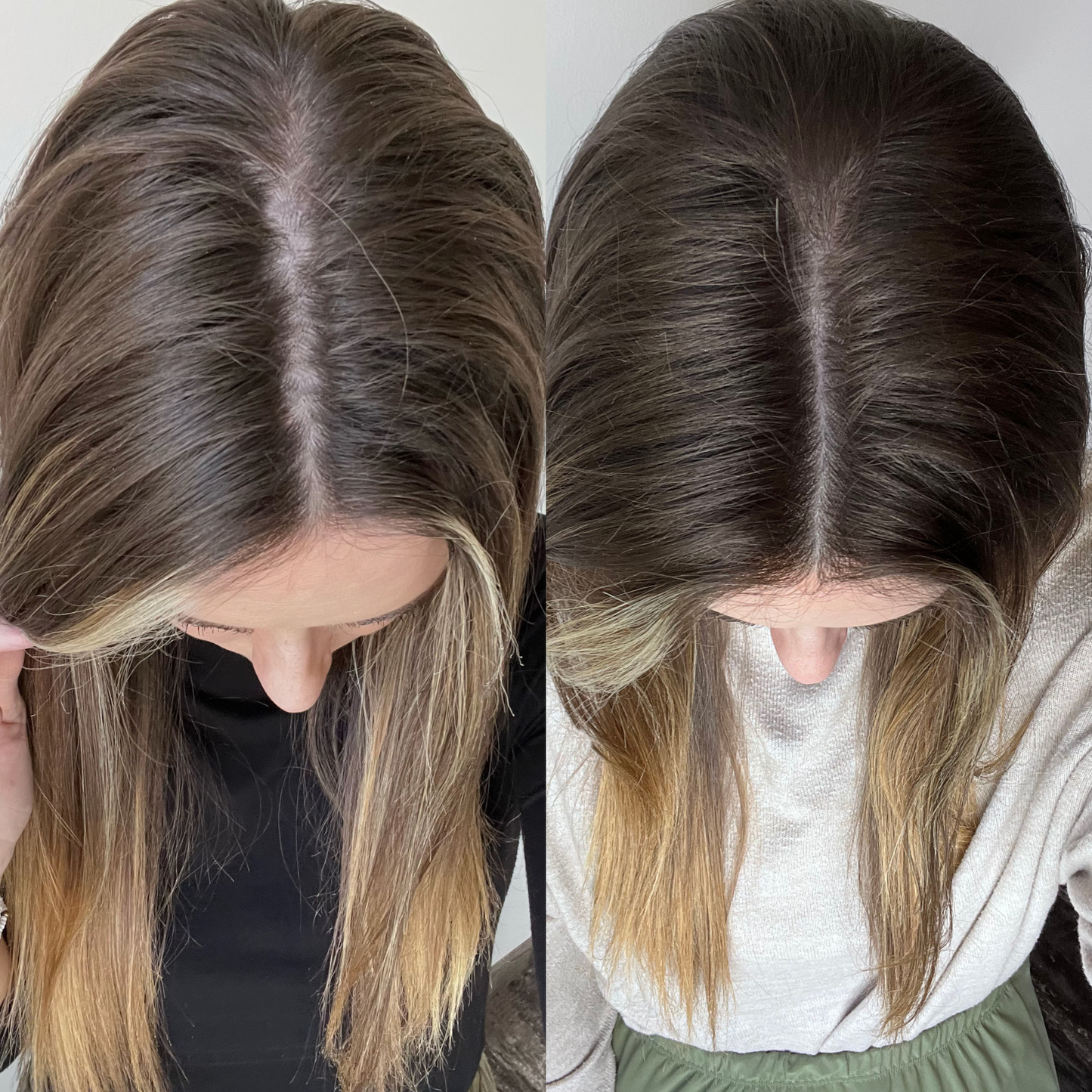
Explore Lumeyr Women →Postpartum hair loss is a form of telogen effluvium, a temporary condition that typically resolves within a few months to a year as your hormones rebalance.
Frequently Asked Questions
How long does postpartum hair loss last?
For most women, active shedding begins between two and four months after birth and peaks around months three to four. Shedding typically slows significantly by months five to six, and most women see full or near-full density restored by twelve to eighteen months postpartum. If significant shedding persists beyond twelve months, a GP review is advisable to rule out nutritional deficiency or thyroid issues.
Will my hair go back to normal after postpartum hair loss?
For the vast majority of women, yes. Postpartum telogen effluvium is temporary because the follicles themselves are not damaged — they have simply been temporarily shifted into a resting phase. New regrowth hair is usually visible around the hairline and parting from around five to seven months postpartum. Ensuring adequate nutrition during this window supports both the speed and quality of that regrowth.
Can breastfeeding make postpartum hair loss worse?
Breastfeeding maintains suppressed oestrogen levels for longer, which some women find extends the shedding phase slightly compared with those who do not breastfeed. It also places additional nutritional demands on the body — particularly for iron, zinc, and vitamin D — which can compound follicular stress if intake is insufficient. Nutritional support is particularly relevant for breastfeeding mothers experiencing persistent hair loss.
Is it normal to lose hair in clumps after giving birth?
Seeing significant amounts of hair come away in the shower or on a brush during months two to five postpartum is a common experience and is consistent with normal telogen effluvium. What you are seeing is not active breakage from the shaft but rather the simultaneous release of hairs that completed their growth cycle. If you notice true patches of bare scalp rather than diffuse thinning, or if the hair is breaking rather than falling with a root attached, seek professional advice as these patterns suggest a different cause.
What vitamins should I take for postpartum hair loss?
Ferritin (stored iron), vitamin D, zinc, vitamin B12, and folate are the nutrients most consistently associated with hair cycling and most commonly depleted in the postpartum period. Biotin is often marketed for hair, but deficiency is relatively uncommon; it is most valuable as part of a broader multi-nutrient formula rather than in isolation. Always confirm deficiencies via blood test before supplementing iron at therapeutic doses, as excess iron carries its own risks. For a broader overview, our guide on female pattern hair loss treatment options covers the evidence behind key ingredients in detail.
Can stress make postpartum hair loss worse?
Yes. The early postpartum period is frequently accompanied by sleep deprivation, emotional adjustment, and significant psychological stress — all of which are independent triggers for telogen effluvium in their own right. When stress-driven shedding overlaps with hormonal postpartum shedding, the cumulative effect can feel more severe and may take longer to resolve. Supporting stress resilience through sleep, nutrition, and, where possible, practical support networks is genuinely relevant to hair recovery during this period.
Conclusion
Hair loss after pregnancy is one of the most common, least-warned-about experiences in the postpartum period. Understanding the biology behind it — the hormonal retention during pregnancy, the sharp drop in oestrogen after delivery, and the subsequent synchronised shed — removes a great deal of the fear, even when the volume of hair loss feels shocking in the moment. For most women, full recovery happens naturally within twelve to eighteen months.
What you can do in the meantime is meaningful: support your nutritional status, treat your scalp with care, avoid additional stressors to the follicle, and monitor the timeline honestly. If your shedding is not improving by month twelve, or if you notice patterns that fall outside standard telogen effluvium, a GP visit is the right next step. For those looking to actively support their follicles through the recovery window, Lumeyr Women is designed precisely for this phase of a woman's hormonal life.

This article follows our editorial & research standards. It is informational content, not medical advice.