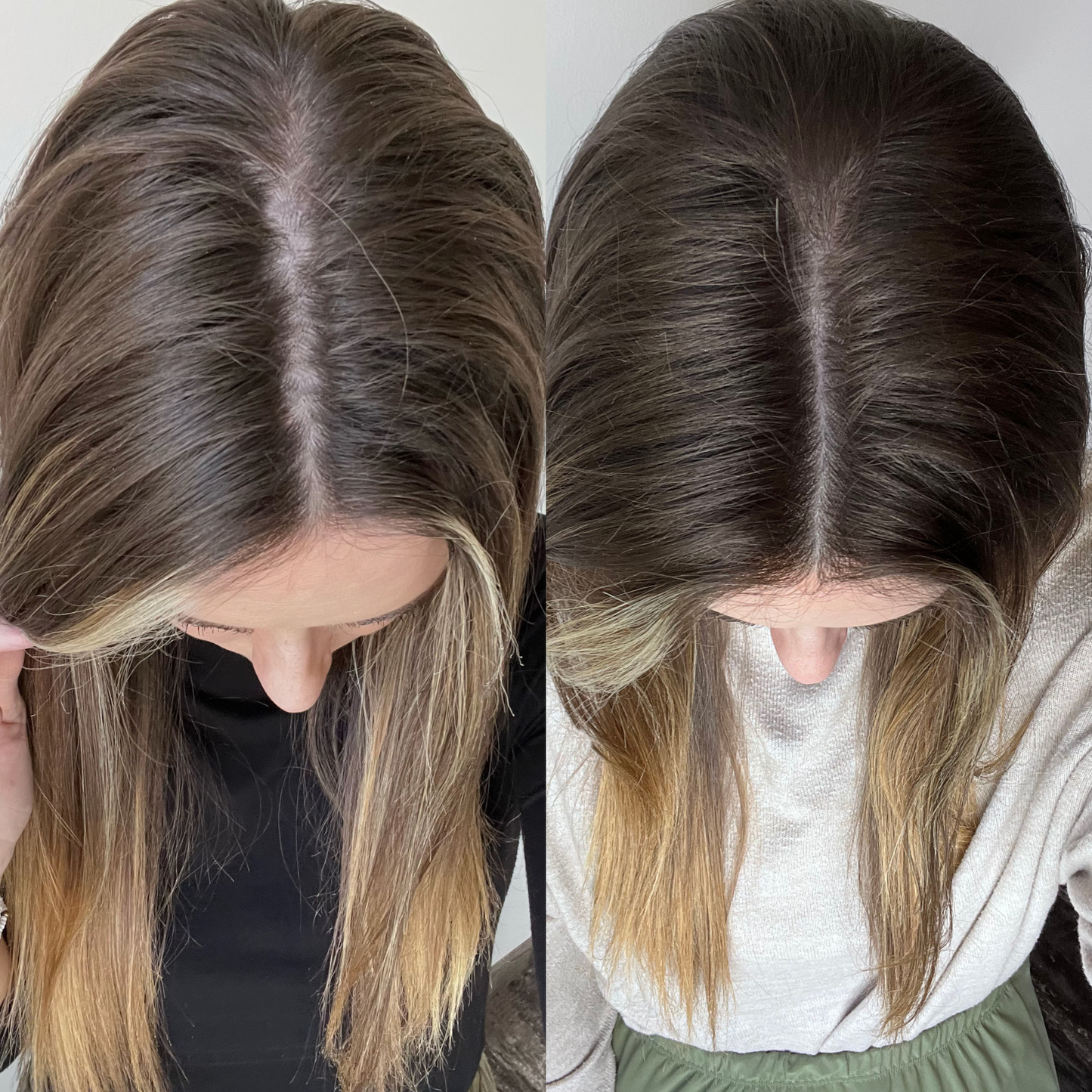
Hair Growth Supplements: The Complete UK Guide


Hair growth supplements have become one of the UK's fastest-growing wellness categories — but with hundreds of products competing for your attention and your money, knowing which ones actually work requires more than a scroll through a brand's Instagram. This is the complete UK guide to hair growth supplements: what the evidence actually says, which ingredients earn their place in a formula, and how to shop intelligently in a crowded market.
- Results take 3–6 months of consistent daily use — there are no shortcuts.
- Biotin, vitamin D, iron, zinc, and pumpkin seed oil have the strongest evidence base.
- Always check the declared dose per serving, not just the ingredient list.
- A GP blood panel helps you target deficiencies rather than guess.

How hair actually grows — and why it falls out
Every strand on your head is produced by a follicle — a tiny, self-renewing organ embedded in the scalp. Each follicle moves through a continuous cycle with three main phases: anagen (active growth, lasting 2–7 years), catagen (a brief transitional phase of around 2 weeks), and telogen (the resting phase, lasting roughly 3 months, at the end of which the hair sheds). At any given time, around 85–90% of a healthy person's follicles are in anagen, which is why the average adult loses 50–100 hairs per day without noticeable thinning.
Problems arise when that balance is disrupted. Several forces can shorten the anagen phase, push follicles prematurely into telogen, or directly damage the follicle's structural integrity:
- Nutritional deficiencies — iron, vitamin D, zinc, and protein are the most commonly implicated in the UK population.
- Hormonal shifts — post-partum oestrogen withdrawal, the menopause transition, and elevated dihydrotestosterone (DHT) in androgenetic alopecia.
- Chronic physiological or psychological stress — cortisol elevation alters follicle signalling, producing diffuse shedding (telogen effluvium) weeks or months after the stressor.
- Scalp environment — buildup of sebum and mineral deposits from hard water (affecting much of England and Wales) can impair follicle function over time.
Understanding which mechanism is driving your hair loss is the single most important step before buying anything. A supplement that corrects an iron deficiency will do nothing for pattern hair loss driven by DHT — and vice versa. This is why the market is full of people who have cycled through expensive product after expensive product and seen little change: they were treating the wrong cause.

The key ingredients in hair growth supplements, ranked by evidence
The supplement aisle uses a lot of the same ingredient names, but declared doses vary enormously — and dose is often the difference between a product that produces a meaningful result and one that is essentially expensive placebo. Below is an honest summary of the evidence for the most common actives, along with the dose ranges that appear in the literature.
| Ingredient | Primary mechanism | Evidence quality | Typical effective dose range |
|---|---|---|---|
| Biotin (B7) | Keratin synthesis, fatty acid metabolism | Moderate — effective where deficiency exists; evidence in non-deficient individuals is weak | 2,500–5,000 µg/day |
| Vitamin D3 | Follicle cycling, VDR receptor activation | Good — low vitamin D is consistently associated with telogen effluvium in population studies | 1,000–2,000 IU/day (SACN UK guidance: 400 IU minimum) |
| Iron (as ferrous bisglycinate) | Oxygen delivery to follicle matrix cells | Strong — iron deficiency is the most prevalent correctable cause of hair loss in UK women | 14–18 mg/day (NRV); therapeutic doses under GP guidance may be higher |
| Zinc | Protein synthesis, 5-alpha reductase inhibition, sebum regulation | Good — zinc deficiency correlates strongly with alopecia areata and telogen effluvium | 8–25 mg/day |
| Pumpkin seed oil | Natural 5-alpha reductase inhibition, reducing DHT at the follicle | Good — a 24-week randomised trial (Cho et al., 2014) found a significant increase in hair count versus placebo | 400–1,000 mg/day |
| Saw palmetto | DHT inhibition via 5-alpha reductase blockade | Moderate — studies suggest benefit in androgenetic alopecia, particularly in men; female data is emerging | 160–320 mg/day (standardised extract) |
| Rosemary extract / oil | Scalp microcirculation, anti-inflammatory | Moderate — one controlled trial found rosemary oil comparable to 2% minoxidil for hair count at 6 months (Panahi et al., 2015) | Topical application or standardised extract 200–400 mg/day oral |
| Vitamin C | Collagen synthesis, antioxidant protection of follicles, enhances non-haem iron absorption | Good as an adjunct — particularly valuable when paired with iron supplementation | 80–500 mg/day |
| B-vitamin complex (B12, folate, niacin) | Red blood cell formation, energy metabolism in rapidly dividing follicle cells | Moderate — deficiency states (common in vegans and older adults) clearly impair hair growth | Per EU NRV as a baseline; higher for therapeutic correction of confirmed deficiency |
| Collagen peptides | Antioxidant amino acids (glycine, proline, hydroxyproline) that support dermal matrix around follicles | Emerging — small studies suggest improved hair diameter and reduction in shedding | 2,500–10,000 mg/day hydrolysed collagen |
One nuance worth understanding: many supplements combine multiple actives, which makes it genuinely difficult to attribute results to any single ingredient. This is not necessarily a problem — the combination may be synergistic — but it does mean that the evidence base for specific formulas is often thinner than the evidence base for individual components.
The top UK hair growth supplement options compared
Below are five well-established, UK-available hair supplement options — including Lumeyr's own formulation alongside verified competitors sold at major UK retailers. Prices for competitors are approximate retail at time of writing and are subject to change.
#1 — Lumeyr Hair Skin Nails Gummies
Lumeyr's Hair Skin Nails Gummies lead this list because of their considered combination of biotin (at 5,000 µg per serving), zinc, vitamin C, and vitamin E in a two-gummy daily format. The gummy delivery system aids compliance — arguably the most important variable of all — and the formula is designed to address the interplay between structural keratin support (biotin, zinc) and antioxidant protection of the follicle environment (vitamins C and E). Price: see lumeyr.com.
Pros: High biotin dose; pleasant taste improves daily adherence; no artificial colours. Consider: Does not include iron (sensible, given the risk of over-supplementing without knowing individual levels) or pumpkin seed oil — those who need those actives should stack with Lumeyr's Pumpkin Seed Oil Softgels and seek GP guidance on iron.

#2 — Perfectil Original (Vitabiotics)
Vitabiotics' Perfectil is one of the most recognised hair, skin, and nails tablets in UK pharmacies, stocked at Boots, Superdrug, and Holland & Barrett. It contains a broad spectrum of micronutrients including biotin (150 µg — notably lower than some competitors), iron (as ferrous fumarate, 14 mg), zinc (10 mg), and silicon. Price: approximately £9–£13 for 30 tablets (one month's supply).
Pros: Excellent pharmacy availability; covers a broad micronutrient base; widely tolerated. Cons: Biotin dose is relatively low at 150 µg; the inclusion of ferrous fumarate (a form of iron associated with GI discomfort in some users) may limit tolerability.
#3 — Viviscal Maximum Strength
Viviscal has been the category leader in evidence-backed supplement marketing for over a decade, and it contains a proprietary marine protein complex (AminoMar) alongside biotin (240 µg), vitamin C, and horsetail extract. Multiple small industry-sponsored trials have found improvements in hair count and reduced shedding over 6 months. Available at Boots and Amazon UK. Price: approximately £35–£40 per month.
Pros: Marine protein complex adds an amino-acid dimension to the formula; multiple product trials support efficacy claims. Cons: Unsuitable for those with shellfish allergies; trials are predominantly industry-funded, which is a methodological limitation; biotin dose is modest relative to specialist brands.
#4 — Nature's Bounty Hair, Skin & Nails (Holland & Barrett)
A widely available, budget-friendly option sold at Holland & Barrett. Contains biotin (5,000 µg), vitamin C, and vitamin E, with a soft gel format. Price: approximately £12–£15 for a 60-count (one month's supply).
Pros: High biotin dose at an accessible price point; soft gel format is easy to swallow. Cons: Minimal zinc; no botanical actives such as pumpkin seed oil or saw palmetto; limited to a structural support formulation rather than addressing hormonal pathways.
#5 — Nutrafol Women
Nutrafol is a premium US brand that has become available on import via Amazon UK and some specialist retailers. It is a multi-pathway formula including ashwagandha (stress pathway), saw palmetto (DHT pathway), biotin, and marine collagen. Price: approximately £75–£85 per month via US import.
Pros: Among the most comprehensive formulations available; addresses stress, hormonal, and nutritional pathways simultaneously. Cons: Very high price point; not always straightforward to obtain in the UK; some ingredients are at lower doses than standalone specialist products.
How to choose the right supplement for your situation
The right supplement is the one that addresses your specific cause of hair loss at a therapeutically relevant dose. That sounds obvious, but most people choose based on packaging or price rather than mechanism. Here is a simple decision framework:
| Your situation | Most relevant ingredients | Format considerations |
|---|---|---|
| General diffuse thinning, no known deficiency | Biotin, zinc, vitamin D3, B-complex | Gummy or capsule; prioritise high biotin dose |
| Confirmed iron deficiency (low ferritin on blood test) | Iron as ferrous bisglycinate + vitamin C to enhance absorption | Separate iron supplement under GP guidance; avoid combining high-dose zinc and iron (they compete for absorption) |
| Androgenetic / pattern hair loss (DHT-driven) | Pumpkin seed oil, saw palmetto, zinc | Softgel or capsule; look for standardised botanical extract doses |
| Post-partum shedding | Iron, biotin, zinc, vitamin D — all commonly depleted post-birth | Check suitability if breastfeeding; consult midwife or GP |
| Menopause-related thinning | Pumpkin seed oil, zinc, biotin, vitamin D3 | Multi-ingredient formulas that address both hormonal and structural pathways are preferable |
| Stress-related shedding (telogen effluvium) | B-complex (especially B5, B12), zinc, adaptogenic botanicals (ashwagandha) | Address the stressor simultaneously — supplements alone cannot counteract ongoing high cortisol |
For women experiencing menopausal hair thinning, our dedicated guide to hair loss during the menopause explores the hormonal mechanisms in considerably more depth, and our overview of female hair loss causes and treatments provides a broader clinical framework that is worth reading before committing to any product.

When and how to take hair supplements for best results
Even the best-formulated supplement delivers suboptimal results if taken inconsistently or in a way that impairs absorption. Several practical points are worth knowing:
Timing and consistency
Hair follicles are metabolically active around the clock, but the general principle of taking supplements at the same time each day — typically with a meal to improve absorption and reduce any GI sensitivity — is well-supported by general nutritional practice. Oil-soluble vitamins (D, E, K) and botanical extracts such as pumpkin seed oil are absorbed more efficiently when taken alongside dietary fat.
What to expect and when
The biology of the hair cycle imposes a delay between nutritional correction and visible improvement. Studies suggest that:
- 4–8 weeks: Reduction in shedding may begin to be noticeable as follicles exit premature telogen.
- 3–4 months: New growth becomes visible at the hairline and parting as anagen follicles begin to produce the new shaft.
- 6–12 months: Meaningful improvements in overall density become apparent; this is the appropriate timeframe for a fair assessment.
Managing expectations is arguably the most important role of any credible hair supplement guide. Brands that imply visible results in 30 days are working against the biology, not with it.
Drug and nutrient interactions to be aware of
- Iron and zinc: Compete for absorption via the same transporter. Take them at separate times of day if both are needed.
- Zinc and copper: High-dose zinc supplementation over extended periods can deplete copper. Look for formulas that include copper at a ratio of approximately 10:1 (zinc:copper).
- Vitamin D and vitamin K2: Vitamin D increases calcium absorption; K2 helps direct calcium to bones rather than soft tissue. Many premium vitamin D supplements now include K2 for this reason.
- Saw palmetto and blood thinners: Saw palmetto may have mild anti-platelet activity. Consult a GP if you are on anticoagulant medication.
Try Lumeyr Hair Skin Nails Gummies
A high-dose biotin, zinc, and vitamin C formula in a daily two-gummy serving — designed for UK women who want effective supplementation without the guesswork.
Shop Now →Beyond the pill: scalp health as the foundation
Supplements work from the inside out — but what happens at the scalp surface matters enormously for whether those nutrients actually reach the follicle. The scalp is the most sebum-rich skin on the body, and in the UK, where hard water is the norm across most of England and the East Midlands, mineral deposits from calcium and magnesium ions can accumulate on the scalp over time, contributing to congestion around the follicle opening and impeding normal cycling.
Our detailed explainer on hard water and hair quality in the UK outlines exactly what is happening at the follicle level in hard-water areas and what you can do about it — including the case for a filtered showerhead.
Scalp exfoliation
Mechanical and enzymatic scalp exfoliation removes the dead-cell buildup and excess sebum that can narrow follicle openings. Used weekly, a dedicated scalp scrub can meaningfully improve product penetration — including the topical absorption of oils and serums applied after washing. Lumeyr's Revive + Restore Scalp Scrub is formulated specifically for this purpose and pairs well with an internal supplement routine.
Scalp stimulation and microcirculation
Physical scalp massage increases blood flow to the dermal papilla — the structure at the base of each follicle that supplies it with nutrients and oxygen. Small studies suggest that consistent daily scalp massage (4–5 minutes) over 24 weeks is associated with increases in hair thickness. The Lumeyr JUMBO Scalp Stimulator is designed to make this a sustainable daily habit rather than an occasional treat.

What hair supplements won't do: limitations of the evidence
Any guide that omits this section is selling you something. Here is an honest account of where the evidence for hair growth supplements falls short, and what supplements are genuinely unable to do.
They cannot reverse established scarring alopecia
Cicatricial (scarring) alopecias — including lichen planopilaris and frontal fibrosing alopecia — involve permanent destruction of the follicle by inflammatory processes. No oral supplement can regenerate a follicle that has been replaced by scar tissue. These conditions require specialist dermatological management.
The trial evidence base has real weaknesses
Most supplement trials are small (fewer than 60 participants), short (6 months or less), and often lack independent replication. Combined formulations make it almost impossible to attribute effect to a specific ingredient. Many trials are industry-funded, which does not invalidate them but does introduce potential bias. The rosemary vs minoxidil comparison (Panahi et al., 2015) is often cited as landmark evidence for rosemary, but it was a single trial with 100 participants — promising, but not conclusive at a population level.
They work only where a correctable deficiency or mechanism exists
If your hair loss is caused by thyroid disease, autoimmune alopecia areata, or a genetic pattern that has progressed significantly, supplements will provide supportive benefit at best and no meaningful change at worst. This is not a failure of the supplement — it is a mismatch between tool and problem.
Dose and bioavailability matter enormously
Many products on the market declare impressive ingredient lists but deliver doses that are a fraction of what appears in trial literature. A product containing 10 mg of pumpkin seed oil extract (versus the 400–1,000 mg range used in trials) is unlikely to produce the same effect, regardless of what the marketing implies. Reading the supplement facts panel — not the front-of-pack claims — is the only way to assess a product honestly.
Frequently asked questions
How long does it take for hair growth supplements to work?
Most hair growth supplements require a minimum of 4–8 weeks before any visible change in shedding, and 3–6 months for meaningful improvements in density and length, because each hair follicle operates on its own cycle. Consistency is therefore more important than dosage. Taking a supplement sporadically for two weeks and expecting thick hair is one of the most common — and costly — mistakes shoppers make.
Are hair growth supplements safe in the UK?
Most well-formulated hair supplements sold in the UK are safe for healthy adults when taken as directed and do not exceed the UK's recommended nutrient intake values. However, certain ingredients — such as high-dose biotin, iron, and zinc — can interact with medications or mask blood-test results if taken in excessive amounts. Always check the label, stay within declared doses, and consult a GP if you are pregnant, breastfeeding, or on prescription medication.
What is the best vitamin for hair growth in the UK?
No single vitamin is a universal 'best'. Biotin supports keratin structure, vitamin D is linked to follicle cycling, iron is the most common correctable deficiency behind hair loss in UK women, and zinc regulates DHT — so the most useful vitamin depends entirely on your individual deficiency. A blood panel from your GP is the most reliable way to identify what you actually need before spending money on supplements.
Do hair gummies actually work?
Hair gummies can work when they contain clinically relevant doses of key nutrients — they are simply a delivery format, not a category of ingredient. The concern with many gummy products is that the format limits the amount of active ingredient per piece without the sugar becoming excessive, so always compare the declared dose per serving against the evidence-based ranges for each nutrient. Lumeyr's Hair Skin Nails Gummies are formulated to deliver meaningful doses within a two-gummy daily serving.
Can hair supplements help with menopausal hair loss?
Targeted supplements can provide meaningful nutritional support during the menopause transition, when oestrogen decline affects the hair growth cycle and increases follicle sensitivity to DHT. Ingredients such as pumpkin seed oil, zinc, and saw palmetto address the hormonal pathway, while biotin, iron, and vitamin D support the structural and follicle-health side of the equation. They work best as part of a broader approach that may include topical treatments and, where appropriate, medical advice.
How much should I expect to pay for a quality hair growth supplement in the UK?
Well-formulated UK hair supplements generally range from approximately £20 to £60 per month's supply, depending on the number of active ingredients, their dose, and whether the format is a capsule, tablet, gummy, or liquid shot. Products at the lower end often underdose key actives; very expensive products do not automatically contain better ingredients. Comparing cost-per-dose of each active nutrient is a more useful metric than the overall price tag.
Should I take a hair supplement if I eat a balanced diet?
Even with a balanced diet, certain factors common in UK life — low sunlight exposure reducing vitamin D, tap-water hardness affecting mineral absorption, or high stress elevating cortisol — can create nutritional shortfalls that a food-first approach alone cannot easily correct. Supplements are not a replacement for whole-food nutrition but can fill documented gaps, particularly during high-shed periods such as post-partum recovery, seasonal change, or the menopause transition.
Is pumpkin seed oil worth including in a hair supplement routine?
Pumpkin seed oil is one of the more evidence-supported botanical ingredients in hair supplementation, primarily due to its natural inhibition of 5-alpha reductase — the enzyme that converts testosterone to DHT, the hormone implicated in pattern hair loss. A 24-week randomised trial (Cho et al., 2014) found a statistically significant increase in hair count in men who took pumpkin seed oil versus placebo. Evidence in women is less extensive but mechanistically plausible, particularly for androgenetic alopecia. Lumeyr offers a dedicated Pumpkin Seed Oil Softgel for those who want to target this pathway specifically.
For a more comprehensive overview of products that support hair health alongside skin and nails, you may find our Best Supplements for Hair, Skin & Nails UK (2026 Guide) particularly helpful.
To understand how hair growth supplements work, it's essential to familiarise yourself with the hair growth cycle and its three distinct phases: anagen, catagen, and telogen.
Conclusion
The UK market for hair growth supplements has matured considerably in recent years, and the best products available today are meaningfully better — in terms of dose, formulation design, and evidence basis — than what existed a decade ago. But the market still contains a very high proportion of products that dress up minimal doses of commodity ingredients in premium packaging and charge accordingly.
The core takeaways from this guide are simple: identify your cause before you buy, prioritise dose over brand prestige, give any intervention at least three to six months before drawing conclusions, and pair internal nutrition with a healthy scalp environment. For most women experiencing nutritional or hormonal hair thinning in the UK, a high-quality supplement like Lumeyr's Hair Skin Nails Gummies — stacked with targeted botanicals where needed and supported by consistent scalp care — is a sound, evidence-grounded starting point.
For women who want to go deeper on the science, our guide to female pattern hair loss treatment options covers the full clinical landscape, from minoxidil to low-level light therapy, and helps contextualise where supplements fit within a broader management strategy.
Explore Lumeyr's Hair Growth Range
From gummies to scalp scrubs, every Lumeyr product is formulated to complement the others — and the science behind each one is explained in full on our product pages.
Browse the Range →Sources
- Cho et al. (2014) — Effect of pumpkin seed oil on hair growth in men with androgenetic alopecia: a randomised, double-blind, placebo-controlled trial. Evidence-Based Complementary and Alternative Medicine.
- Panahi et al. (2015) — Rosemary oil vs minoxidil 2% for the treatment of androgenetic alopecia: a randomised comparative trial. Skinmed.
- Almohanna et al. (2019) — The role of vitamins and minerals in hair loss: a review. Dermatology and Therapy.
- Finner (2013) — Nutrition and hair: deficiencies and supplements. Dermatologic Clinics.
- Trost et al. (2006) — The diagnosis and treatment of iron deficiency and its potential relationship to hair loss. Journal of the American Academy of Dermatology.
This article follows our editorial & research standards. It is informational content, not medical advice.