Can PCOS Cause Hair Loss in Women? Signs & What Helps

- Yes — PCOS can directly cause hair loss in women by elevating androgens that miniaturise scalp follicles.
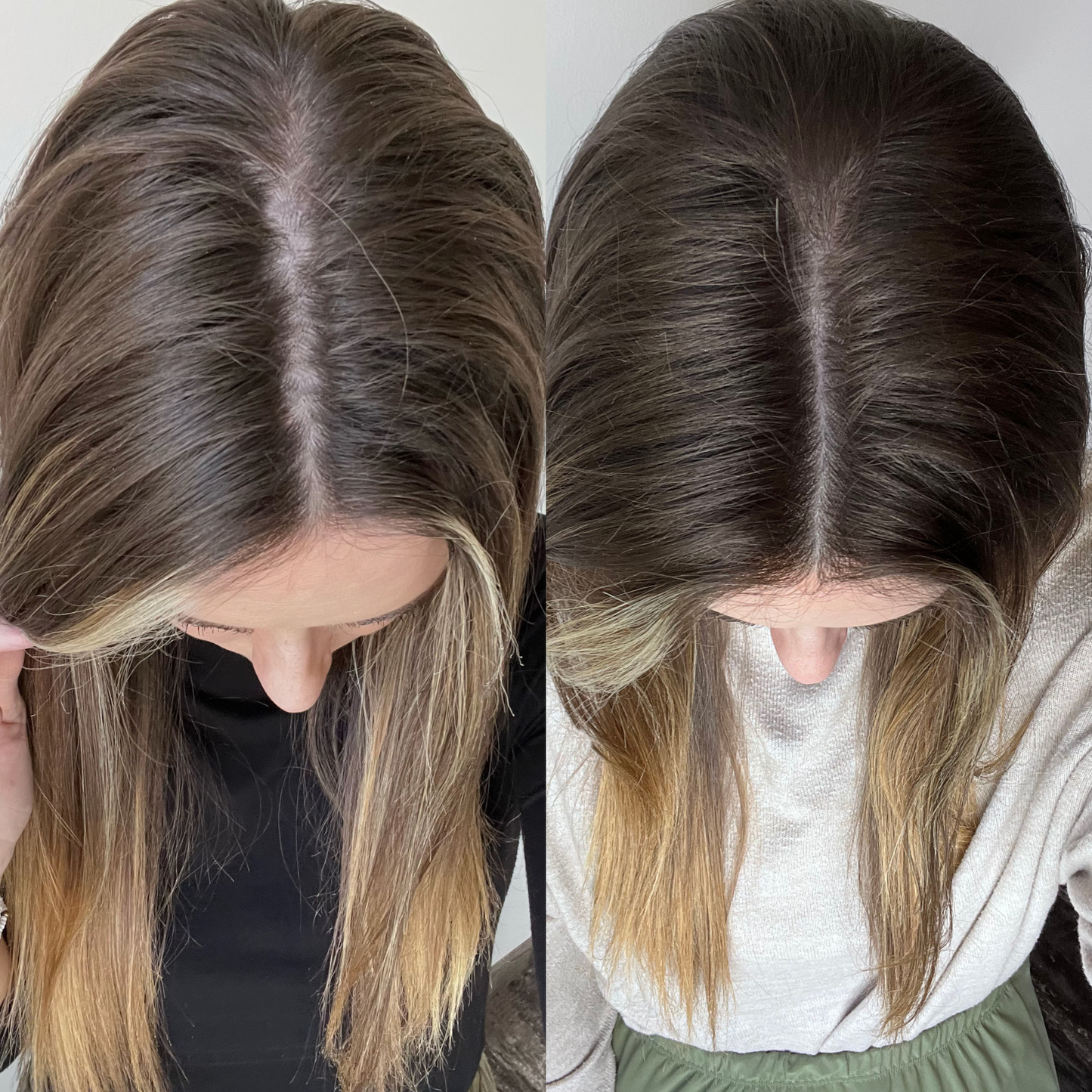
- The pattern typically looks like female-pattern thinning at the crown rather than a receding hairline.
- Managing the underlying hormonal imbalance is the most important step; targeted nutrition and scalp care are useful adjuncts.
- Always confirm your diagnosis with a GP or dermatologist before starting any treatment plan.

PCOS (polycystic ovary syndrome) is one of the most common hormonal conditions affecting women of reproductive age in the UK, and yes — it can absolutely cause hair loss. Understanding exactly why this happens, and what evidence-backed steps you can take, is the focus of this article.
In this article
What is PCOS and how common is it?
Polycystic ovary syndrome is an endocrine disorder characterised by at least two of three features: irregular or absent ovulation, elevated androgen levels (either measured in blood or visible as symptoms), and the appearance of multiple follicles on the ovaries on ultrasound. It is not, despite its name, simply about cysts — those follicles are actually undeveloped eggs that failed to be released.
Estimates suggest PCOS affects somewhere between 8% and 13% of women of reproductive age worldwide, making it one of the leading hormonal diagnoses a GP in the UK will encounter. Many women are not diagnosed until they investigate irregular periods, difficulty conceiving, or — increasingly — unexpected hair changes. Because its presentation varies so widely, some women live with PCOS for years before receiving a formal diagnosis.
The condition is also closely linked with insulin resistance, which amplifies androgen production by the ovaries and the adrenal glands. This hormonal cascade is precisely why PCOS affects so many tissues at once — skin, metabolism, mood, and, importantly for this article, your hair follicles.
Why PCOS causes hair loss: the hormonal mechanism

The central mechanism is androgenic alopecia — specifically, a sensitivity of scalp follicles to dihydrotestosterone (DHT), a potent androgen derived from testosterone via the enzyme 5-alpha reductase. Women with PCOS often have higher circulating testosterone and other androgens than average. Even a relatively modest elevation can be sufficient to trigger follicle miniaturisation in women who carry a genetic sensitivity to DHT.
Each affected follicle produces progressively finer, shorter hairs across successive hair growth cycles. The anagen (active growth) phase shortens, while the telogen (resting/shedding) phase proportionally lengthens. Over months to years, once-thick terminal hairs are replaced by vellus-like fibres that are barely visible to the naked eye — a process trichologists call miniaturisation.
There is also a secondary mechanism worth noting: insulin resistance, which is present in a significant proportion of women with PCOS, further stimulates androgen production. Higher insulin signals the ovaries to produce more testosterone, compounding the androgenic effect on follicles. Chronic low-grade inflammation — another feature of PCOS — may additionally stress the follicular environment, though the precise contribution to hair loss is still being characterised in research.
Recognising the signs of PCOS-related hair thinning
PCOS-related hair loss follows a pattern distinct from, say, telogen effluvium (diffuse shedding after illness or extreme stress) or alopecia areata (patchy loss). Understanding the difference matters, because the management approach differs too.
| Feature | PCOS-related hair loss | Telogen effluvium | Alopecia areata |
|---|---|---|---|
| Pattern | Diffuse crown/central parting thinning | All-over diffuse shedding | Discrete smooth patches |
| Onset speed | Gradual (months to years) | Rapid (weeks after trigger) | Variable — can be sudden |
| Frontal hairline | Usually preserved | Usually preserved | Can be involved |
| Other androgen signs | Often present (acne, hirsutism) | Absent | Absent |
| Reversibility | Partial — depends on treatment | Often fully reversible | Variable |
A key distinguishing feature of androgenic alopecia in women is that the frontal hairline is generally preserved — unlike the male-pattern recession most people picture. Instead, you will notice the central parting appears wider, the crown looks thinner under strong lighting, or your ponytail feels noticeably less dense than it once did. Many women also notice increased shedding on the pillow or in the shower drain, though shedding alone is not diagnostic.
It is also worth noting that PCOS can simultaneously cause excessive hair growth in androgen-sensitive areas of the body — such as the chin, upper lip, chest, and abdomen — while thinning scalp hair. This paradox occurs because body hair follicles and scalp follicles respond to androgens in opposite ways, a quirk of their differing androgen-receptor profiles.
What actually helps: a layered approach
Managing PCOS-related hair loss is most effective when approached in layers: addressing the underlying hormonal drivers, supporting the follicular environment nutritionally, and protecting the scalp and existing hair from additional stressors. No single supplement or topical will undo an active hormonal imbalance on its own.
1. Medical management of the underlying PCOS
This is the non-negotiable foundation. Your GP or endocrinologist may consider options including combined oral contraceptives (which raise SHBG and reduce free androgens), antiandrogens such as spironolactone or cyproterone acetate (the latter is a component of co-cyprindiol, licensed in the UK), or metformin if insulin resistance is significant. These are prescription-only decisions requiring clinical oversight — this article is not the place to recommend one over another, and you should discuss the risk-benefit profile with your doctor.
2. Nutritional support for follicle health
Once medical management is in place, targeted nutrition can meaningfully support the follicular environment. Research into the role of androgens and the enzyme 5-alpha reductase has drawn attention to pumpkin seed oil as a candidate ingredient. A randomised, double-blind, placebo-controlled trial (Cho et al., 2014) found that men taking 400 mg of pumpkin seed oil daily for 24 weeks showed significantly greater hair counts than the placebo group — a finding that has generated interest in its potential for androgenic alopecia more broadly, though large studies in women specifically remain limited.
Lumeyr's Pumpkin Seed Oil Softgels deliver a standardised dose in a convenient once-daily softgel. For a broader formulation addressing multiple nutritional gaps relevant to hair — including zinc, biotin, selenium, and vitamin D — Lumeyr Women is designed specifically around the needs of women dealing with hair thinning, including those with hormonal contributors.
Protein adequacy is also important: hair is approximately 95% keratin, a protein, and chronic low protein intake accelerates shedding. Our detailed guide on protein intake and hair health covers practical daily targets and food sources.

3. Scalp care and mechanical protection
A healthy scalp environment supports healthier follicle function. Regular exfoliation removes product build-up and sebum that can clog follicle openings, while scalp massage has been explored in small studies as a means of increasing dermal papilla cell stretching — a mechanical signal thought to support the anagen phase. Our scalp care range includes the Revive + Restore Scalp Scrub for exfoliation and the JUMBO Scalp Stimulator for daily massage — both practical additions to a consistent scalp routine.
Beyond products, handle thinning hair gently: avoid tight ponytails and buns (traction aggravates follicle stress), limit heat styling, and use a sulphate-free shampoo to avoid stripping already-fragile strands.
Designed for women's hair thinning
Lumeyr Women combines zinc, biotin, selenium, vitamin D, and botanical actives in a formula built around the nutritional gaps most commonly seen in women with hormonally driven hair loss.
Explore Lumeyr Women →4. Lifestyle factors that matter
Insulin resistance — a core driver of androgen excess in many women with PCOS — responds meaningfully to lifestyle intervention. Regular moderate exercise (particularly resistance training combined with aerobic activity) and a lower-glycaemic dietary pattern have both been associated with improved insulin sensitivity and, consequently, lower androgen levels. This is not a quick fix, but sustained lifestyle changes can reduce the hormonal pressure on follicles over time and improve overall PCOS symptom burden.
Managing chronic stress is equally relevant. Elevated cortisol can worsen both insulin resistance and hair shedding (via telogen effluvium), creating a compounding effect on top of the androgen-driven loss. Sleep quality, nervous system support, and reducing unnecessary physiological stressors all feed into the bigger picture.
Limitations of the evidence
It would be dishonest not to acknowledge the gaps in the current research landscape. Most clinical trials on androgenic alopecia have historically recruited male participants, meaning the evidence base for women — and especially for women with PCOS specifically — is considerably thinner. The Cho et al. pumpkin seed oil trial cited above was conducted in men; whether the magnitude of benefit translates to women with PCOS-related androgenic alopecia has not yet been confirmed in a large, well-powered, randomised controlled trial.
Similarly, much of the positive data on ingredients like biotin, zinc, and vitamin D for hair loss comes from populations with documented deficiencies — the benefit in women who are already replete is less clear. Studies on scalp massage are typically small and short-term, making it difficult to draw firm conclusions about long-term follicle outcomes.
This does not mean these interventions are without value — it means managing expectations is important. Nutritional and scalp-care strategies are best understood as supportive adjuncts to medical management, not replacements for it. Hair recovery after androgenic alopecia is also a slow process: even under optimal conditions, meaningful regrowth typically takes six to twelve months of consistent effort, and results vary considerably between individuals.

Lucía leads editorial at Lumeyr. With over eight years writing and editing in wellness, beauty and women’s hair health, she focuses on the intersection of science and daily routine, ensuring every Lumeyr piece explains complex topics clearly and without empty promises.
View author profile
Frequently asked questions
Can PCOS cause permanent hair loss?
PCOS can cause progressive hair loss that becomes harder to reverse the longer it goes untreated, but it is not automatically permanent. If elevated androgens are addressed through medical management and the follicles have not been irreversibly miniaturised, meaningful regrowth is possible. Early intervention significantly improves outcomes, which is why prompt diagnosis and treatment matter.
How quickly does PCOS hair loss happen?
PCOS-related hair thinning typically develops gradually over months to years rather than appearing suddenly. The slow pace is one reason many women do not notice it until a significant proportion of density has already been lost. Unlike telogen effluvium — which causes dramatic shedding over weeks — androgenic alopecia is a quiet, cumulative process driven by repeated miniaturisation across hair growth cycles.
Will treating PCOS stop hair loss?
Treating PCOS by reducing androgen levels can slow or halt the progression of hair thinning, and some degree of regrowth is possible, particularly if treatment begins early. However, hair recovery is slow — expect a minimum of six to twelve months before assessing results. Supporting treatment with targeted nutrition and a consistent scalp-care routine gives follicles the best possible environment for recovery.
Are hair supplements useful for PCOS hair loss?
Hair supplements can be a useful adjunct when they address genuine nutritional gaps — zinc, vitamin D, biotin, and selenium are among the nutrients most commonly depleted in women with PCOS or chronic inflammation. They are not a replacement for medical management of the underlying hormonal imbalance, but they support the follicular environment as part of a broader, layered approach to recovery.
Does PCOS cause hair loss all over the head or just in patches?
PCOS-related hair loss is typically diffuse across the crown and central parting rather than patchy. The frontal hairline is usually preserved, distinguishing it from male-pattern baldness and from alopecia areata, which produces smooth, discrete bald patches. If you notice clearly defined patchy loss, consult your GP to rule out alopecia areata, which has a different cause and management pathway.
Can you grow hair back after PCOS-related hair loss?
Partial or significant regrowth is achievable in many women when androgens are brought under control and nutritional support is in place, especially if follicles have not been fully miniaturised. Results vary based on genetics, duration of hair loss before treatment, and consistency of the approach. Realistic timelines are six to eighteen months for visible improvement, and maintenance is usually ongoing.
Sources
- Cho et al. (2014) — Effect of pumpkin seed oil on hair growth in men with androgenetic alopecia: a randomised, double-blind, placebo-controlled trial. Evidence-Based Complementary and Alternative Medicine
- Panahi et al. (2015) — Rosemary oil vs. minoxidil 2% for the treatment of androgenetic alopecia: a randomised comparative trial. Skinmed
- Escobar-Morreale et al. (2016) — Polycystic ovary syndrome: definition, aetiology, diagnosis and treatment. Nature Reviews Endocrinology
- Lizneva et al. (2016) — Criteria, prevalence and phenotypes of polycystic ovary syndrome. Fertility and Sterility
This article follows our editorial & research standards. It is informational content, not medical advice.