Best Supplements for Menopause Hair Loss UK (2026)

- Menopause hair loss is driven by falling oestrogen and rising androgen sensitivity — the right supplement targets both hair-follicle nutrition and hormonal balance.
- Key nutrients to look for: biotin, zinc, selenium, vitamin D, and botanicals such as pumpkin seed oil or saw palmetto.
- Our top pick for UK women in 2026 is the Lumeyr Hair Skin Nails Gummies — a complete, taste-friendly daily format with EFSA-aligned ingredients.
- No supplement replaces medical advice; always see your GP if hair loss is sudden or severe.

If you are comparing supplements for menopause-related hair loss, you are not alone — and you are right to scrutinise the options carefully. This guide is published by Lumeyr; we will recommend our own product as the lead pick, but we will show you exactly why, and we will name real alternatives so you can make an informed decision.
Contents
How we chose: our criteria
Every product in this guide was assessed against five transparent criteria:
- Ingredient evidence: Are the key ingredients supported by peer-reviewed research in the context of hair or nutrient-deficiency correction? We do not count marketing claims as evidence.
- Dosage transparency: Does the label disclose the exact quantity of each active ingredient, or does it hide behind a proprietary blend total?
- Format suitability: Is the format (gummy, capsule, softgel) practical for daily compliance over a 3–6 month period — the minimum timeframe hair-growth studies typically require?
- Value for money: We consider cost per day rather than headline price, and whether a subscription option improves affordability.
- UK availability and regulation: All picks must be legally sold in the UK and formulated in compliance with UK food-supplement rules. We favour products manufactured to GMP standards.
Why menopause causes hair loss
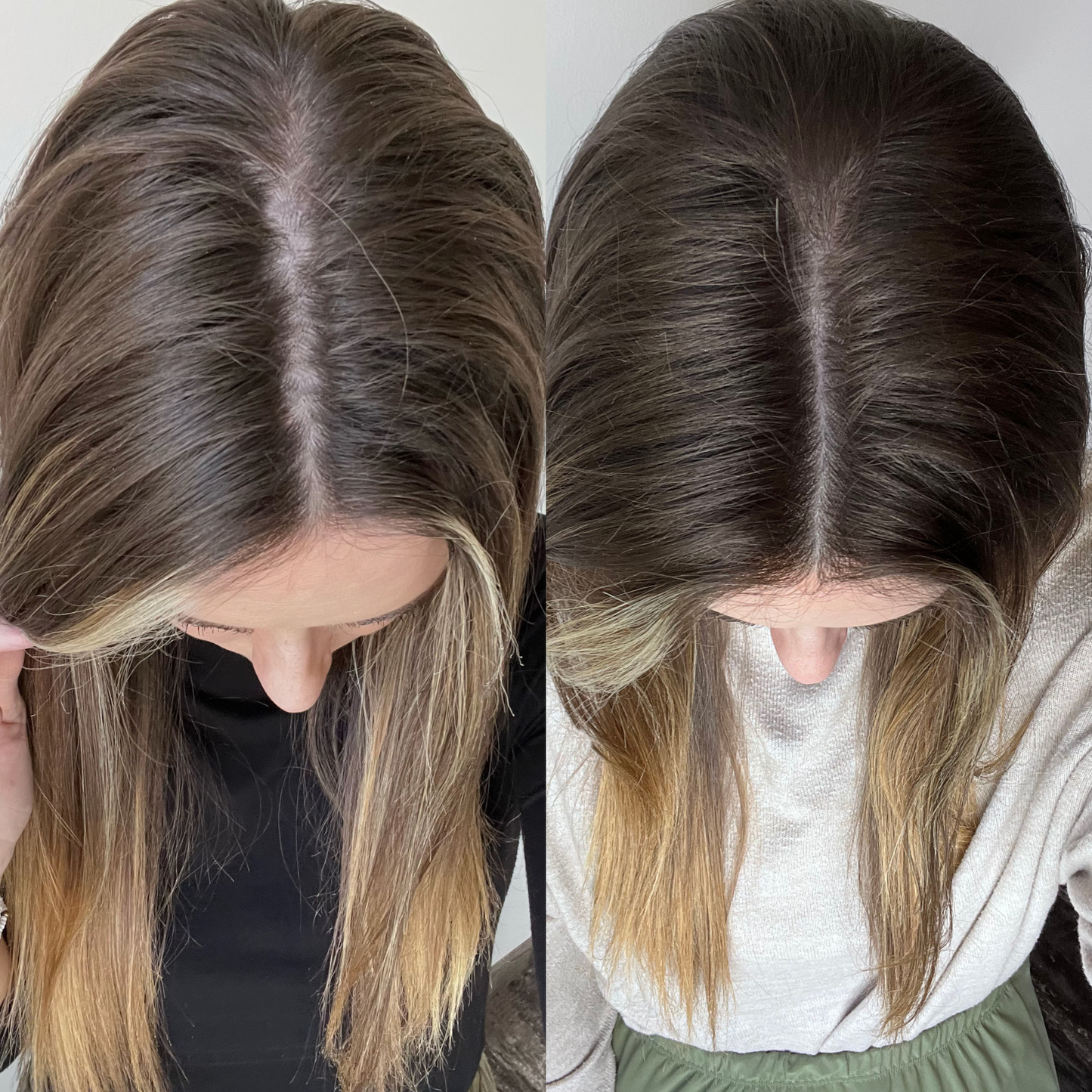
During perimenopause and menopause, oestrogen levels decline significantly. Oestrogen normally prolongs the anagen (growth) phase of the hair cycle; as levels fall, follicles spend less time growing and more time resting or shedding. At the same time, the relative rise in androgens — even though absolute androgen levels may not change dramatically — can increase follicular sensitivity to dihydrotestosterone (DHT), the androgen most associated with miniaturisation of hair follicles (Sinclair, 2001). The result is often diffuse thinning across the crown, with the hairline remaining relatively intact — a pattern distinct from male-pattern loss.
Nutritional factors compound the hormonal picture. Iron, zinc, vitamin D and biotin deficiencies are all more common in women over 45, and each has a role in the normal cell-division processes that sustain hair-follicle activity. Addressing genuine deficiencies through diet and supplementation can therefore contribute to supporting normal hair growth — though supplements are not a medical treatment and should not replace GP-guided care.

Our in-depth article on menopause hair loss: what to do step by step covers the hormonal picture in greater detail if you would like to understand the science before buying anything.
The best supplements for menopause hair loss in 2026
#1 — Lumeyr Hair Skin Nails Gummies
Best overall for UK women experiencing menopause-related hair thinning.
The Lumeyr Hair Skin Nails Gummies stand out in this category because they combine meaningful doses of biotin, zinc, selenium and vitamin C in a once-daily gummy format with full label transparency — every active quantity is declared individually. Biotin contributes to the maintenance of normal hair (EFSA, 2010); zinc and selenium contribute to the maintenance of normal hair and nails; vitamin C contributes to normal collagen formation, which supports the structural integrity of the dermal papilla. These are EFSA-authorised claims, not marketing copy.
The gummy format is particularly relevant for menopausal women who may already be managing multiple supplements — swallowing fatigue is real, and consistent daily intake over at least 12 weeks matters far more than a “perfect” formula taken sporadically. The pleasant taste also makes it easier to build a habit alongside breakfast.
Honest limitations: Gummies typically contain a small amount of sugar per serving. If you are managing blood glucose carefully, check the label. The formula does not include iron — if your GP has identified iron-deficiency anaemia as a contributing factor, you will need a separate, medically supervised iron supplement.
- Full individual-dose label transparency
- EFSA-compliant nutrient claims
- Practical gummy format for daily compliance
- Available direct in the UK with fast dispatch
- No iron — not a standalone solution if iron deficiency is confirmed
Price: see lumeyr.com
Try Lumeyr Hair Skin Nails Gummies
Formulated to support hair, skin and nails from within — with full ingredient transparency and UK-fast delivery.
Shop Hair Skin Nails Gummies#2 — Vitabiotics Perfectil Platinum (Hair)
Best established pharmacy option.
Vitabiotics is a long-standing UK brand stocked widely at Boots and Holland & Barrett. Their Perfectil Platinum Hair variant is a capsule-format supplement that combines standard hair-supporting micronutrients (biotin, zinc, selenium, silicon) with additional botanicals. The format is a swallowable capsule — two per day in some variants. It is a solid, safe and widely trusted choice for women who prefer buying in-store.
Pros: available in virtually every UK pharmacy; established brand reputation; broadly researched micronutrient blend.
Cons: capsule format requires swallowing two per day; proprietary blend elements mean some individual ingredient doses are not fully disclosed; check the current label for exact quantities before purchasing.
#3 — Nourkrin Woman
Best for women wanting a specialist clinically-studied marine extract.
Nourkrin Woman is built around Marilex, a proprietary marine proteoglycan concentrate derived from fish. The brand has sponsored clinical research into its specific extract — always check for published, peer-reviewed trials rather than relying on brand-commissioned summaries alone. It is available at Boots and online, with a recommended intake period of at least six months.
Pros: specialist single-mechanism approach; available across UK pharmacies and online; targets the hair cycle specifically.
Cons: higher cost per month (check current Boots pricing — typically in the £30–£40/month range, subject to change); contains fish — not suitable for vegetarians or those with fish allergies; the proprietary extract means independent dose verification is difficult.
#4 — Holland & Barrett Super Strength Biotin 10,000 mcg
Best budget entry-level option.
A straightforward, single-ingredient biotin tablet at a high dose. Biotin (vitamin B7) contributes to the maintenance of normal hair per EFSA authorised claims. For women whose primary gap is biotin, this is an affordable, no-frills option. Note: very high-dose biotin supplements can interfere with certain laboratory tests, including thyroid function and cardiac biomarker tests — always inform your GP or the testing laboratory that you are taking a high-dose biotin supplement.
Pros: low cost; single-ingredient transparency; widely available in-store.
Cons: single-nutrient approach does not address the full nutritional picture of menopause-related hair loss; potential interference with blood tests at high doses; no botanical support for androgen balance.
#5 — Lumeyr Pumpkin Seed Oil Softgels
Best botanical add-on for androgen-sensitive thinning.
Pumpkin seed oil is emerging as a botanically derived option of interest for women with androgen-sensitive hair thinning. A 24-week randomised trial (Cho et al., 2014) found statistically significant increases in hair count in men; while a women-specific large-scale trial is still needed, the mechanism — mild inhibition of 5-alpha reductase, the enzyme that converts testosterone to DHT — is relevant to menopausal androgen sensitivity. Our complete guide to pumpkin seed oil for women’s hair growth covers the evidence in detail.
The Lumeyr Pumpkin Seed Oil Softgels are best used as a complementary product alongside the Hair Skin Nails Gummies rather than as a standalone replacement.
Pros: addresses the androgen pathway; transparent softgel dose; good option to layer on top of a foundational multivitamin formula.
Cons: women-specific large-scale evidence is still limited; contains fish-derived gelatin — check if vegetarian capsule version is available; adds to daily supplement cost.
Side-by-side comparison table
| Product | Format | Key actives | Dose transparency | Suitable for vegetarians | UK availability |
|---|---|---|---|---|---|
| Lumeyr Hair Skin Nails Gummies | Gummy (once daily) | Biotin, zinc, selenium, vitamin C, vitamin E | Full individual doses declared | Check current label | Direct / lumeyr.com |
| Vitabiotics Perfectil Platinum Hair | Capsule (2/day) | Biotin, zinc, selenium, silicon, botanicals | Partial — some blend totals | Yes (most variants) | Boots, H&B, Amazon UK |
| Nourkrin Woman | Tablet (2/day) | Marilex marine proteoglycan concentrate | Proprietary extract — limited | No (fish-derived) | Boots, Amazon UK |
| H&B Super Strength Biotin 10,000 mcg | Tablet (1/day) | Biotin only | Full (single ingredient) | Yes | Holland & Barrett stores & online |
| Lumeyr Pumpkin Seed Oil Softgels | Softgel (add-on) | Cold-pressed pumpkin seed oil | Full dose declared | Check current label | Direct / lumeyr.com |
Note: prices, formulations and availability change. Always verify on the retailer’s current product page before purchasing.

Limitations of the evidence
It would be dishonest to present supplementation as a straightforward solution to menopause hair loss. The evidence base has real constraints:
- Small sample sizes: Many micronutrient and botanical hair-loss trials recruit fewer than 100 participants, limiting the statistical power to detect modest effects.
- Combined formulations: Most commercially tested products combine multiple ingredients, making it difficult to attribute any observed benefit to a single nutrient.
- Short durations: Hair grows approximately 1 cm per month; many trials run for only 12–24 weeks, which may be insufficient to capture the full cycle of follicle recovery.
- Women-specific menopause data is thin: The majority of published hair-supplement trials include mixed-sex populations or focus on men. Extrapolating findings directly to perimenopausal or postmenopausal women requires caution.
- Bias risk: Industry-sponsored trials are more common in this space than independent academic research. Always check who funded a study before treating it as definitive.
Our guide on female alopecia: causes, types and the best treatments explains when it is appropriate to move beyond supplementation and seek medical or dermatological input.
Ready to start? Build your routine.
The Hair Skin Nails Gummies are designed for consistent daily use alongside a balanced diet. Browse the full hair growth supplements collection to build a complete routine.
Shop NowVerdict: which supplement is right for you?
For most UK women experiencing diffuse hair thinning during perimenopause or menopause, the Lumeyr Hair Skin Nails Gummies represent the best starting point in 2026. The reasons are practical as much as scientific: the format supports daily habit-building, every active ingredient dose is declared, and the formula addresses the core nutritional gaps (biotin, zinc, selenium, vitamin C) that EFSA recognises as relevant to normal hair maintenance. For women whose thinning has a clear androgen-sensitivity pattern — diffuse crown thinning with a visible change in hair texture — adding the Pumpkin Seed Oil Softgels as a complement is a logical next step, based on the available evidence.
Vitabiotics Perfectil Platinum Hair is a sensible alternative if you prefer buying in-store or already trust the Vitabiotics range — the micronutrient profile is solid, though dose transparency is less complete.
Nourkrin Woman is worth considering if you have used standard micronutrient supplements for 6 months without result and want to try a different mechanism; however, verify the current price and check suitability if you avoid fish products.
Who the Lumeyr gummies are NOT for:
- Women with confirmed iron-deficiency anaemia as the primary driver of shedding — you will need a medically supervised iron protocol, not a general hair gummy.
- Women managing blood glucose very strictly who need to minimise all sugar intake — check the gummy’s sugar content on the current label.
- Anyone expecting a quick fix in under eight weeks — no supplement will deliver that, and any brand claiming otherwise should be avoided.
For scalp health alongside any internal supplement approach, consider pairing with the Revive + Restore Scalp Scrub to support a clean, well-circulated scalp environment. Our scalp care collection has further options for topical support.
Frequently asked questions
How long does it take for menopause hair loss supplements to work?
Most women need to take a hair supplement consistently for at least 12–16 weeks before noticing a change, and 24 weeks is a realistic horizon for a meaningful assessment. Hair grows approximately 1 cm per month; follicles recovering from a telogen phase must re-enter anagen before new growth is visible, which takes time regardless of how effective the formula is. Commit to at least three months before evaluating.
Can supplements replace HRT for menopause hair loss?
No — food supplements are not a substitute for hormone replacement therapy (HRT), and neither should replace the other without guidance from your GP. HRT addresses the root hormonal cause of menopause symptoms, while supplements support normal nutrient levels that the follicle cycle depends on. Discuss both options with your doctor, as many women use them alongside each other.
Are hair gummies as effective as capsules?
The format matters less than the dose and consistency of intake; a gummy taken daily almost always outperforms a capsule taken sporadically. That said, it is worth checking that the gummy delivers a meaningful quantity of each active — some gummies underdose ingredients to manage taste or cost. Always compare the declared per-serving amounts rather than the format alone.
How much do the Lumeyr Hair Skin Nails Gummies cost, and is there a subscription?
Current pricing is displayed on the product page in your local currency — we do not hardcode a price here because it can change. Lumeyr offers a subscription option that reduces the per-month cost; check the product page for the current saving percentage. UK delivery options and timelines are also listed there.
Should I see a GP before taking a hair supplement during menopause?
Yes, particularly if your hair loss is sudden, patchy, or accompanied by other symptoms such as fatigue, weight changes or skin changes — these may indicate an underlying condition such as thyroid dysfunction or iron-deficiency anaemia that requires medical treatment, not supplementation. A GP can run a simple blood panel to rule out deficiencies and guide your choices. Food supplements are not medicines and cannot diagnose, treat or cure any medical condition.
Can I take the Hair Skin Nails Gummies alongside other supplements?
For most women, yes — but check for overlapping ingredients with other supplements you already take to avoid exceeding tolerable upper intake levels for fat-soluble vitamins (such as vitamin A or E) or minerals like zinc. If you take any prescription medications, speak to your pharmacist or GP before adding new supplements, as some nutrients can interact with certain drugs.
Sources
- Sinclair R. (2001) — Male pattern androgenetic alopecia, BMJ
- Cho YH et al. (2014) — Effect of pumpkin seed oil on hair growth in men with androgenetic alopecia, Evidence-Based Complementary and Alternative Medicine (PMC4017725)
- Panahi Y et al. (2015) — Rosemary oil vs minoxidil 2% for the treatment of androgenetic alopecia: a randomized comparative trial, Skinmed (PMID 25842469)
- EFSA Panel on Dietetic Products (2010) — Scientific Opinion on the substantiation of health claims related to biotin, EFSA Journal
- Trüeb RM et al. (2018) — Oxidative stress and its impact on the hair cycle, International Journal of Trichology
This article is published by Lumeyr for informational purposes only. It does not constitute medical advice. If you are concerned about hair loss or any health condition, please consult a qualified healthcare professional.

Lucía leads editorial at Lumeyr. With over eight years writing and editing in wellness, beauty and women’s hair health, she focuses on the intersection of science and daily routine, ensuring every Lumeyr piece explains complex topics clearly and without empty promises.
This article follows our editorial & research standards. It is informational content, not medical advice.